Labuan: A very surprising and welcoming island

I featured Labuan Island in a recent interview on 6PR radio.  This article was written for Grand Dorsett Labuan.

OLYMPUS DIGITAL CAMERA
Grand Dorsett Labuan

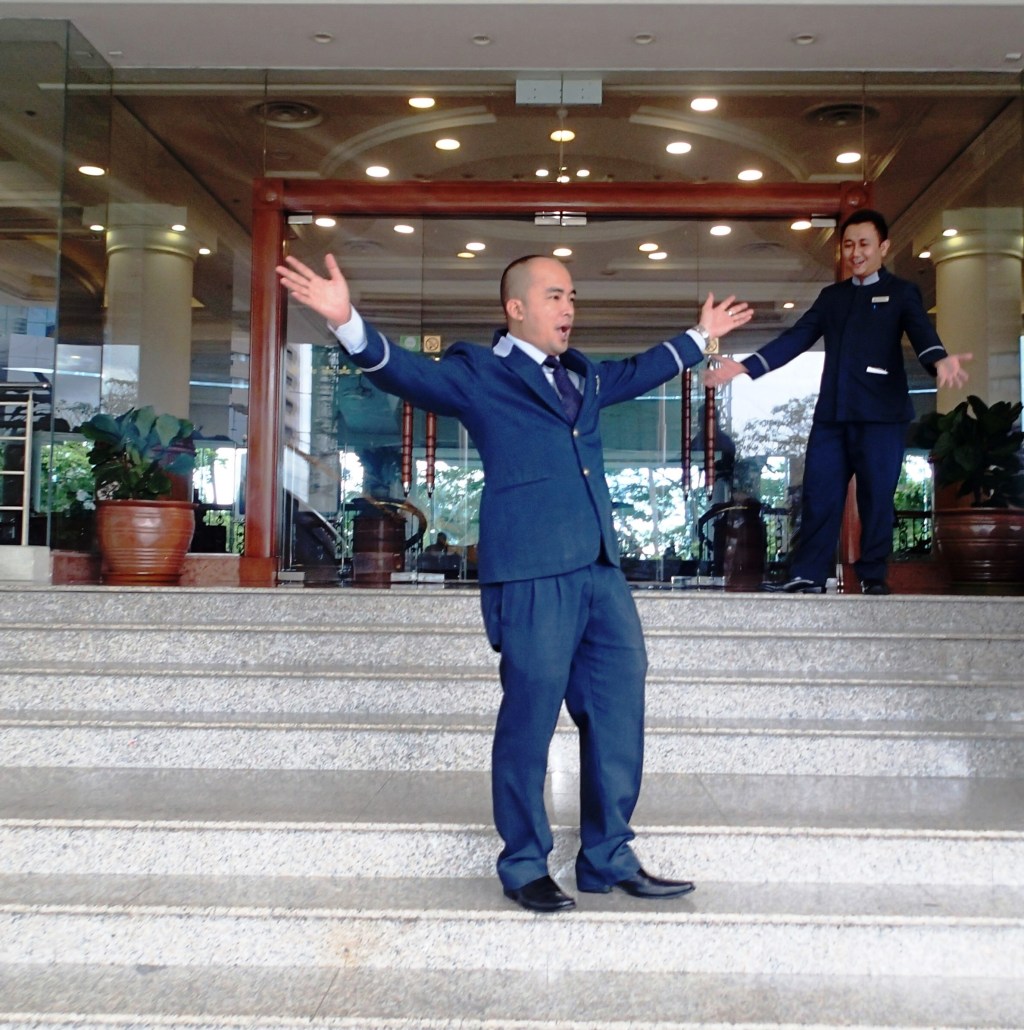
I’m standing in the lobby of the Grand Dorsett Labuan amidst a crew of Dorsett Grand Labuan staff. They are about to perform their welcome song for my crew, an assortment of trekkers from various parts of Australia who have recently completed the Sandakan Ranau Death March Trek, retracing the footsteps of Prisoners of War in 1945.

I’ve been pulled into the group and handed the song sheet which is in English and Bahasa Malay. I keep up reasonably well even though I don’t know the tune and speak very limited Bahasa Malay.

The one image I have of this experience is looking up from my song sheet across at the singers alongside me as they belt out the line, “We welcome you to Dorsett Labuan!” and they’re singing with smiles on their faces. They’re not embarrassed and there’s no reluctance to show their pride and enthusiasm for their hotel.

My group of trekkers are spellbound. Many have travelled throughout the world and it’s the most heartfelt greeting any of them have received in a hotel. I used to think being gonged on arrival and handed a peach iced tea was pretty special but these guys are the best I’ve seen at welcoming guests.

The Dorsett Grand Labuan is the only five star hotel on the island and just minutes from the airport, waterfront and the busy town centre. The hotel receives regular awards for its customer service and with their singing staff I think they also have a good chance of winning Malaysia’s Got Talent.

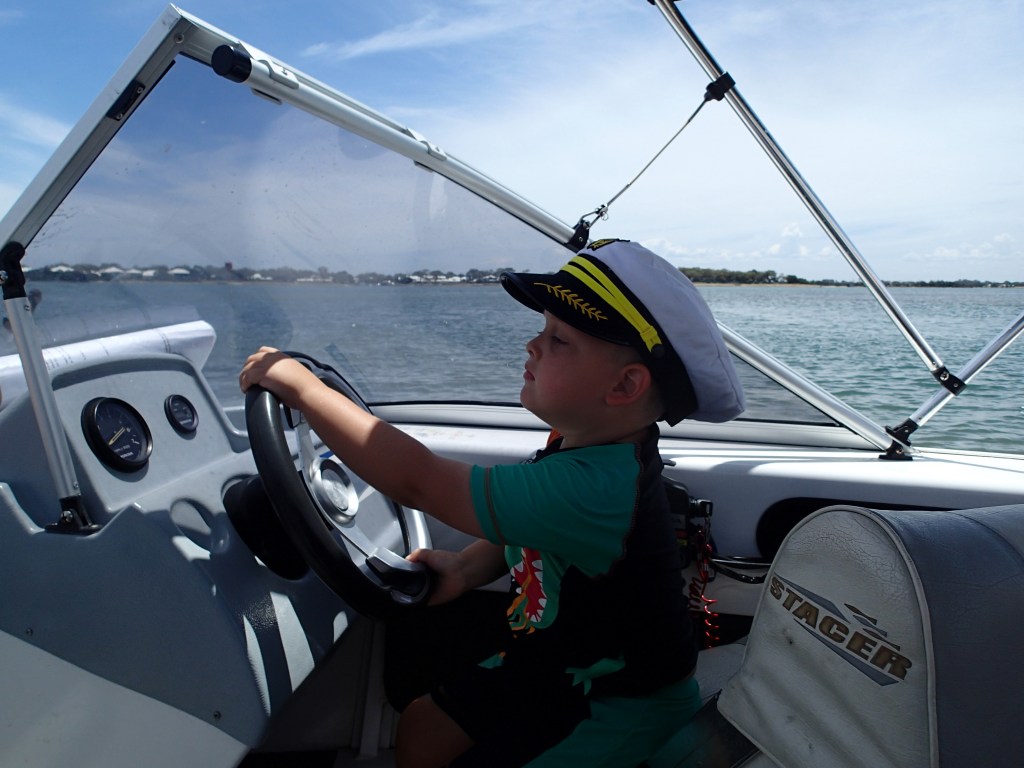
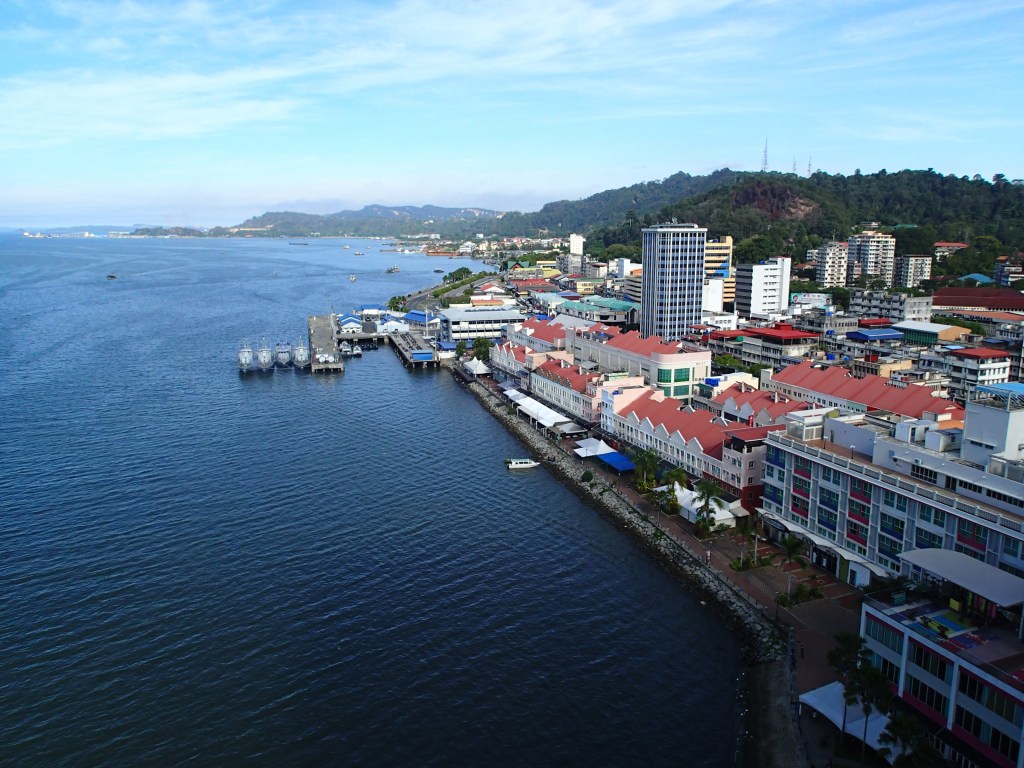
Labuan Island is a territory of Malaysia off the western coast of Borneo and to the south of Kota Kinabalu, the capital of Sabah. It can accessed easily by plane or ferry or if you’re slightly more adventurous, by speed boat. Electing the speed boat route takes 20 minutes from the mainland and you motor past islands, shipwrecks and red hulled offshore drilling ships waiting for their next job.

The island has a wonderful pace about it and even the traffic is slower than you’ll find in other parts of South East Asia and distinctly more courteous.

OLYMPUS DIGITAL CAMERA
Labuan:  Where even a Ferrari will slow down to let you cross the road.

While most tourists come for the great duty free shopping, particularly the textiles and technology, there is also a very good museum with free entry located five minutes’ walk from the Dorsett Grand Labuan. The colourful history and cultural themes of Labuan is well documented with many interesting and interpretive displays.

The first Governor of Labuan, James Brooke, was better suited to his original inspiration for coming to Borneo in the 1800’s.  After some strategic discussion at the Raffles Hotel in Singapore, Brooke set off across the South China Sea to rid Borneo of its Pirates.  He was better at being swashbuckling than sitting behind a desk but those who took his place have done a magnificent job of creating an island where the shopping is brilliant, the history is rich, the hawker markets are cheap and delicious and the diving and fishing is just about unbeatable anywhere in the world. For those with a love of reality tv, Survivor Island, where the first ever Survivor series was set, is located nearby to the north and tours allow you to wallow in the same mud pools as the contestants, including a nude Richard Hatch.

My trekking group have come to Labuan to bind together the Sandakan Death March Trek that began with many days of trekking through mountainous Borneo jungle and then riding a stock carriage train to the coast, then a fast boat to the island. Every step we’ve taken and the stories we have talked about have led us to Labuan War Cemetery, the final resting place for the few whose remains are known and the many who are only ‘Known Unto God’.

OLYMPUS DIGITAL CAMERA
Labuan War Cemetery

As we walk the lines of memorial graves we think about the Australian and British Prisoners of War who perished at Sandakan and Ranau and on the three death marches in 1945. We think about how the final 15 prisoners were shot and killed 12 days after the war had finished. From 2434 Australian and British Prisoners of War, only 6 survived.

We stand in front of Richard Murray’s grave. He stepped forward from a line of men and said that he alone stole rice, knowing he would be killed. Stealing rice was a capital offence and he sacrificed his life so that others may live.

We stand in front of Captain John Oakeshott’s grave, a doctor who had the opportunity to escape but decided to stay with the sick. He was one those killed 12 days after the war had ended.

As a fighter jet from the Royal Malaysian Air Force flies over the Cross of Sacrifice at the cemetery we also remember the sacrifice of so many local people from Sabah and Sarawak who were killed during World War II and the bravery of those who provided assistance to the prisoners.

OLYMPUS DIGITAL CAMERA
The Royal Malaysian Air Force pays tribute to the fallen from the Empire.

It is a beautiful war cemetery, well maintained by Labuan authorities and staff are on site Monday to Friday from 7am to 4:30pm.

While the trek has been physically exhausting the walk through Labuan War Cemetery has been emotionally exhausting. Returning to the Dorsett Grand Labuan, our group is quiet and some choose to just sit in the lobby while others go off to breakfast, for a swim or a play with the resident sun loving cat.

OLYMPUS DIGITAL CAMERA
Susan Carlos is a wonderful General Manager of the Grand Dorsett Labuan but this cat is truly in charge.

For each us, in our own way, we find the space to reflect on our journey. I’ve cried during this trek but for now I am smiling. As I remember the staff at the hotel who sang to us I know I have to come back and share this experience with others, for the history of the past and for the friendships of the future.

OLYMPUS DIGITAL CAMERA
Back to Borneo, the race is on!

Travel Warnings Warning: Do your own research.

Looking at the adventures I have had and who they have been with I am torn between solo jungle treks and family resorts as what I have enjoyed the most. That’s really what defines the joy of travel for me; no matter what I do, it’s always better than sitting at home.

When I am sitting at home and find myself looking at travel destinations, part of my research is to check the Department of Foreign Affairs and Trade (DFAT) website. Travel advice and bulletins have been available on their Smartraveller site since 2000.

The advice you’ll find highlights the range of threats you may encounter at your destination and may include information relating to health, security, local customs and laws and natural events and disasters, such as the recent Bali flight disruptions caused by the ash eruptions of Mt Raung.

Minister for Foreign Affairs Julie Bishop says that the Australian Government frequently consults with foreign governments on a range of issues as part of normal diplomatic relations, including on matters relevant to the safety of Australians.

“DFAT also engages with other stakeholders, including in the travel industry, to understand any changes in the local threat environment,” the Minister said.

Many Australian publications maintain an editorial policy not to encourage travel to destinations where travel warnings are sufficiently serious enough to advise that people do not visit. It’s a completely responsible decision that I don’t disagree with but it got me thinking about countries that have travel warnings issued against them and the actions being taken to improve the safety, security and health of travellers.

As an example, the Smartraveller advisory for the east coast of Sabah is, ‘reconsider your need to travel’. I have travelled to the Malaysian state of Sabah several times as a trekker and as a father. Whether it’s the jungles, mountains, caves, wildlife, shopping or the resorts, there’s much to love about this Malaysian state at the top of Borneo.

Sandakan, on the east coast, has a remarkable connection to Australians, including many Western Australians who died there during World War II. The tragic and infamous Sandakan Prisoner of War Camp and the three death marches to Ranau at the foot of Mount Kinabalu cost the lives of 2428 Prisoners of War (1787 were Australian and 641 were British) and thousands of locals who were made to work for the Japanese and many of whom were caught providing assisting to the prisoners.

The east coast of Sabah is at present experiencing security challenges in meeting the threat of armed insurgents from the nearby Sulu Archipelago chain of islands that make up the southern Phillipines.

Since 2013, the severity of insurgent attacks on the people of Sabah and kidnapping of foreigners has intensified. Two foreign tourists were attacked in their resort off the coast of eastern Sabah and a male tourist was murdered and his wife kidnapped and held captive for several months. In 2014 a foreign tourist and a local employee were kidnapped from a resort and in May this year a gunman with links to insurgents operating in the Sulu islands abducted the manager and a local customer from a restaurant near Sandakan.

It all sounds a bit grim doesn’t it? You’d think it’s not the sort of place to tell my parents that I’m taking their grandchildren to so they can see orangutans in the jungle when they can see them in comfort at the Perth Zoo.

OLYMPUS DIGITAL CAMERA
Orangutans from Sepilok Orangutan Rehabilitation Centre near Sandakan

Having a look at Smartraveller I source their latest update on worldwide kidnapping threats. 27 countries have a current prevalence of kidnapping and there are broader areas of concern, including North Africa and parts of West Africa. Since June 2014 when the last reported kidnapping involving a foreigner occurred in eastern Sabah there have been 16 kidnappings involving foreign nationals in 8 countries across the world and none of them happened on the east coast of Sabah, or anywhere in Malaysia for that matter.

In March 2013, the Malaysian Prime Minister Datuk Seri Najib Tun Razak, launched ESSZONE, the Eastern Sabah Security Zone, and the main enforcement agency ESSCOM, the Eastern Sabah Security Command.

Within ESSZONE, the capabilities of land, sea and air defence and surveillance forces has been upgraded to include new police stations and military forces comprising of five full strength battalions stationed in the area. Naval ships with helicopters and quick response teams are located off the eastern Sabah coast and an oil rig is being utilised as a permanent sea base for ESSCOM forces. The Royal Malaysian Air Force is transferring fighter jets to cover the area and armed attack helicopters will also be attached to ESSCOM.

According to Prime Minister Razak the security levels will remain high as a deterrent to further insurgent activity and increase the confidence of local people and those travelling to Sabah.

The vision and mission for ESSCOM is for its operations to lead to the safety and the wellbeing of the people in eastern Sabah by 2017 and to work with all agencies to increase the ability to gather intelligence and information sharing.

Every travel advisory from the Smartraveller website is reviewed and reissued at least twice a year. The travel advice is a summary of the most likely risks that a traveller may face. According to DFAT it takes into account the overall threat environment, including the capabilities and responses of local authorities.

What’s lacking in travel warnings is a link to the countermeasures being undertaken by a country with a travel warning issued against it. Also, rather than just taking into account the capabilities and responses of local authorities when forming an advisory, it would be useful to disclose what the capabilities, responses and resources of local authorities are.

OLYMPUS DIGITAL CAMERA
Sandakan

It’s a serious situation in eastern Sabah that is reflected by the travel advice of the DFAT travel advisory but unless a traveller is provided with information on the evidence of countermeasures to the situation then it’s only half the story. The Malaysian Government has reacted to the issues by establishing significant police and military forces in the area and is working with the community and other agencies to ensure that security is maintained and information is shared to reduce the risk of insurgent action.

The Smartraveller website provides effective, useful and important information that all travellers should utilise prior to travel and during travel. What the website is not providing is the opportunity to be a one stop shop for travellers to self-assess a situation in another country. While DFAT explain that the internal affairs of other countries, including law and order and public health, are the responsibility of those countries, DFAT is having an impact on the internal affairs of countries by issuing travel advisory information that doesn’t present the full story to travellers undertaking their travel research.

Let me just tell you who recently travelled safely to Sandakan on the 15th of August 2015 for Sandakan Memorial Day; tour groups, including ex-Prisoners of War, school children from across Australia, our Governor-General Sir Peter Cosgrove, the British High Commissioner Vicki Treadell and senior staff from the Australian War Graves Commission in Canberra.

Perhaps it’s still not enough for you to travel to the east coast of Sabah, despite the increased security in place, but at least you have more information to make your own assessment.


Agung…again.

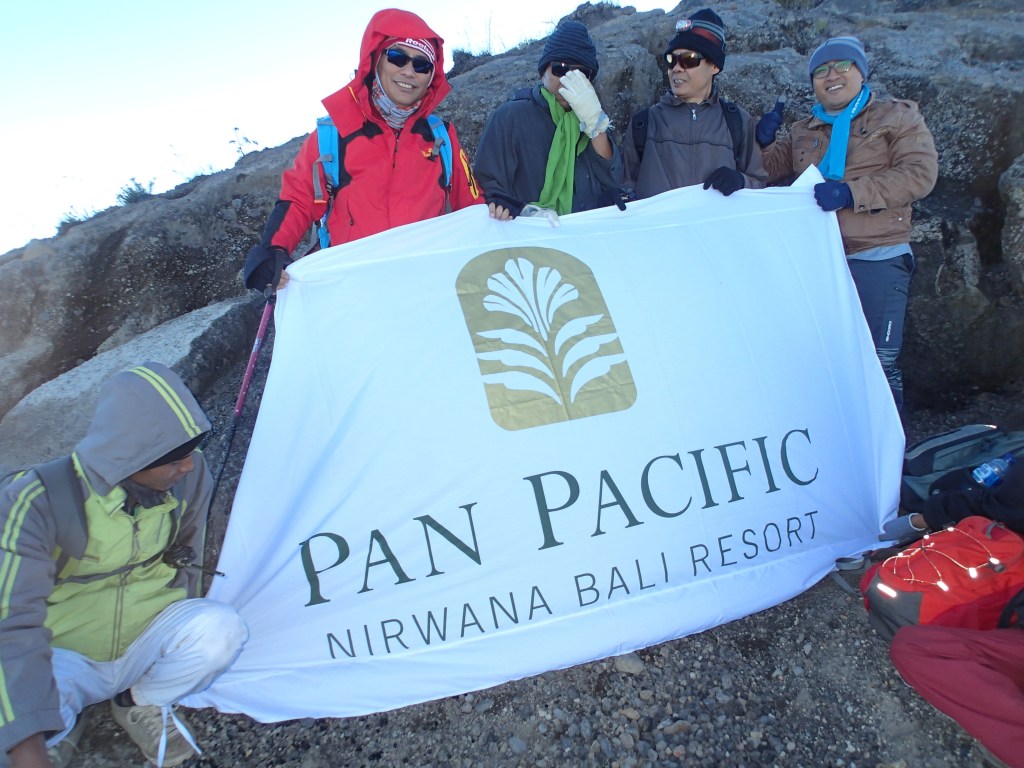
Written for and published by Pan Pacific Nirwana.

Agung…again. In 2013 I wrote an article about climbing Mount Agung, an active volcano in Bali.

I began that account by making a statement about my style of family holiday to Bali, “It has to be more than just waterslides and sitting at a swim up bar.”

Since then, the waterslides have become more important to the kids and the swim up bars have become less important to me, as I seek the perfect family resort.

In 2014 I found it. Pan Pacific Nirwana. The best resort slide in Bali, the best pools, the best staff, just the best of everything.

One afternoon I was talking to my new friend Romy Mansoer who worked at Pan Pacific Nirwana and we discuss the motivations required for getting fit. Romy was a fan of the golf buggy as a means of travelling around the resort and I advised him to start walking and have an aim. We decided he and other Pan Pacific Nirwana staff, should climb Mount Agung, visible from just about everywhere in Bali and regarded as a very spiritual location for the Balinese.

At 3031m, Mount Agung is high and a very challenging. The holiday paradise reputation that Bali has is deceptive when attempting this adventure. Many people don’t make the summit and even more, like me, require considerable work afterwards to repair weary muscles.

Romy never got around to taking up this challenge. Admirably, he gave up the golf buggy and walked his way to fitness but he also found new opportunities that took him away from Bali.

The challenge for the staff, however, remained. In 2015, I met with Wayan Yudiana, Director of Human Capital and Development at Pan Pacific Nirwana. ‘Yudi’ is also a very motivated leader of a fitness group and always looking for a challenge and normally singing as he does it.

OLYMPUS DIGITAL CAMERA
Yudi…Pan Pacific Nirwana Director and not a bad singer either


So, in 2016, with five Pan Pacific Nirwana staff, two guides and one imbedded travel writer, we set out to climb Mount Agung.

With Yudi and I are Udiana the Employee Canteen Manager, Riadi the Human Capital Manager and Dastera the Housekeeping Manager. Our guides Wayan Yasa and Ketut Kari are younger than expected and live at the base of Mount Agung.

For me, I anguished at my personal fitness which was far less than when I had done this adventure three years earlier. I also had the fear of knowing what was ahead rather than apprehension and nervousness. I had written three years earlier that I was prepared physically and with good equipment but, “…unprepared for the fear as I peer through the darkness trying to judge just where to put my hands and place my feet…”

Nothing has changed.

It can be dark and at times lonely. While this is a team effort, the nature of this trek is that the line can spread out and you can find yourself looking back and not seeing anyone and looking ahead and not seeing anyone.

Even with our headlamps on it is possible that beyond your own light all around you is complete darkness.

Actually, that’s not entirely true. During our rest breaks one of the most enjoyable parts of this adventure is putting your backpack under your head and lying back and just looking up at more stars than you could ever imagine.

We sit and rest, pass boiled eggs and lollies and top up water bottles from our guides.

Our rest periods are not for long. We need to keep moving because it is more than the accomplishment of the ascent, it is the sunrise we are seeking. To be on the summit as the world begins to waken once more.

agung2016

100m before the summit and nearly 7 hours since we commenced our climb, we are ready to make our final effort.

There’s a problem though. When I did this in 2013, it was calm, it was peaceful and there was nothing to distract us from focusing on maintaining your balance on a very narrow path to the summit. On either side of this path are very steep slopes covered in fine pebbles and dust. Slipping here is not going to be very forgiving.

Our problem is the wind. The gusts are increasing in frequency and strength. While two of our group decide to remain in a small cave, the rest of our group make the climb.

On this part of the path, the surface is made up of soft stones that your boots can sink into with a bit of pushing. With the wind gusting unpredictably, there is a feeling that it wouldn’t take much to toss you from the path and we all dig our boots in with each step, trying to hold our ground while trying to move forward at the same time.

We reach the summit.

Three years ago my selfies show the pride I felt and I know I felt closer to those I had lost and felt a very spiritual connection to my achievement.

Standing on the summit on this occasion I had to marvel at the bravery of two of our members to remain 100m below us. To climb for so long but realise their limit was the conditions we were dealing with now took great strength of character.

We stand on the summit and group together for some photos, proving our accomplishment to the world. While we all want to make our way across the narrow ridge line to the western summit the wind makes our decision for us. It’s time to go down.

Before we go, we take a minute to look at the shadow of this mountain that is shown in the clouds behind us like an enormous pyramid.

OLYMPUS DIGITAL CAMERA
The Shadow of Mt Agung rests on the jungle canopy over 3000m below

We are above the clouds. As a group, we all made it above the clouds. We all made it.

For anyone who has climbed, trekked, crawled and embraced a mountain it’s at this moment that you realise the adventure is only half complete and in many ways, is even more difficult.

Weeks after this adventure, I still have black toes and I’m waiting for the nails to drop off. This was mainly because of the toes banging into my boots on the descent but not helped the following day when I saw Yudi and in a friendly embrace he trod on my sore toes.

Descents put a lot of pressure on knees and toes. Hot spots become blisters and muscles cry out for remedial creams and ointments. Finally, about 14 hours since we began, we are back. Beside the Besakih Temple I find a place to rest and enjoy removing my boots and allowing my feet to swell and distort.

I am proud I’ve done this again and proud to have been included with such a wonderful group.

We have shared stories and food together, sung songs and I was even invited to pray with them.

In 2013, my climbing party was a guide and a young American student. This time I feel a greater sense of accomplishment because I have been a part of group that has trained hard together to do this challenge and the reward is that feeling of teamwork from achieving a goal together.

Sometimes the challenge we seek is more than the end goal, it is working together along the way to encourage and make sure that everyone has an experience that is meaningful to them.

I would climb a mountain again, but only in the company of others. I enjoyed the company when I rested. I needed the company when I was tested.


The West Australian newspaper: Abrolhos for the Echoes of the Past

OLYMPUS DIGITAL CAMERA
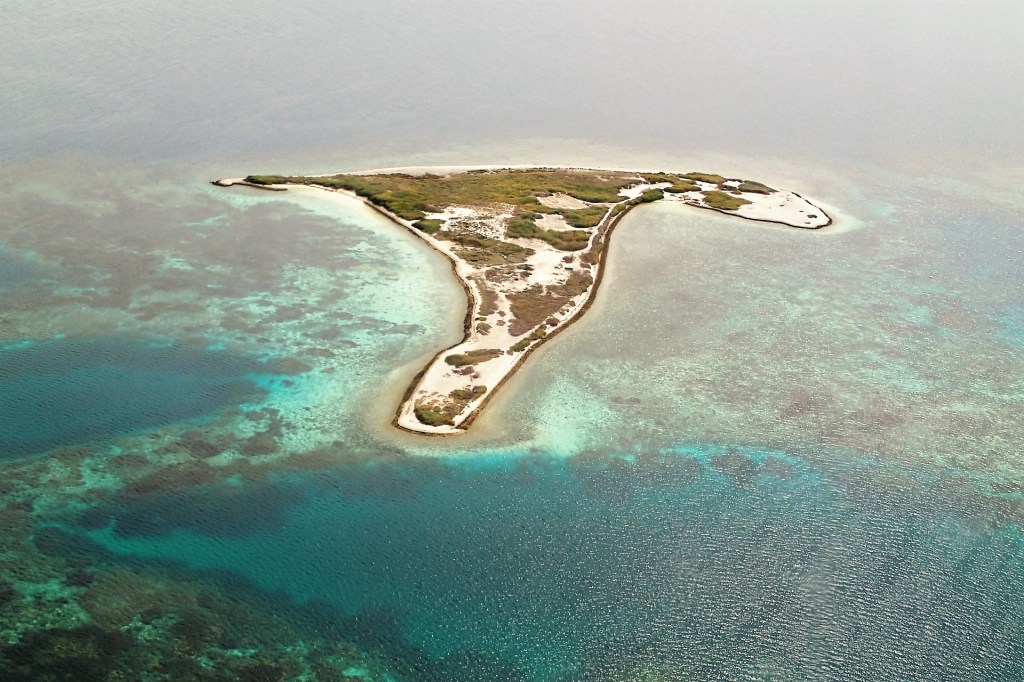
One of the islands currently under archeological exploration for Batavia shipwreck victims

Originally published by the West Australian newspaper

Before driving to Geraldton to meet a charter flight to the Abrolhos Islands I did a quick internet search on the drive from Perth. Just checking the distance and potential stops along the way to have a stretch.

In 1629, a good sailor had the remarkable ability to calculate latitude but not longitude. So sailors who could navigate were, at best, capable of working out how far up or down they were but had to guess how far across they were based on the estimated speed of their vessel.

It’s for this reason that so many ships from centuries past slammed into our coast as they flicked under the Cape of Good Hope and belted across the Indian Ocean on the Roaring 40’s and made a guess when to turn north for the Dutch East Indies.

And there I was, calling up in a matter of seconds on the internet a route map for my north bound destination.

In 1628, preparations for a greater voyage than mine in 2015 were well underway.

The Batavia had just been built. It was the most magnificent ship that the VOC, the Dutch East India Company, had ever built. It promised its owners years of delivering valuable cargo and satiating European appetites for spices, bringing with it enormous profits for an already wealthy and powerful shipping company.

My preparations for this trip had largely been based on rereading one of Western Australia’s great books, Islands of Angry Ghosts by Hugh Edwards. First published in 1966, my copy got wet at the beach many years ago and has an odd look and smell to it but that’s become part of its appeal.

I am reacquainting myself with the story of the Batavia; how it became shipwrecked off the Western Australian coast and the unfolding drama of 386 years ago which saw villains and heroes fight out a remarkable battle for survival that left over 120 men, women and children brutally murdered.

Geraldton is 424km north of Perth and is the heart of the Mid West Region. Driving with a few rest breaks in quiet seaside towns like Leeman, Jurien Bay and Dongara will get you there in about five hours or you can fly up and miss all the scenery and be there in an hour. The shared fascination my daughter Matilda and I have for the story of the Batavia and the curiosity to see the Abrolhos Islands where it all happened is why we’re sharing this adventure.

Our flight with Geraldton Air Charters is one of several available that operate from Geraldton Airport. While there are also plenty of boat charters that make the 70km journey out to the islands we had some time constraints that have us choose an option that gets us in and out in a day.

The Chief Pilot, Wendy Mann, has a busy weekend ahead of her. As well as our flight there is a local band to fly out for a party on one of the seasonally occupied islands. Easter is one of the busiest weekends on the Abrolhos and the flight out just needs to follow the long white wakes of the numerous boats making their way out to the islands from Geraldton.

Our first look at the islands are those in the Pelsaert Group, wrongly named after Commander Pelsaert of the Batavia in the belief that the ship sunk in this group of islands.

This is the most southern group of islands and we fly over numerous wreck sites including the Zeewjik, Ocean Queen, Windsor and Ben Ledi.

Further to the north is the middle group of islands in the Abrolhos, the Easter Group. Of the 122 islands in the Abrolhos around 20 have established camps for the fishing community and nearly all of these are in the Easter Group. Jetties protrude over the coral from these islands that are dotted with colourful huts that are home for fishers and their families through the crayfishing season of March to June.

We fly on and soon reach the Wallabi Group and our pilot skilfully tips the wing so that it is just above sight of Wiebbe Hayes’ stone fort on West Wallabi Island.

After Pelsaert and a number of his crew sailed the longboat to Batavia to seek help, the highest ranking official in charge was Jeronimous Cornelisz whose leadership style was keen on mutiny and piracy. He scattered the survivors to various islands under the pretence of searching for food and water.

Hayes and his soldiers found plentiful water and food on the island and constructed the fort with flat rocks as protection from the wind and later as a defence from repeated attacks by well-armed mutineers led by Cornelisz, who they managed to capture shortly before the return of Pelsaert in the rescue ship Sardam.

Wiebbe Hayes was promoted on the spot by Pelsaert and later became an officer. There is nothing else we know about this remarkable young man who designed and constructed the first European structures in Australia.

We land on East Wallabi Island, where Wiebbe Hayes and his men first landed before crossing the shallow water to West Wallabi Island. The gravel airstrip, one of three throughout the islands, was built during World War II by the RAAF and the occasional flight of Avro Ansons was stationed there with staff from the Flying Training School based at Geraldton. We walk from the aircraft to Turtle Bay, a beautiful curved stretch of white sand, strewn with an assortment of shells.

Snorkelling in Turtle Bay is amongst the best you will find in Western Australia. Over 200 coral species have been identified in the Abrolhos and I think I saw all of them. The vivid colours of the coral stay fixed as hundreds of differently coloured fish mix the palette by swimming across your view and trepang loll back and forth to the rhythm of the sea. We give our favourite coral the scientific name of Ladies Hanky; it is bright purple and looks like it has been gently draped on the reef.

We explore the shoreline, filled with stubborn oysters, grumpy crabs and a feeling of discovery around each craggy bend. Walking around the island reveals massive osprey nests and skinks with black and gold speckled scales. Elusive from our view are the tammar wallabies that on West Wallabi Island were such a valuable food source to Wiebbe Hayes and his men.

In the afternoon, we decide to go searching for flotsam and jetsam along the beach, leaving our pilot to relax on the beach.

By the time we reach the western tip of the bay I am laden down with a bag of beachcombing treasure. As we walk along we hear a cry for help.

Marooned on the beach, with hulls fixed as fast on the sand as the Batavia on the reef, are two jet skis whose riders need the combined pushing power of a dad and his daughter.

After a few minutes of rolling and cajoling we have the jet skis free of the Abrolhos grasp that seems so eager to hold vessels that touch her shores. One of the jet ski’s drivers is Australia’s Minister for Foreign Affairs, Julie Bishop.


OLYMPUS DIGITAL CAMERA
One daughter and one Australian Minister for Foreign Affairs


On a recent island adventure Matilda met Ashton Agar but, with apologies to Ashton, in the eyes of this eleven year old girl a jet skiing Minister for Foreign Affairs trumps an Australian Test and Perth Scorchers cricketer.

After more snorkelling, sorting through our beachcombing, writing some messages in the sharp, white sand and watching a seal shuffle along in the shallows, we return to our aircraft.

After the wheels lift off at the water’s edge we fly over the wreck of the Batavia and the other islands of importance to the Batavia story; Traitors Island where Pelsaert left a note to the survivors saying he would be back with a rescue ship, Beacon Island where most of the survivors of the shipwreck were killed and Long Island where the mutineers, including Cornelisz, were tried, found guilty and had their hands cut off before they were hung.

Before heading north back to Batavia, Pelsaert sailed the Sardam to the mainland where two mutineers were put ashore, most probably near Hutt River between Geraldton and Kalbarri, to make whatever life they could for themselves. Ever mindful of opportunity for the VOC, Pelsaerts last words as they sail away advises the two young men that if they find riches to make signal fires to attract future ships. They’re never heard of again.

When we contemplate the possible fate of these two men, and perhaps other shipwreck survivors, read what the English explorer George Grey recorded in his diaries. In 1839 he led an expedition through the Mid-West Region.  His observations of what he saw as completely different to other Aboriginal communities included huts with clay rendering, a series of deeply sunk wells and cultivated crops of local root vegetables.

As the plane descends to Geraldton airport late in the day I make the travellers mistake of becoming melencholy that this modern day adventure is about to end. I tell myself it’s OK. With good travel and good travel companions the adventure never really ends. You pull out all the books and stories that got you there and read them all over again. And write your own.

OLYMPUS DIGITAL CAMERA
Abrolhos Islands

The West Australian newspaper: Slipping the Surly Bonds of Earth

chris-parry-0096

Originally published by the West Australian newspaper and the writer was a guest of Skydive the Beach.

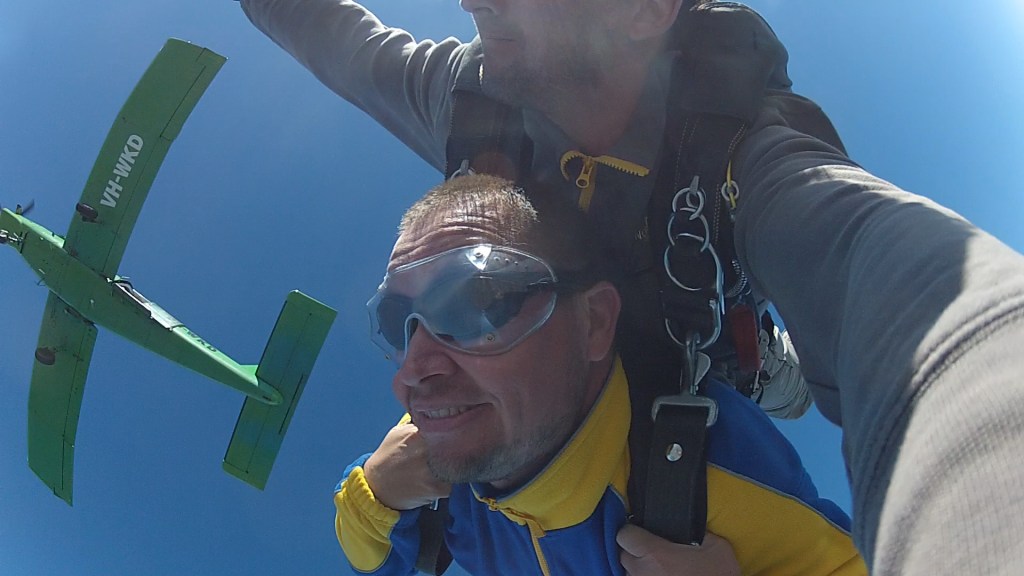
Disappointment. Now there’s a strange emotion to have in the middle of a skydive from 14,000 feet. The parachute opened, ending my freefall. I felt disappointment. It was a mixed emotion to be sure. I would have been more disappointed if it hadn’t opened.

The freefall had been an explosion of enjoyment for a full minute. I’d smiled for the Go-Pro, whooped for joy and as my cheeks were being blasted I looked skyward, drenched my face in the sun and quoted some lines from one of the most beautiful poems ever written, High Flight, by John Magee.

Oh! I have slipped the surly bonds of Earth…

I’ve topped the wind-swept heights with easy grace…

Up, up the long, delirious, burning blue…

Put out my hand, and touched the face of God…

In 1969, astronaut Michael Collins had a copy of this poem on the Apollo 11 mission and looking down on Earth had remarked that if Magee could write such a poem from the cockpit of a Spitfire, imagine what he would have written from a rocket ship in space.

John Macgee joined the Royal Air Force in June 1941, wrote High Flight in August and was killed in December. He was 19.

As I swung in my harness, linked in an embrace of clips and straps to my tandem partner Dan, I looked around. We were high enough that there was curvature to the horizon and I could see Penguin, Garden and Rottnest Islands just about as they appear on a map, from a top down view rather than from the view from shore.

The beautiful blue sky, the ‘delirious, burning, blue’ as Magee described it, contrasted lightly against the darker blue of Cockburn Sound, Shoalwater Bay, Safety Bay and the vastness of the Indian Ocean beyond.

Even the industry of Cockburn Sound looked spectacular. Silver networks of pipes, tanks and smokestacks with the black hulls of ships waiting offshore to come and collect whatever it is they’re refining, smelting and storing.

When I was a kid in the 1970’s, Cockburn Sound was a mess. I was lucky to spend school holidays by the sea. A little house in Shoalwater Bay was home to my family every school holidays and from the family runabout, the Red Witch, we would pull in King George whiting and revel in the silver flash in the water that would announce the arrival of the herring. I was also lucky enough to have a dinghy with a 1942 Seagull outboard engine which was responsible for disturbing the sleep of the local sea lion population for many years. We spent most of our time in Shoalwater Bay and Safety Bay because of the reputation Rockingham had for polluted waters.

The pollution of Cockburn Sound coupled with the rise of the bogun on land led to Rockingham developing a reputation it’s only recently shrugged off. Over the past few years, from a travel perspective, there has been a surge of interest in this area that has largely been bypassed by southern travellers for Mandurah and the communities further south.

At the beginning of 2015, Gemma Nisbet wrote in West Travel about Manuel Towers, a B&B in Shoalwater Bay. Gemma mentioned that it’s, ‘people from the city looking for a break that’s not far away’ who are coming to stay.   What a change has come over Rockingham! There have also been recent travel stories about Penguin Island, the local kayaking opportunities, swimming with dolphins, the new jetpack riding adventure and a beachfront promenade of dining opportunities that is hard to beat on the west coast.

Entering from above into this new world is Skydive Rockingham, an adventure tourism company that is catering to adrenalin junkies as old as 91 and as young as 12. On my jump, 13 year old Brandon-Lee had been presented that morning, as a surprise birthday present, the news that he was going skydiving. I would have loved to have got a wonderful quote from Brandon-Lee about how he felt about the experience but like you have to be when you’re a 13 year old boy, it’s all about actions not words. He didn’t say much but he can say he jumped out of an aeroplane.

Skydive Rockingham started dropping out of the sky over Rockingham in 2013 and have been frequent fallers above York (Skydive York) since 1996.

Arriving at the office on the foreshore at 0630 the level of staff enthusiasm was closely matched by the level of professionalism. While all the while smiling and asking how I was feeling, the paperwork was being checked and signed, scales confirmed I wasn’t lying about my declared weight and fitment of the harness and a firm introductory handshake with Dan were all accomplished without fuss.

“Do you have a nickname Dan? Diver Dan perhaps?”

“Nup. Just Dan.”

“Got it.”

After the short drive to Jandakot airport there’s no mucking about, we walk out to the aircraft which I’m told is an old crop duster from New Zealand. Less use of the word ‘old’ in the description of the plane would have been appreciated. Expecting to see an aircraft like Dusty in the movie ‘Planes’ I’m surprised to see something that looks more like a big green bean than an aeroplane. Never speak ill of a plane though, you don’t know what bigger plane it might be related to. Suffice to say, it was very narrow and I was already looking forward to getting out of it.

Dan, sitting behind me, starts clipping buckles and pulling straps and pushing me around like a hairdresser; tipping my head over to the side, pulling it up, pushing it down. As I feel him pulling straps I can’t help thinking of loads on my car or trailer that I always seem to loosen accidently as I try and tighten them.

I was about to ask him to shave the back of my neck when all of a sudden the two blokes in front of me just disappeared, they’d jumped out. Gone. No scream. No final questions to determine final agreement to embark at 9.8 metres per second per second towards the ground below.

Suddenly, unlike a hairdresser, Dan is pushing me towards the door. He reminds me to put my arms across my chest before exiting the aircraft. The funny thing is, I’m already outside the aircraft. He’s still inside with me stuck on the front of him.

Suddenly the plane isn’t there anymore.

Freefalling, or skydiving, only really became achievable once aircraft were able to operate at a high enough ceiling to allow time for falling before the deployment of the parachute. While jumping out of aircraft with parachutes and cloth buckets (not recommended) has been going on since not long after the Wright brothers first took to the skies, it wasn’t until the end of World War II that skydiving became a pursuit for adventure. Surplus aircraft and parachutes become available and ex-military parachutists wanted to do it for fun rather than being shot at as they descended.

As I’m falling, I’m doing what Dan has taught me, my arms are held out to keep my position stable. There’s not much else I have to do but enjoy the ride. I’m confident that Dan is checking his wrist mounted altimeter. I could tell him with a fair degree of certainty that we’re falling but I’m not aware at the time that our speed is closing quickly on 200 kilometres per hour. My car can’t do that.

After the parachute has deployed Dan grips my hand and tells me what a great job I’ve done. I’ll take praise most anywhere, most anytime but over the skies of Rockingham I found this a bit too difficult to take. Coming from the bloke who has literally shouldered the responsibility for our lives, it’s a great gesture to congratulate me but all I’ve done is grin my face until it hurt and quote the guts out of a 75 year old poem.

I’m given the opportunity to take the controls and I pull down hard on the right to begin our slow spiral towards the beach below. I focus on three dots below that I know are my family. I knew where they would be standing and I knew the colours of their clothing. With every second I drop closer to them. Dan snaps me to attention and reminds me to lift my legs up so that his feet touch down on the sand first. I stuff up. I don’t quite get my legs up high enough and as we hit the sand we end up looking like a sneaky couple seeking romance in the dunes.

As Dan unclips me from his harness our tethered relationship is at an end. As I leave his arms I am back in the arms of my family. I introduce them to Dan like he is God himself.

“Family, this is DAN.”

Next to the Skydive Rockingham office is the perfect venue to debrief the family, the well named, ‘Coffee by the Bay”. With fresh, warm muffins and a great coffee I regale the family and field their questions. The staff in the café have seen it all before. They’ve heard the descriptions and seen coffee cups go flying as gesticulating arms get out of control in the story telling moment.

Well I’m having my moment.

“So, kids, what did you think when you saw me coming in to land?”

chris-parry-0098


Borneo – Go for the past, stay for the present


OLYMPUS DIGITAL CAMERA

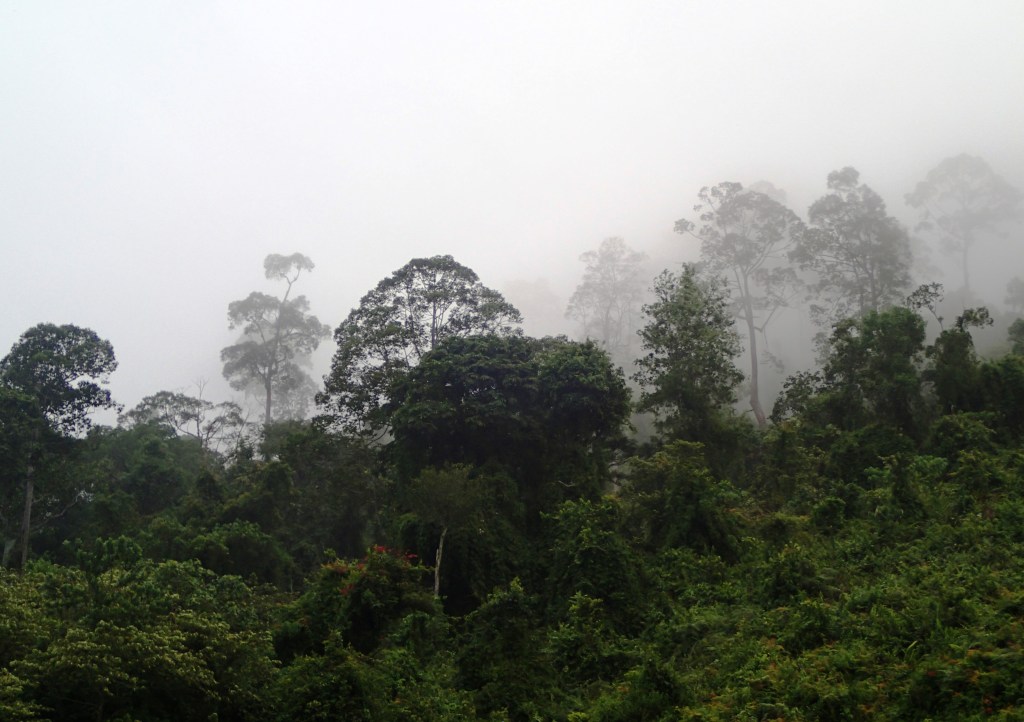
A jungle so hot and humid I couldn’t wear my wraparound sunglasses because the heat and humidity were so high that the glasses had formed their own terrarium in front of my eyes, constantly fogged and dripping.

A jungle so dense that the overhead canopy blocks light from reaching the jungle floor.

A jungle so enveloping that it was described by World War II Australian and British Prisoners of War (POWs) as the ‘green cage’.

It’s for the story of these POWs that I am here in Sabah on the island of Borneo.

I thought of that experience over a week later when I was in Kota Kinabalu, the capital of Sabah, enjoying a gorgeous scoop of pandan ice-cream. I was with Ervina Masduki from the Hyatt Regency Hotel, enjoying the comfort of luxury accommodation at the end of a gruelling trek on both body and mind.

Ervina knew about the trek and some of the history. She has seen trekkers, nearly all of them Australians, stagger into the air-conditioned lobby of the Hyatt, muddied boots and trekking poles making a mess of the polished, tiled floor.

It was in 1942 that Australian and British Prisoners of War (POW) were transferred to Sandakan from Singapore. They were there to build an airfield but by 1945 it was clear that as the Allies advanced, the airfield would never be operational. Fearful of an invasion at Sandakan and not prepared to release their prisoners, the Japanese forced them to march to Ranau, at the foot of Mount Kinabalu, a distance of 240 kilometres.

Over three marches, the horrific conditions for those who remained at Sandakan camp and those who made it to Ranau, only 6 survived from a total of 2434. The final 15 were killed on 27 August 1945, 12 days after the war had ended.

Those that died on the track weren’t to know it but it had been cut by locals who had been instructed by the Japanese to make it. Thinking it must be for Japanese soldiers, the locals made the track as difficult as possible; up and over difficult mountains and avoiding flat ground, rivers and villages where food could easily be obtained.

When locals saw the POWs on the track they were distraught and many risked their lives by passing food whenever possible to the men as they walked past them.

For those who want to trek, the terrain will test you physically and mentally. For those who want to learn more about the Sandakan story, you will also be tested physically and mentally. There are opportunities to visit memorial sites, listen to locals and walk at your own pace in the footsteps of men who, for the most, didn’t survive.

The trek is designed to allow participants to learn and understand not just the loss of life to POWs but also recognise the sacrifice and bravery of many local Sabahans who provided assistance anyway they could.

Before the trek commences in Sandakan we visit the English Tea House for dinner. This colonial inspired restaurant sits high on the hill overlooking Sandakan town and harbour. Choosing to sit outside on the grassed terrace I adopt the atmosphere and sip a Gin and Tonic while reclining in a wicker lounge. Clink. It’s the gentle sound of wood on wood. I watch as others in my group play a game of croquet while being attended by a waiter with a drinks cart.

I turn away and focus my attention down below, past the lights of Sandakan town and out to the darkness of Sandakan Bay. It was from out there that the POWs had slowly steamed into the harbour on the dilapidated steamship Ubi Maru in July 1942. Just months earlier the Japanese had taken possession of British North Borneo after the fall of Singapore.

The next day we visit St Michaels and All Angels Church. When the POWs arrived in Sandakan in 1942, many spent the night in the church before being marched off to the camp. It’s a beautiful stone church that was one of the few buildings to survive the air raids in World War II.

In recent years the addition of the stained glass Windows of Remembrance by Australian stained glass artist Philip Handel has added a remarkable tribute to the Sandakan story. The windows show St Peter, under sentence of death. The windows are abundant with representations of flora, including Australian Bottlebrush, Banksia and Everlastings, British Shamrocks, Thistles, Bluebells and Roses and Borneo Orchids, Cordylines, Hibiscus and Vines.

The main window consists of 2,500 pieces – one piece for each POW sent to Sandakan. Each piece of glass was fired up to three times in Philip Handels own kiln.

A small area at the front of the church commemorates the POWs. There is a banner with the following words from Lord Byron;

“For there are deeds that should not pass away, and names that must not be forgotten.”

After St Michaels, we visit the Sandakan Memorial Park. Evidence of the past is here in the present. The boiler and a train locomotive alternator that was part of an intricate process to generate electricity sit upright and defy all attempts by the rust to topple over. Nearby, the Ruston Bucyrus excavator that the Japanese thought would speed up the job of building the airfield sits with its bucket resting on the ground. It’s doing about as much work as it did then thanks to some subtle acts of sabotage by the POWs.

A little further on are the concrete remains of the Japanese kitchen and quartermaster’s store. One of the six survivors, Keith Botterill described what it was like:

“The cooks would feed the dogs with swill, the kitchen rubbish. They’d pour it in this trough. We’d all hit together, the dogs and all of us. If you’ve ever tried to pull a bone out a starving dogs mouth you’ll know what it is like. The dog would fasten onto your wrist to take the bone off you and you’d still be putting the bone in your mouth.”

There is also evidence on a hill, now populated with pine trees, of the trenches that contained many of the bodies of POWs who died at Sandakan.

The last prisoner alive at Sandakan was Private John Skinner from Tenterfield in New South Wales. He was beheaded on the 15 August 1945, the day Japan announced its unconditional surrender.

As we leave the park there are children enjoying trying to catch dragonflies that flit among some lilies. Newly married couples position themselves in front of flowering gardens for photos and joggers make their way around the various tracks. It’s a peaceful, happy place that sits on ground with a tragic past. So long as we don’t forget the past, I think it’s wonderful that the land has found new life that is maintained and nourished by the people who visit it.

The trek begins early the next morning. There’s no way of easing us into it. This is jungle that is impenetrable without the sharp parang of our guides. This is jungle that hasn’t been trekked for nearly 8 months and in that time has completely regrown.

It was one of the great problems for the War Graves Commission when they returned to retrieve the bodies of the fallen after the war. The jungle reclaims itself so quickly that even with the experience of locals who had walked the track and with Bill Sticpewich, one of the six survivors, it was difficult to determine where the original track was.

There are steep short ascents, steep long ascents and descents that are sometimes easier to slide down than walk (well, that’s what I kept telling everybody). There is mud, there are rocks and there are massive trees that have fallen across your path and depending on your dimensions you need to make a decision how you’re going to go over, or sometimes under.

There are water crossings and there is walking in rivers, sometimes above knee height.

There are one-at-a-time suspension bridges that look and feel like they should be in an Indiana Jones movie.

There are leeches. There are ticks.

At times there are flying lizards, rhinoceros beetles and the best named creature in the world, the macrolyristes imperator, or giant long-horned grasshopper.

Each evening is spent debriefing the days walk and then briefing everyone on the next day. Everyone is keen to know how many water crossings there will be. More than ascents and descents, it’s the fuss of water crossings that cause irritation. The process of ensuring your feet are dry when you put your socks and boots back on is a routine you have to get right. If you don’t, your damp feet will easily cause blisters.

Most evenings are fairly short. After dinner there’s gear to be sorted for the next days walk, bruises and scrapes to be attended to, then a restful sleep.

Mid trek, we stay in a bamboo long house at the Sabah Tea Plantation. With each step sending a domino effect of creaking through the long house it’s a difficult late night walk to the toilet.

Along the way each day, we stop to talk about the lives of Australian POWs who are known to have died at particular locations on the track. We talk about their pre-war lives. We even sing for those who it’s known loved a bit of country music.

Our trek finishes at Ranau and we conduct a ceremony at the Kundasang War Memorial. We search the memorial walls for the names we have learnt, we look up at Mount Kinabalu.

The locals believe that Mount Kinabalu shrouds the souls of the dead while for the POWs they came to hate the ever present mountain that was always there, watching them from above.

As I look at Mount Kinabalu’s long, jagged peak I am proud to have reached the end of this trek and even prouder to know more about a story that unfortunately remains unknown to most.

Before I walk away I take a look out to the jungle past Ranau and imagine Keith Botterill hiding in the jungle with Nelson Short after escaping from the final camp not far from here. He hears a trampling on the undergrowth, big heavy footsteps that don’t mind revealing their presence. He thinks to himself that he’s had it, the Japanese soldiers have found him. His head slumps down as the footsteps stop in front of him. He looks at the boots and something is not right. Over two and a half years of captivity have taught him what a Japanese soldiers boot looks like. He looks up, and up, and up. It’s a great big Australian soldier, Lofty Hodges, who looks at him and his mate and says, “How ya going boys?” They were safe. They had survived.

While our trekking is complete, our journey is far from over. We now need to travel to the Labuan War Cemetery on Labuan Island where the graves of the Australian and British Prisoners of War from Sandakan are to be found.

Labuan Island is a territory of Malaysia off the western coast of Borneo and to the south of Kota Kinabalu, the capital of Sabah. It’s accessed easily by plane or ferry or if you’re slightly more adventurous, by speed boat. Electing the speed boat route takes 20 minutes from the mainland and you motor past islands, shipwrecks and red hulled offshore drilling ships waiting for their next job.

Our accommodation on the island is at the Dorsett Grand Labuan. I arrive before our group and I soon find myself standing in the lobby amidst a crew of Dorsett Grand Labuan staff. They are about to perform their welcome song for my crew.

I’ve been pulled into the group and handed the song sheet which is in English and Bahasa Malay. I keep up reasonably well even though I don’t know the tune and speak very limited and badly pronounced Bahasa Malay.

The one image I will always have of this experience is looking up from my song sheet across at the singers alongside me as they belt out the line, “We welcome you to Dorsett Labuan!” and they’re singing with smiles on their faces. They’re not embarrassed and there’s no reluctance to show their pride and enthusiasm for their hotel.

My group of trekkers are spellbound. Many are well travelled and it’s the best greeting any of them have received in a hotel.

The Dorsett Grand Labuan is the only five star hotel on the island and just minutes from the airport, waterfront and the busy town centre. The hotel receives regular awards for its customer service and with their singing staff I think they also have a good chance of winning Malaysia’s Got Talent.

While most tourists come for the shopping there is also a very good museum with free entry located five minutes’ walk from the hotel. The colourful history and cultural themes of Labuan is well documented with many interesting and interpretive displays.

We’ve come to Labuan to bind this trek together. Every step we’ve taken and the stories we have talked about have led us to Labuan War Cemetery, the final resting place for the few whose remains are known and the many who are ‘Known Unto God’.

As we walk the lines of memorial graves we think about the Australian and British Prisoners of War who perished at Sandakan and Ranau and on the three death marches in 1945.

We stand in front of Richard Murray’s grave. He stepped forward from a line of men and said he alone stole rice, knowing he would be killed. Stealing rice was a capital offence and he sacrificed his life so that others may live.

We stand in front of Captain John Oakeshott’s grave, a doctor who had the opportunity to escape but decided to stay with the sick. He was one of those killed 12 days after the war had ended.

As a fighter jet from the Royal Malaysian Air Force flies over the Cross of Sacrifice at the cemetery we also remember the sacrifice of so many local people who were killed during World War II and the bravery of those who provided assistance to the prisoners.

It is a beautiful war cemetery, well maintained by Labuan authorities and staff are on site Monday to Friday from 7am to 4:30pm.

While the trek has been physically exhausting the walk through Labuan War Cemetery has been emotionally exhausting. Before our departure to Kota Kinabalu on the mainland, our group is quiet. For each us, in our own way, we find the space to reflect on our journey. I’ve cried during this trek but for now I am smiling.

As I remember the staff who sang to us yesterday and the kids playing at Sandakan Memorial Park right at the beginning of this journey, I know I have to come back and continue to share this experience with others, for the history of the past and for the friendships of the future.

Far from the wartime horror of what was then known as British North Borneo, the Malaysian state of Sabah is beautiful and the people are friendly and polite. They may laugh at my use of Bahasa Malay words I’ve picked up along the way but they laugh not to make fun but to make friends.

The island of Borneo, of which Sabah is the northern most region, has been described as the ‘Land Below the Wind’, taken from the title of a book, first published in 1939 and written by Agnes Keith who lived in Sandakan. It’s a description that tells you where Borneo is but not what it is. It tells you Borneo is below the typhoon belt of the South China Sea but doesn’t describe the near impenetrable jungle that blocks light from the jungle floor. It doesn’t describe the vast network of rivers that twist through deep rainforest valleys and gorges.

There’s something else missing from the description, the ‘Land Below the Wind’. It doesn’t make you smile. Despite the difficulty of the trek, despite being far from home and tending to blisters and an aching back you can’t take the smile off my face. The challenge this land presents, the locals you meet and the opportunity to be in real jungle has given me a desperate longing to come back.

Weeks later, I pull on my boots to start preparing for another trek in another part of the world. I cross the laces and pull on them sharply and a small cloud of dust puffs up and drifts over my face.

It is the smell of my footsteps in a place now far away. It is the smell of the jungle, it is the smell of leaves both fresh and fallen, it is the smell of my emotions, often faltering and falling. I am home and I weep that they, the truly brave and fallen, are not.

Chris Parry Writes For Us

Chris Parry Writes For Us, the website, has become a requirement.  It’s a business that is about writing for you and writing for me.  Lots of what I post will be just some of what I have had published.

Most of what I post will be related to my travel writing but that’s really just a part of what I am doing for clients.  If it needs to be written, I can do it.

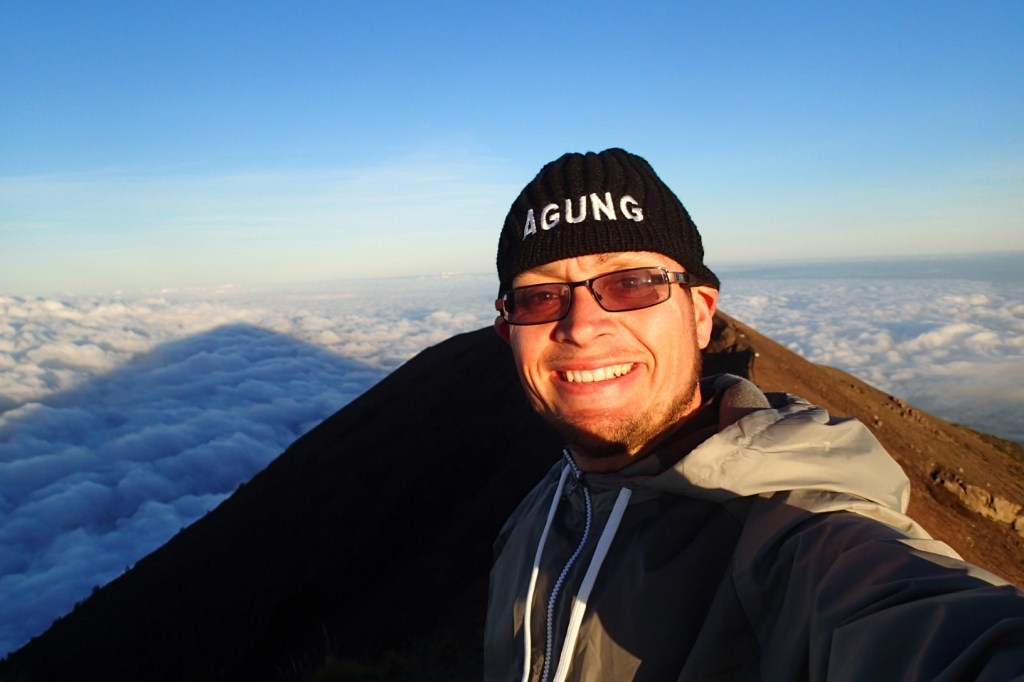
I will post articles I’ve had published or describe interviews I’ve done related to my travels.  The picture of the boy in the beanie on top of a mountain is me. It’s me!  It’s me on Mount Agung in Bali in 2013 and it’s where all this started, but that’s a story for another day, another post.

I look forward to entertaining you, informing you and being interesting.

Please don’t recline your seat.

The West Australian newspaper: Wildlife Interests Put At Risk …By Us

Originally published by the West Australian and also by the United Nations Indian Ocean South East Asian Marine Turtle Memorandum of Understanding.

I enjoy travelling for the experiences I give my children. To see them wide eyed and able to have sensory encounters is remarkable for the influence it has on their confidence with animals, their imagination when drawing, telling stories and their understanding of the world around them.

I am torn now. I don’t even want them to read this article. Our most recent animal experience may not have been in the best interests of the animal. Our most recent animal experience may not have been in the best interests of the participants, including my son and daughter who received a certificate to acknowledge their achievement.

They had very proudly and reverently each released a baby turtle.

After recently returning from an overseas holiday I had some niggling curiosity, not yet concern, about a turtle release we had participated in.

It’s not important where we did the release, I don’t want to shine a light on the resort or even the country. There are numerous countries world-wide that are offering tourists the opportunity to release a turtle from a beach.

I was curious about what I had been brought up to believe about turtles; that the mature females return to the beach where they were hatched to lay their eggs. If this beach was particularly rocky, or strewn with drunken tourists like some turtle release beaches are, what chance was there of a fully grown female turtle returning to this beach and successfully laying her eggs and what were the chances of survival for any hatchlings?

I mentioned earlier that I don’t want to shine a light on a particular resort or country. I have to make my point by shining a light somewhere though. Let’s start with myself, a tourist.

Over the years my family has experienced close encounters with orangutans, elephants, bears, lions, tigers and even attended a piranha feeding where my children were ushered to the front and invited to pour in a container of live goldfish for the piranha to shred before our eyes, for our …eco education.

I am laying myself wide open by declaring what my family has participated in. I’m not calling for a campaign to save the animals by not participating in eco-tourism activities. I’m not saying all experiences are wrong. I’m not saying eco-experiences can’t have great worth for knowledge, understanding and appreciation for life itself.

I am saying that we need to understand that what we are doing, in some instances, may be wrong.

I have been able to contact marine biologists specialising in turtles in Australia and around the world. I’m writing this article because it was at this point that my curiosity became concern.

I spoke with Dr Colin Limpus, the Chief Scientist for the Threatened Species Unit at the Department of Environment and Heritage Protection in Queensland.

Dr Limpus explained that these release programs contravene the biological rule of operation for hatchling turtles.

There can’t be many people who haven’t seen a wildlife documentary showing the plight of little turtles scuttling to the sea. The narrator’s voice informs us of the dreadful survival rate which always seems to be something like, “8 out of 10 hatchlings won’t make it to the water’s edge.” We flinch as various predators pluck them off the sand.

For many cultures, turtles and their eggs are traditional food. As suitable nesting areas continue to decrease this has created an egg poaching industry and black market for turtle eggs and meat. Removing the eggs to a hatchery is certainly reducing the poaching and black market activity.

One turtle release program website says that in the past two years they have taken 50,000 eggs from beach nests and have an 80% hatch and release rate.

So we think that by taking the eggs to a hatchery and releasing the hatchlings at the water’s edge, free from poaching and predation, that we are definitely increasing their rate of survival. It’s what makes this experience feel wonderful. We believe we are helping!

I think we’re wrong.

In my discussion with Dr Limpus he tells me how the hatchling comes out of the nest with an internalised yolk sack that it feeds off for energy over the first three or so days of its life. It’s like an inbuilt can of Red Bull, powering the little turtle down the beach and then swimming nonstop out to sea, maybe as far as 80km before it hits the currents, where it drifts and feeds on jellyfish and other little bits and pieces it finds on the seas highways.

With a scheduled tourist activity like releasing a turtle, the hatchlings are held for a few days to build up enough numbers for the booked participants. By the time they are released the effects of their little Red Bull have worn off and they no longer have the energy to swim the required distance offshore. This means they tend to stay close inshore where they are not exposed to the food they require and may be at increased risk of predation by fish and birds.

By now I was in touch with marine turtle experts from around the world, all responding to my curiosity with photos, essays and opinions.

From the University College of Cork in Ireland, Emeritus Professor John Davenport supported Dr Limpus’ comments, adding that his worldwide marine turtle studies show that most ecotourism interactions with turtles are poor and actually exploit them. Positively, he added that conservation education for children usually leads children to remain conservation conscious for life.

Dr Mark Hamann from James Cook University says that as a parent he understands the conflict between animal welfare, ecological benefit and education. Professor Hamann sees that clearly there are ecological concerns but rarely have the educational benefits of this interaction been examined.

For the Indian Ocean, there is a South-East Asian Marine Turtle Memorandum of Understanding. This is an intergovernmental agreement that aims to protect marine turtles and monitor their habitats.

The Coordinator in Thailand for this group, Douglas Hykle, described to me how a better starting point for our awareness and contribution to the survival of turtles should be with an activity that doesn’t depart from something that occurs naturally.

This is because any change is less likely to be as good as what nature intended. Maybe we should be keeping the nests intact and sitting quietly in our huddled masses as we watch the hatchlings emerge and begin their trek to the water.

My network of marine turtle experts all offered comments to a similar affect; if we teach our children to question and learn from these types of experiences then long term conservation might be in a better place. The resort where my family participated in a turtle release has a strong community focus, employing local people and supporting local conservation programs.  Just like the experts I’ve spoken to, the resort believes in the importance of children having educational conservation experiences.

The relationship we all have with wildlife has come a long way. We now all agree that you can’t have a circus anymore with bears on bikes and whips cracking to goad lions to jump through fiery hoops.

We need to learn more about how we can best have an experience with a baby turtle that is meaningful to us, particularly our children, but more importantly doesn’t upset the balance of a process that’s been around a lot longer than we have.