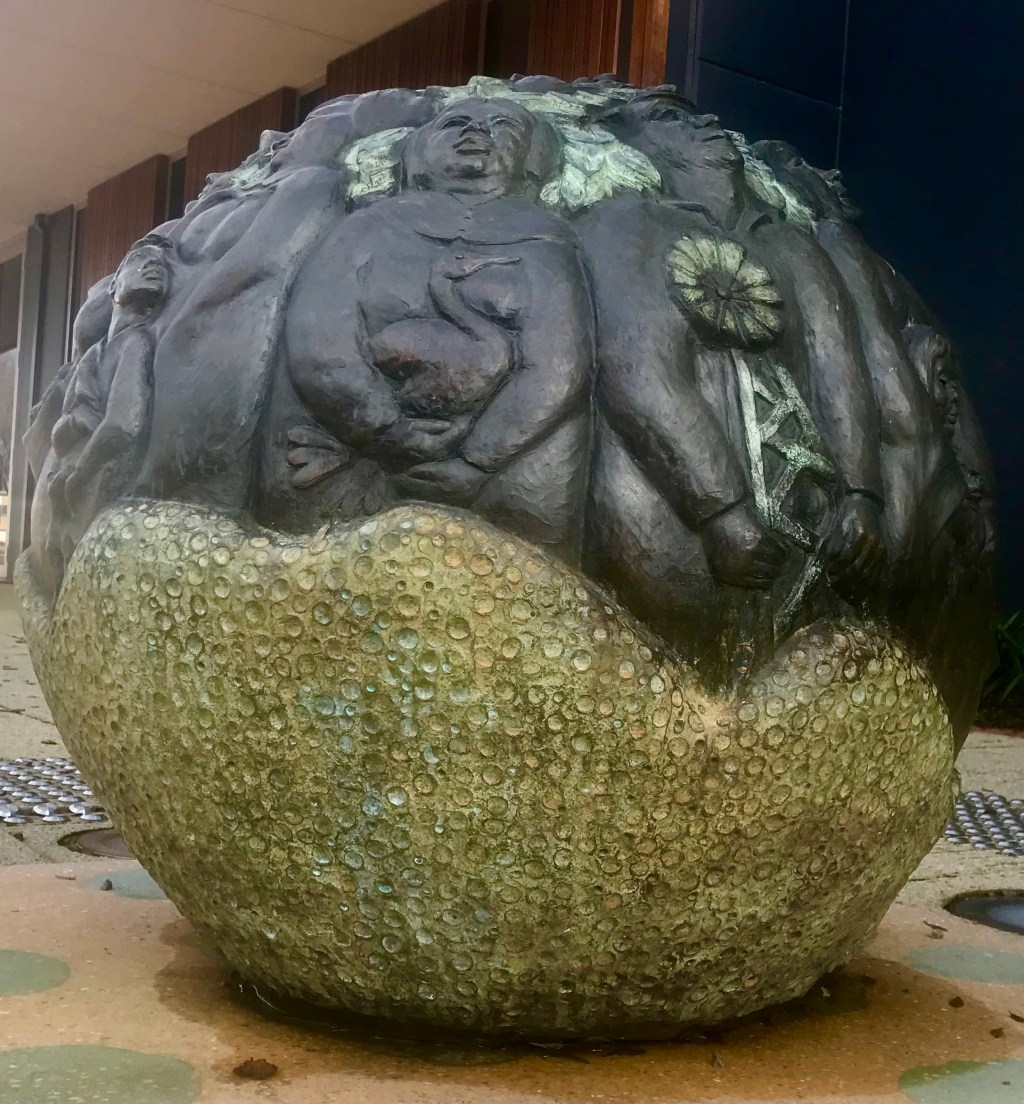
ABC Perth Saturday Breakfast: Why Gosnells is like peeling an orange.

Gosnells … like peeling an orange, the segments of a vibrant and historic community are revealed.

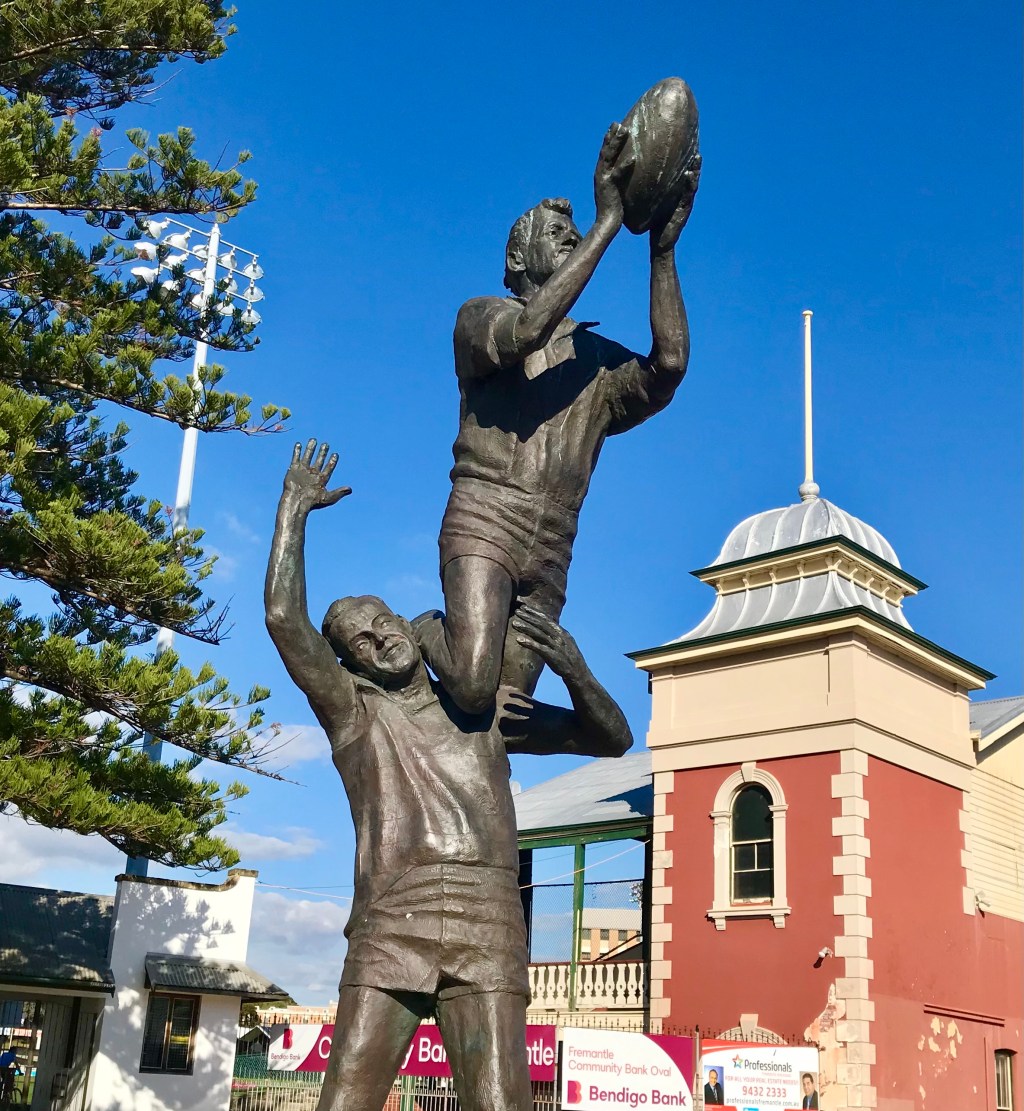
There is a public art sculpture in the heart of Gosnells.  The heart of Gosnells is very busy and as traffic belts along Albany Highway and the shops on its edges clamour for your attention, stop and look at this sculpture and watch it reveal itself and in so doing, reveal the suburb it represents.

It’s called ‘The Pioneers – The Peeled Orange’, and as the orange is peeled away the segments reveal the people who worked in the orchards which were so abundant in the area upon settlement as part of the Swan River Colony.

It’s an accurate reflection of the workers in the orchard but it’s also an accurate reflection of the many segments in Gosnells that come together to make it whole. 

For Hidden Treasures let’s explore another of our suburbs that get driven through quickly and see if we can find some reasons to stop a while in a community that is enjoying the fruit of its labours in creating new spaces and places to sit a while.

Let’s start with a brisk walk through the Ellis Brook Valley Reserve where you’ll find yourself in the richest, most diverse wildflower location in the metropolitan area.  There are a range of wilderness trails of varying difficulty and the Easy Walk Trail has very good wheelchair access and a great view of Perth.  Just make sure you take enough water as there aren’t any water facilities in the Reserve.

The Mills Park Nature Play Space is the only play space in Perth where if a child, parent or carer, falls off the log path you’ll fall into wetlands.  It’s a remarkable space that has a slightly elevated pathway over a wetland that is full of paperbark trees.  With flying foxes, opportunities to make cubbies and lots of ways to get really dirty it’s a park with a real sense of adventure and activity.

Mills Park Nature Play … enjoy falling in!

For a bit of settler history and a great look at some old agricultural machinery and vintage motor cars have a look at the Wilkinson Homestead. When I was out there, local volunteers were dressed for the part for a visiting school group and the homestead, built in 1912, is fitted out with period furniture and displays that reflect the rural settler life of Gosnells.  There’s even an outside dunny to scare the kids.

Wilkinson Homestead

With the hustle and bustle of Albany Highway giving us most of our impression of Gosnells you might be surprised to learn there is a very quiet and most splendid wetland that is home and refuge to waterbirds, frogs and turtles.

The Mary Carroll Wetlands has walking trails alongside the two lake systems and is ringed by pristine bushland. It’s a great spot to enjoy a bit of nature and you can get involved with its protection by joining the Friends of Mary Carroll Wetlands and do some seed collection and revegetation activities.

Mary Carroll Wetlands

The Centennial Pioneer Park sits between the Gosnells cbd and the Canning River, which is flowing like the Avon at the moment. 

This park is overlooked by the impressive Spinning a Yarn sculpture and Aboriginal mosaic mural and the park features a tree top walk and an amphitheatre and playground. It is also where the naughty and noisy birds from the peaceful Mary Carroll wetlands are sent to. These are the birds who love to sing loudly and over the top of every other bird.

Hidden Treasures loves urban art. In the heart of Gosnells is a self-guided 40-minute walking tour of public artworks, including murals in little laneways and sculptures on street corners and overlooking the Canning River.  Two of my favourites aren’t the biggest on the trail but they’re the two that made me smile the most, and pull out my camera. 

The Peeled Orange

Firstly, the Peeled Orange, that we’ve already mentioned, is a tip of the hat to the historical European settlement days when orange groves were seen throughout the area.  The sculpture shows different people in the segments of the orange, including the farmer, his wife and the labourers who worked in the orchards.  My second favourite is just a couple of big strides down the street where you’ll find a possum, turtle and lizard peeking from underneath a manhole cover and about to make a run for it along the footpath.  It’s about the hope of the community for nature to live within the community.

The Gosnells Railway Markets are a regular weekend market so there’s no need to look up when they’re on next.  There’s a steam train and diesel train to look at and lots of stalls selling local produce, including cheesecakes and cookies and a great stall that is full of one of life’s essentials, Russian dolls. 

Lots of colour to be found at the Gosnells Markets

Now is probably a good time to duck into the most prominent building in Gosnells and home to lots of local events and celebrations or just a night out for good counter meal.  The Gosnells Hotel is the only pub I’ve found in Perth that does a brisket sandwich.  Brisket.  It’s meat like my Nana used to cook and it’s glorious.  

Inside … there is a brisket sandwich. Brisket.

Do you like a bit of fright in your night?  I don’t even like my motion sensor light going on outside. The Gosnells Ghost Walk is a tour that requires sturdy shoes and bravery. Now a little disclaimer, I haven’t done the tour yet but I’ve heard all about it from Miranda at the City of Gosnells who coordinates it and I’m booked and ready to go when they commence their next season under a full moon from February to April next year.

It’s a short season, the spirits can get a bit restless and it’s getting harder to find supernatural insurance cover.  With local support and paranormal participants, the tour explores the old timber mill and railway bridge and discovers deadly love triangles.

Are you up for the Gosnells Ghost Walk?

Gosnells is a hidden treasure because it’s about discovering wetlands and flowing rivers you didn’t know were there, discovering tree top walks and singing birds, finding a brisket sandwich and finding culture and history through public art, historic homesteads and night time walks to encounter the spirits from our colonial past.

ABC Perth Saturday Breakfast: Mr McGregor in our suburbs … it’s actually not scary at all.

Outside Broadcast, live from City Farm

Community gardens are thriving in our urban areas.  Some are inspired by a commercial opportunity to support a business, some are designed to teach kids how to get dirt under their fingernails and others are designed to be opportunities to make connections with people in your community who just want to grow some food or make better use of unused spaces.

The ABC is currently running a wonderful campaign to provide new books for kids who may never have held a new book.  I’m very lucky that growing up I was given many new books and one of my favourites was Peter Rabbit. 

As a kid in a country town I was a lot like Peter, sneaking into backyards with fig, loquat, and mulberry trees, brushing away the fruit flies for a sneaky snack.

There were some people though who didn’t like kids pinching their fruit and were after me to put me in a pie just like nasty Mr McGregor wanted to do with Peter. Those illustrations in Peter Rabbit that show him being chased through the neat rows of vegetables and little tool sheds remind me very much of my childhood.

Throughout Perth there are some amazing and inspiring examples of commercial gardens, local government coordinated gardens and community gardens organised by and for the community.

Forget Broome Time, come and enjoy some City Farm time.  Within a half hectare of space are rows of little plants, little sheds, wandering chickens and free range kids and opportunities to get noisy and dirty or just quietly wander around with your hands behind your back, leaning in occasionally to study the leaves of a plant and think about what you could do at home with a packet of seeds.

Overlooked by the urban world, community gardens are still thriving

I love the constant change of City Farm. Every time you come in here it’s different.  Things have grown or been pulled out to grow new things.  The markets can have odd shaped vegetables and flour bag pants and the following weekend have bee workshops and odd shaped fruit. 

It’s not hippy but it is hip. I feel like I can let Tom wander off on his own and he’s not going to come back dressed like John Butler but he may have a story to tell about a chicken he chased, or how he wants to grow some oddly shaped vegetables at home.

Further south you’ll find a garden you’re allowed to wander and explore called the Coogee Common.  It’s run by Scott and his gardens supply the restaurant that’s part of the premises, the old Coogee Hotel. Not only will you see the staff wandering around the garden snipping and picking bits and pieces for your brunch or lunch but you can get a tour with Scott once he’s finished making your meal.

Kale stalks at Coogee Common (according to Jo Trilling we blanch them)

He helped Tom overcome his fear of bees by showing him their hives, nestled in amongst a row of olive trees and rosemary bushes.  He showed us barrels of olives, stalks of kale, the fruit of the prickly pear and so many rows of vegetables and piles of little terracotta pots that once again I started having visions of Peter Rabbit running for his life.

Let’s get up to North Perth for a trio of community garden experiences.  Let’s start with the Kyilla Community Farmers Market.  Every Saturday morning this little market sets up camp at the Kyilla Primary School with farm direct and locally made produce, and the stalls are constantly changing to reflect what’s being grown.  Last weekend it was oyster mushrooms.  As a country boy familiar with walking the paddocks with a bucket and a knife and filling it up with field mushrooms the size of dinner plates, I scoff at these more elegant fungi but nevertheless they are delicious on a piece of heavily buttered toast in the morning.

Just around the corner in North Perth, on the rather aptly named Farmer Street, is the North Perth Community Garden that is growing community support as diverse as its produce, including the Warrigal Greens, an Australian and New Zealand native plant that’s a bit like spinach. It’s a quieter space than City Farm.  Nobody is going to ssssh you if you talk loudly but it does feel more contemplative and slower, as you plant or prune or toss some compost over the fence to stir up the neighbours who happen to be a Mens Shed who are helping make this area a precinct of peaceful activity for locals.

How cool is the North Perth area for community gardens and there’s more!  The City of Vincent has been featured on ABC TV’s Gardening Australia for its Edible Verges program which allows locals to make use of their verge spaces by allowing vegetable and herb gardens to be cultivated by residents.  If you find yourself driving through the suburbs of Vincent, take a moment to duck into some of the residential streets and check out just how many verges have replaced paving with crops.

Finally, let’s head over the Causeway to Victoria Park.  The Victoria Park Community Garden has been going for more than ten years and is a space that allows for the leasing of small allotments as well as communal spaces for an orchard and a frog pond that is popular with kids and reminded me of another Beatrix Potter classic, Jeremy Fisher, riding the river on his lily pad leaf and the illustration of the trout coming up from below.

The Victoria Park Community Garden uses a quote from Audrey Hepburn to inspire those who participate and visit, “To plant a garden is to believe in tomorrow” and with the high participation of young people at this garden there’s a lot to be hopeful for.

Community Gardens are Hidden Treasures because they remind us what being in a community is all about and the importance of good old fashioned busy bees to keep people involved and the great thing about a busy bee is the drink at the end of the day in the company of grimy, dirty people just like you. Community Gardens have stacks of pots, lots of rakes and shovels and rows of odd shaped plants and I’m still reminded of Mr McGregor’s garden but I’m not afraid anymore.

Live on air in the fresh air

ABC Saturday Breakfast: Joondalup … it’s no longer at the end of the line

With Jo Trilling on Hidden Treasures for ABC Perth Saturday Breakfast, we took what used to be a trek but is now a hop and a skip up the road to Joondalup. Have a listen to the link below, or read on, or do both:

https://www.abc.net.au/radio/perth/programs/saturdaybreakfast/hidden-treasures-joondalup/13485714

While you would never admit it to your kids or grandkids, there’s something that happens when your first-born child or grandchild arrives.  It just seems to be imprinted on the memory a bit more.  You remember every detail about their birth and those that come after aren’t remembered less fondly, they’re just not as well remembered.

Joondalup is Perth’s first planned city, built from scratch, born from the bush.

We can remember when we first travelled there. To be honest, we probably made sure we filled up the petrol tank.

When you arrived, you wondered why there were such wide streets and fancy paving.  Who was ever going to love this baby and look after it and nurture it?

Joondalup is a big local government area but let’s focus on our traditional Hidden Treasure objective, exploring a suburb.

I’ve mentioned in the past the longing to get back to Bali.  I’m really missing a swim that isn’t really a swim, just walking slowing through the middle of a big resort pool with a big hat on.  Well you can do that in the suburbs, at the Joondalup Resort.  It’s got a big resort pool that would completely remind you of being in Asia if it wasn’t for the singing of the magpies and laughing of the kookaburras as someone slices badly on the fairway of the resort golf course.  Maybe the golfer was put off by the kangaroos that lie around the fairways.  Currently the resort occupants are only visiting AFL teams. For the ladies, keep on eye on the resort calendar because in August they host a Ladies Night Market full of stuff…for ladies.

Time to move into the heartland of the suburb and take a look at Edith Cowan University.  When I attended the campus you could look out the window and see kangaroos boxing in the bush.  You still see the kangaroos but they’re now hopping through a very established campus, including hopping past the biggest periodic table in the world on the Science Building.  It reminded me of the great pick-up lines for elements, “Forget Hydrogen, you’re my number one element.” and “Are you carbon because I’d like to date you?”

The biggest Periodic Table in the world

I think Edith Cowan herself would have wanted a mural of those pick-up lines on the science building somewhere.

Next up the road is the HBF Arena, home to the Cardi’s.  I’m not going to say they’re mighty but they have put down very strong WAFL roots into the ground and like all WAFL grounds, it’s close to the heart of the suburb and easy to get to and watch some great footy.

Let’s head to the top of the suburb to Nanika Park to check out a mural.  Murals and other public art are important to Joondalup because it doesn’t have an architecture yet that reflects the culture of its community, it’s simply not old enough yet. 

Together is a Beautiful Place to Be

So public art is a standout feature in this suburb because local artists are used and they consult with local schools and community groups to visually create what is important to them. The mural at Nanika Park is a great example of this.  Local artist Hayley Welsh worked with Joondalup Primary School to create the whimsical, ‘Together is a Beautiful Place to Be’.

Let’s duck across to Yellagonga Regional Park which is a great stretch of wetland and pristine bush, full of walking trails and opportunities to sit quietly and watch an amazing assortment of birds that live in the area and migrate to the area. There’s even a jetty!

Lake Joondalup

There’s a walk trail that starts at Lake Joondalup and makes its way for 28 kms up to Yanchep National Park called the Yaberoo Budjara Heritage Trail. It follows the movement track of the local Aboriginal people and was later used by settlers as a stock route.

The track starts at Neil Hawkins park which is nestled against Lake Joondalup and features some more examples of Joondalup public art that acknowledge the Aboriginal contribution and connection to the land through the Bibbulmun Yorga sculpture and the very cool Flight of the Black Cockatoo Table Tennis Table, available to play on all year long.

Flight of the Black Cockatoo in Neil Hawkins Park

Next to the war memorial is the Two Up Brewery, a brilliant spot to try local onsite brews and they’re building a great reputation for creating products that also tell wonderful wartime stories about the role of service men and women, children and families.

Great beers, great service and great stories at the Two Up Brewery

Making our way into the cbd streets of Joondalup, there are murals and sculptures including the bizarre ‘Interlace’ that senses your presence and squirts water.

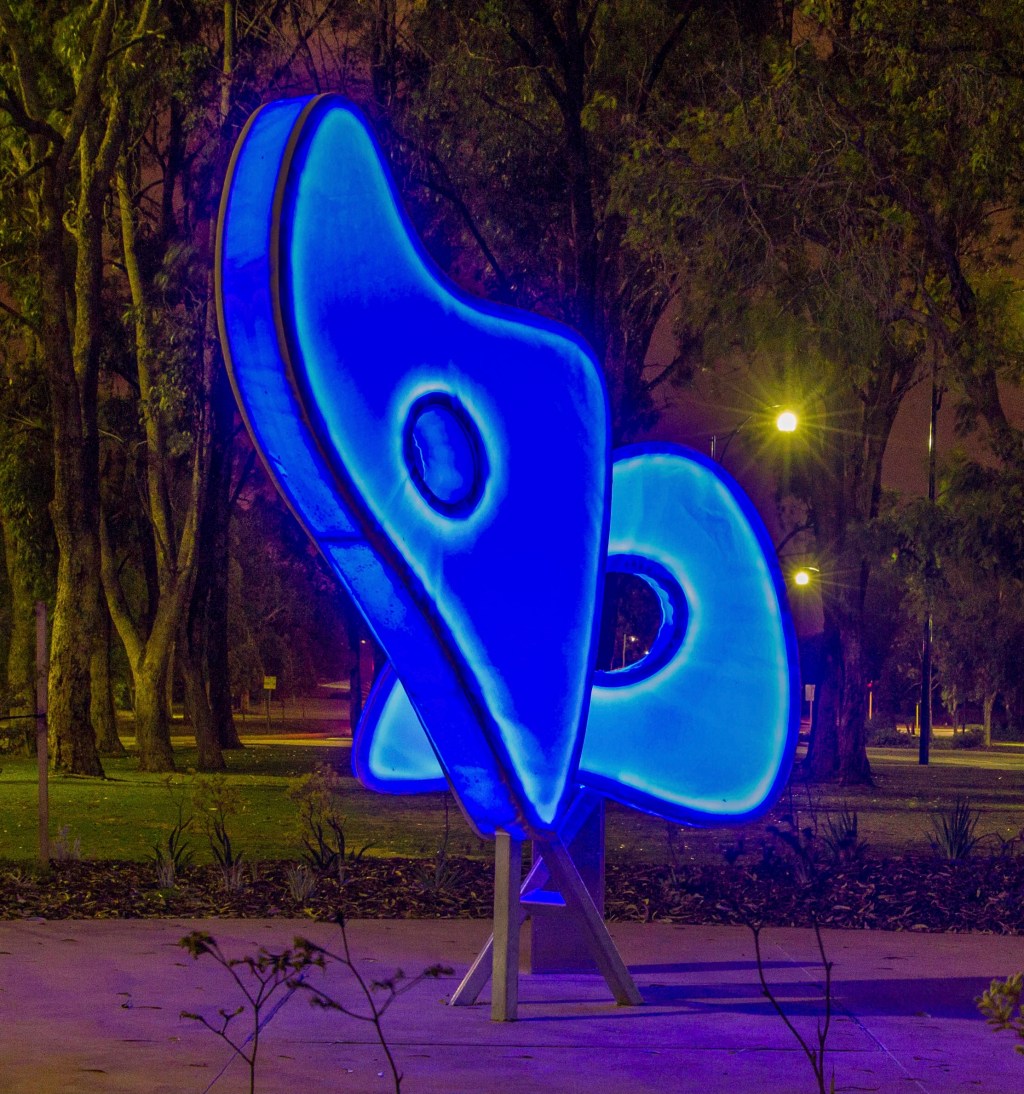
Joondalup’s love of public art continues into the evening with visual light display murals on the library and a remarkable sculpture called ‘Love Motels for Insects’ that lights up at night to attract horny insects who want a big night out on the town. Dirty bugs!

There are 1000 ceramic medallions with depictions by community groups, laid into the paving so watch where you’re walking because there’s a lot to see, including the Walk of Fame!

The Walk of Fame features name plaques of famous locals. There is a problem however because the Walk of Fame is missing Joondalup’s own hidden treasure, an 80’s and 90’s Perth rock god, now employed in the heart of Joondalup at the City of Joondalup.  The lead singer of The Marigolds and The Neptunes, the one and only Jamie Parry, my big brother.

It’s a Hidden Treasure because you can enjoy getting there, particularly by train, and you can enjoy the luxury of a resort, parks, bushland and lakes, the tribalism of local footy and the defining of a maturing and connected community through its telling of stories in artwork on the ground and on the walls throughout the day and the night.

Joondalup is a hidden treasure because just like that first born, you’re always just a bit more interested to see what it becomes.  You want to tell it, “I remember when you were just a twinkle in an Urban Planner’s eye!”

ABC Perth Saturday Breakfast: Cold Country … Dryandra Woodlands Delivers Shivers

It’s time to seize the day and embrace the cold. Really. 

Grab your best flannel shirt and prepare for it to soak up woodfire smoke! For ABC Perth Saturday Breakfast Hidden Treasures let’s drive out of this town and into one of the best woodland adventures you can have in Western Australia. have a listen to the link below of just continue reading:

This is a getaway that will need torches, jaffle irons and ugg boots. 

You’ll even find flowers in winter

The Dryandra Woodlands are less than two hours drive south of Perth, although you may want to stop off at Wandering, Williams or Narrogin, depending on which way you go and whether you need to get supplies.

Dryandra Woodland

In the centre of the 28, 000 hectares is the Lions Dryandra Woodland Village, full of wartime era nissen huts and even earlier, but more recently refurbished, woodcutter cottages of varying sizes and all facing the setting sun with a view of grazing kangaroos in the dying of the light.

The dying of the light in Dryandra

I grew up in the area and it’s fair to say that Dryandra brings out the Les Hiddens Bush Tucker Man in me, or perhaps more accurately the Russell Coight.

My school camps were held at Dryandra and in between kids staking their feet on protruding sticks, eyes being punctured by protruding sticks and kids being impaled on protruding sticks it’s fair to say I’m keen to gather up all the protruding sticks and put them in our fireplace when we arrive.

You’ll need to.  Dryandra is cold.  It’s next door to Wandering which is as cold as cold gets in Western Australia.  I thought I knew what cold was, growing up in Narrogin and playing hockey on a Saturday morning, or more recently hot air ballooning in the Avon Valley, but Dryandra cold is relentless, it keeps shivering itself further inside your skin, deeper, deeper, until it coils itself around your bones and doesn’t let go.

But that’s why you’re here.  To freeze on an afternoon bush walk.  To freeze on an evening discovery tour to see the local wildlife.  To freeze while you’re having a hot shower and to freeze while you sit by the fireplace. 

The bedrooms of the cottages are filled with bunks and, with multiple rooms, there are lots of options for keeping couples and friends together and farters and snorers in their own quarantine. 

There are big sofas and a wood fire and you can use the firewood as it’s provided or chop it into smaller pieces with the axe provided. Wood chopping in a flannel shirt – dreams are made of this.

There’s an inside toilet and there’s an outside toilet for the dads. And there’s a front veranda that looks out over a grass field and the forest.  Perfect for sitting with a cup of tea and a gingernut biscuit while you watch the kangaroos grazing as the sun sets over the woodland.  The caretakers pay the roos well to make their regular appearances.  If you don’t see kangaroos I’ll eat my South Freo beanie and wear a Swan Districts beanie for a week.

Western Grey Kangaroos

There are lots of well-marked walking trails that will last 30 minutes or 4 hours or if you’re worried about drop bears then you can stay in your car for the Darwinia drive trail.

Barna Mia is an unforgettable experience that can be bitterly cold but will warm your heart.  In the middle of Dryandra, as night falls, participate in a nocturnal tour under the guidance of Parks and Wildlife staff and with red light torches spot all sorts threatened and precious animals in our bush, like bilby, woylie, quenda, boodie and maybe even a drop bear.  

Possum spotting can be done from the back porch of your cottage or a short stroll into the surrounding bush.  With an old Dolphin torch, shine it up into the trees like a World War II searchlight and if you see one, hold the light to the side as shining it into their eyes is just as annoying and horrible for their little eyes as it is for us.

Hello possum!

Try some campfire cooking.  Take your trusty, rusty jaffle iron and put some tinned spaghetti between some white bread and stick it on the fire and for sweets wrap a banana with some chocolate in alfoil and stick it on the coals.  Get the kids to make damper balls (as Tom said, “Must have been a big damper.”) and dip them in jam.

Get a local Aboriginal experience.  Have a look at the WAITOC website for Narrogin Aboriginal tour operators or ask the cottage caretakers for advice on who to contact.  I recommend Ross Storey.  Sit on a log around a small fire and listen to Ross talk about his country and he will teach you how to throw a boomerang and he’ll put local ochre on your face, do a smoking ceremony and pass around kangaroo skins and Aboriginal tools from the area, including woomeras and spears.

Ross Storey’s Stories

Do some modern day treasure hunting by locating sneaky geocaches in the bush.

Geocaching is modern day treasure hunting

The nearby Williams Woolshed is another unforgettable experience on your way to Dryandra or on your way back home. They’ve recently set up a drive-thru but sitting inside and being presented with the best sausage roll in the world is worth getting out of your car for.  My dad never allowed food in the car.  Once every three years he’d stop for a drumstick or spearmint milkshake but that was it.  No food in the car.  Ever.  Not even butter menthols.

Dryandra is a Hidden Treasure because it’s not featured in any big tourism campaigns but it’s always big in my annual getaway plans and it’s a getaway that gets you together, whether it’s huddled by the fire telling stories, walking through inspiring bush or waiting for the first person to ruin the ambience and scare the roos as they bite through their gingernut bikky. Soak it in your tea people!

Just what I needed

ABC Perth Saturday Breakfast: Spitfires, Curry Puffs, Sculptures & Logs Over Creeks … Welcome to Bull Creek

On ABC Hidden Treasures we’ve recently been doing some special issues, like WAFL footy and Aboriginal Tourism. It’s time to get back to the idea of hidden treasures in our suburbs.

Some adventures require a lot of planning, other adventures are looked forward to with anticipation and excitement. 

Other adventures are opportunistic moments to explore new ground and dare I say it, as just a reason to spend some time with the kids and get out of the house.

Not quite a road trip but more than a trip to your local café around the corner.

Welcome to Bull Creek. 

Let’s start with a coffee and something to eat at the Little Parry Café.

When little Tom stands in front of a café that is named for his stature and his surname it is a remarkable photo opportunity to have him stand in front of it and an even better opportunity to try and work out why a dish simply called Waffle could appeal to an eleven year old boy. 

No wordy review needed from Tom, just a thumbs up as the other hand wipes maple syrup from his chin.

This a little café that also doubles as a little art gallery and there some great local paintings and drawings in this little space.

Little Parry at Little Parry

You won’t wear off the waffles in the short walk from the café to one of Bull Creek’s most treasured shops, Bull Creek Oriental Supplies.  This is a store that has been run by the  gorgeously cheeky Li Ling for more than 20 years and as well as all those spices and flavours of Asia that you can stock up on you can also fossick for utensils and bits and pieces you won’t find anywhere else plus all the chips and chocolates you might be used to buying when you’re in Bali and other parts of Asia.  Plus, I can assure you that their curry puffs are the best in Perth.  Light and fluffy with a generous vegetable filling and my only regret was not buying the lot. Great to eat as you leave the shop and you do these quick exhales of breath because they’re nice and hot.

Pork Floss! Lemon Water! So Much More and Don’t Leave Without A Bag of Curry Puffs

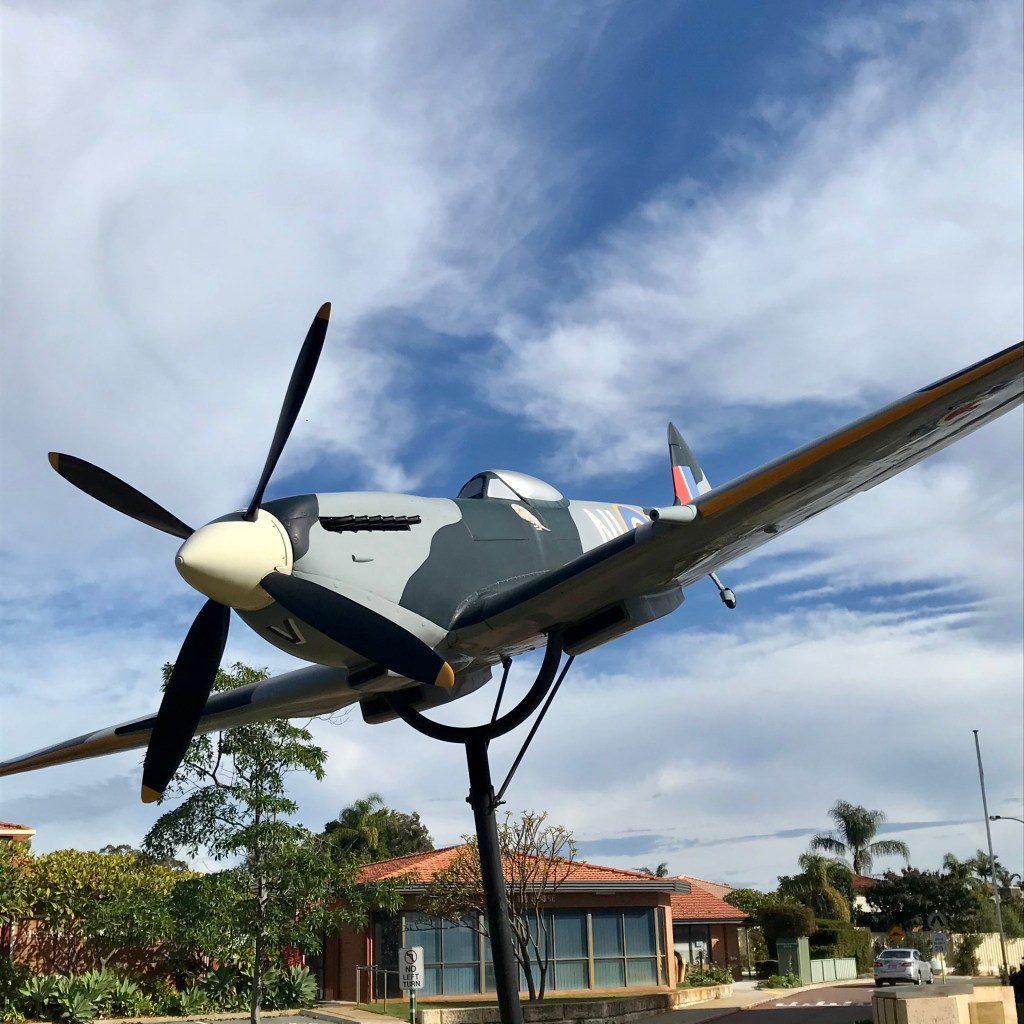
A few years ago I wrote about the Aviation Heritage Museum in a story about all of the things alongside the freeway that you should have a look at.  I rate this museum, firmly and proudly in Bull Creek and run by volunteers as an absolute treasure in this state and you don’t need to be an aviation buff to get a buzz from hearing a very real and very loud Rolls Royce Merlin engine from a Spitfire being started or crouch your way through the fuselage of an Avro Lancaster bomber or look at Catalina Flying Boat and imagine what it was like seeing these take off and land on the Swan River during their famous double sunrise flights during World War II.

The Awesome PBY Catalina Flying Boat

What I love most about this museum is that you’re not guided in a particular direction.  My kids ran one way and I ran the other.  We’d call out, “You’ve got to see this!” Admittedly there can also be a bit of “Where are you?” and “Tom, get off that aeroplane wing!” but the staff, who are volunteers and filled with stories to compliment the more than 30 aircraft on display, mostly just smile so long as you’re not trying to spin the propellors or sitting in cockpits pretending you’re Biggles.

There’s a dam down south and a few wheat silos with murals but the Stockland Shopping Centre in Bull Creek mural has to be one of the biggest in Perth and displays the Noongar seasons and local birds. It’s on the south side of the shopping centre.

An absolute highlight of Bull Creek is a sculpture in Centennial Park called the Pilgrim, by Western Australian artist Russell Sheridan  and was part of Sculptures By The Sea about four or five years ago. 

I spoke to the artist about this piece and it’s inspired by his love of Michael Leunig cartoons and the resemblance of the man featured in the sculpture to the main character in Leunig cartoons is very evident.  Russell Sheridan explained to me that the dog is the passive observer to the burdens of life that we all carry, whether it be regret or being bullied or being discriminated against.  It sounds a bit grim and heavy but just like a Leunig cartoon there is that element of inspirational whimsy that will lift you up and keep you in the fight!

The Pilgrim

While not the Nile, I was inspired by the Pilgrim to find the source of Bull Creek.  In a glorious remnant piece of Bull Creek Park, next to Brockman Park and the playground, is the source of Bull Creek.  There’s a small and steady flow of water that meanders through some of the most extraordinary bushland you’ll find on Perth. 

In Mid-Summer Nights Dream, Shakespeare describes a character as “though she be but small she is fierce”.  This is like Bull Creek Park.  As Bull Creek flows towards the Canning River, it is surrounded by a small piece of bushland.  There’s a log over the creek to walk across and a great path that requires you to push ferns out of the way and there’s bird life and enough green canopy to block out the noise of the busy city roads nearby. Interestingly, it’s very well protected by the City of Melville and you’re required to scrub and wash your boots before you enter to prevent dieback entering this small but fierce bit of bush.

Where Bull Creek Begins

Bull Creek flows into the Bull Creek Inlet which Noongar people called Gabbilju.  The inlet has some good interpretive signage about the creek catchment area and an excellent walking trail that will take you from Gabbilju right around the river to the Riverton Bridge.  But that’s a suburb and a story for another day.

Where Bull Creek Ends

Bull Creek is a Hidden Treasure because it will surprise you.  A little walk on the wild side by a little creek, Spitfires, curry puffs, local art and inspirational sculptures make this your afternoon out when you’re too tired for a road trip but never too tired to have some fun with your kids.

ABC Perth Saturday Breakfast: Aboriginal Tourism around Perth and a bit further.

Beyond stories, Aboriginal tourism is about tangible opportunities to feel ochre on your face, touch kangaroo skins, dance and have some fun.

For ABC Perth Saturday Breakfast, Ro and I thought that we should do something to be a part of NAIDOC Week, which celebrates the culture and contribution of Aboriginal people in Western Australia. Below is a link to our discussion about Aboriginal tourism experiences in Perth and down the road.

https://www.abc.net.au/radio/perth/programs/saturdaybreakfast/naidoc-hidden-treasures/13449400

I thought we’d look at just a few of the immersive experiences that are available to learn and understand more about Aboriginal culture and just to enjoy and have fun.

As a local, it’s a great time to be exploring tourism opportunities.  Without the international tourists crowding the scene our world is our oyster and our world has the oldest and most remarkable living culture in the world. 

Whether you’re after education or entertainment the opportunities to immerse yourself in an Aboriginal Tour and Experience aren’t just limited to the great red dirt northern expanses of the state, they’re right here in your backyard and in your neighbour’s backyard.

They’re even increasingly around where you’ve always walked and cycled or gone to the footy.  Keep a look out for signage, statues and sculptures at your favourite spots, particularly for interpretive signs giving new life and understanding about where we live and who has lived here before us.

Here are a few of my favourite Aboriginal Tours and Experiences that are here in Perth and just a couple that are a little bit down the road.

All of them are accredited tour operators and are members of the WA Indigenous Tourism Operators Council who have the coolest corporate values you’ll find; 1) Connection to Country 2) Welcome to Country 3) Have Corroborees … to share and learn!

No buzz words.  They’re real words.

Let’s start in Mandurah and welcome you to Mandjoogoordap Dreaming. Anyone who has taken the Freeway and Forrest Highway down south has seen the longest name sign Main Roads has ever had to install.  The ‘Mandjoo’ means ‘meeting place’ and the ‘goordap’ means ‘of the heart’.  George at Mandjoogoordap Dreaming will teach you how to make bush twine and forage for bush tucker and learn the bushcraft of the region during walks along the Mandurah foreshore and estuary and a little bit on a bus for little legs and older legs.

Let’s keep going a bit further down the road but only as far Bunker Bay just to the west of Dunsborough.  Pullman Bunker Bay have partnered with local Elders to give guests the opportunity to do a Six Seasons Tour by exploring the gardens at the resort.  When I did the tour with my kids, Elder Nina Webb showed them the plants that could be eaten, used for medicine, and showed me what ones just look good as a bouquet for.  We found frogs behind leaves and lizards on rocks. 

This is one tour that showcases not just the flora and fauna but also the culture and language of the local Wardandi people and are showing how to work alongside a modern hospitality experience to include some authentic culture in your resort getaway.

Wardandi Elder Nina Webb takes resort guests at Pullman Bunker Bay on a tour of what is right before their eyes … and opens them!

We’ll stay south for another experience but head east to Kojonup to the Kodja Place.  It’s with great sadness that my friend and local legend Jack Cox passed away in March and I wish to thank his family for letting me mention his name today.  Jack used to greet visitors with a bush tea that was actually bought at the Kojonup IGA and he used to tell international visitors that he needed their help to find lost sheep in the gardens surrounding Kodja Place. The Kodja Place will continue to tell stories about his remarkable life and his family who lived in the area.  If you are putting together a bucket list of Western Australian cultural travel experiences, make sure the Kodja Place in Kojonup is on it because it’s a complete tapestry of stories from Noongar life to settler life in the area.

On our way back up to Perth let’s stop near Narrogin and go into Dryandra to meet my friends Ross Storey and Marcelle Riley.  As part of the Narrogin Noongar Ranger Tours and Experiences these guys tell beautiful stories through the use of dollmaking and in bush walks. I grew up with Ross and if you’ve ever wondered if anyone can talk more than me then just listen Ross talk about his country.

Ross Storey, based in Narrogin and telling stories about the Wheatbelt
Ross makes sure that all ages can participate, learn and have a lot of fun

Back in Perth let’s look at some tours that will be so immersive you’ll no longer see the land around you as a city landscape, you’ll see and feel the land the way it was.  Go Cultural Aboriginal Tours and Experiences will walk you around the city, the river, and even on Wadjemup and get you singing songs, touching kangaroo skins, using tapping sticks and smelling ochre and crushed leaves in your fingers.  This is storytelling with knowledge, passion and fun and have you smiling all the way home.

Deadly Diva Experiences for Women is an experience I wish they’d let me participate in.  Tahn tells campfire stories and does wildflower walkabouts and it’s all for the ladies. It’s inspiring and intriguing and let’s use my favourite word of the day … immersive.  She is now looking at a once a year tour for the curious fellas so watch this space very carefully.

Get up to Kings Park as a family and participate in the Kings Park special events program that focuses on local Aboriginal culture and takes kids into the world of Kings Park before roads and playgrounds.

Finally, get to the Yagan Square Nyumbi where at 5:30pm every Friday you watch and participate in a smoking ceremony and dance.  The performers change each week.  Some Fridays it’s an Elders group and other times it’s the kids getting up and sharing stories with an audience that includes tourists, office workers and passers-by who never walk by when they see what’s going on. They also love a photo at the end of the performance and some of those kids will give you some cheeky feedback on your own dancing skills.

These are experiences for our community to be proud of and enjoy. Aboriginal tours and experiences are hidden treasures because they’re immersive and substantial on so many levels but most importantly, you can discover, learn, and have fun while you’re doing it.

ABC Perth Saturday Breakfast: The World of the WAFL is full of History, Heritage and Hotdogs.

I asked Ro to dress like a Champion but she wore her Swan Districts gear

From Mandurah to Joondalup, Freo to Basso and a fair bit in between, there are footy grounds with enough heritage and heart to bring out your tribal colours, wave a scarf, admire some silverware and photos of yesterday’s champions and watch close up, todays champions of men and womens footy, and listen to their coaches support and spray them at quarter and three quarter time.

Wherever you live in the metropolitan area, there’s a WAFL ground near you.  Click on the link below to listen to our ABC Perth Hidden Treasures story on WAFL grounds around Perth:

https://www.abc.net.au/radio/perth/programs/saturdaybreakfast/wafl-hidden-treasures/13430668

All of the WAFL grounds offer spectators the opportunity to get over the boundary fence at quarter time breaks and have a kick to kick or listen to the coaches and players as they huddle around the magnet board at quarter and three quarter time. 

Listen to a winning coach speak to his winning team

It’s these moments that make WAFL truly special.  Getting on to the ground.  Kicking a footy.  Getting close to the teams. Seeing up close the mouth guards being rinsed, the smell of liniment getting rubbed into legs that are fit and strong … but not quite as big as Ron Bouchers.  And high level coaches instructing high level players. And big wins.

Celebrate the wins

Mandurah has a redeveloped arena that is next door to the main shopping centre in Mandurah and highlights one of the characteristics of WAFL grounds, they’re accessible and central to the community they represent.

Clint Wheeldon fondly remembers when Rushton Park used to truly have that country footy feel with cars parked the oval.  When he was on air for the ABC covering a game he’d give a shout out to the cars and they’d honk their horns and flash their lights.  The lights thing didn’t work well for radio but he said it was lots of fun.

Up the road in Freo are two grounds that embody the rivalry between WAFL clubs.  While East Fremantle fans love their Shark Park with its acres of grassy banks and its low stands with plank seating that is more splinter than plank, Fremantle Oval is completely different. 

South Fremantle is a great club and Fremantle Oval is a great ground

The mightiest football team in the world, the South Fremantle Bulldogs, has allowed the Italian influence in Fremantle to literally pave the spectator terraces in concrete to follow many an Italian homeowners gardening creed that there are no weeds in concrete.

Concrete terraces and seagulls? It could only be footy in Freo!

Despite the concrete terraces, there is the beauty of some of Perth’s grandest old fig trees, the wall of Fremantle Jail just behind the scoreboard and a contender for the best stand in Perth the Victoria Pavilion, built in 1897.

Up Stirling Highway you’ll find the transformed Claremont Oval which in the Covid environment is the easiest way to get a resort experience in Perth.  The fully redeveloped ground is only lacking a swim up bar to complete the picture.  Much of the seating is sumptuous and there are even sofas and proper coffee tables with proper coasters!

Nusa Dua in Claremont

Just up the road is the dual tenanted Leederville Oval, home to Subiaco and East Perth.  As a venue for the 1962 Empire Games it’s grandstand reflects this era and if you like the look down spectator experience like major stadiums, this won’t cost you anymore to sit in than the gate entry price of $15 – with complimentary Footy Budget.

Joondalup is one of the pioneer grounds in Perth to make the transition from footy oval to multi sports complex, incorporating a swimming complex, gym and other sports while still retaining that great hallmark of WAFL grounds, the grass embankment.

Lathlain is another ground that has retained and redeveloped.  There’s still a van with a loud generator making hot chips and big hotdogs but there’s also the sophistication and dominant architecture of the West Coast Eagles complex that is alongside the oval. It’s got the big stand from the same era as Leederville Ovals and has a great view of the game and you can sit close to the commentators and hear how they’re seeing the game unfold.  

Love a Lathlain Oval hotdog

 I guess now we’ve got to make the long trek out to Bassendean and have a look at Bassendean Oval.  While it’s true that Swan Districts got a hat-trick of flags in the 80’s I don’t know if there’s much else to say about them.   

They do have a spectacular grass embankment and two stands that put the grand in grandstand.  The ground is a great hub for local kids with a skate park adjacent to the oval and on the my last visit there were two kids playing with a footy near the goals and taking turns pretending to be their favourite player as they kicked for goal. 

Putting the ‘Grand’ in ‘Grandstand is the Bill Walker Stand at Bassendean Oval

Best ground that resembles a resort: Claremont – sofas, seating and service like a Nusa Dua resort

Best Gates: Bassendean Oval

Best Grass: Bassendean Oval

Best Stand: Victoria Pavilion, Fremantle Oval

Best Trees: Fremantle Oval

Best Ground Announcer: Leederville Oval “Describing children as ‘kiddies and young un’s’ and saying ‘please’ when advising spectators to get off the ground and to ‘please remember to help your kiddies gently over the fence’. 

Honk your horns for WAFL grounds! WAFL grounds are hidden treasures that are well and truly in the open throughout suburban Perth.  They’re accessible, good value and are a great way to connect with your community and watch good footy. Thank you to all the WAFL clubs who let me be a part of their game day experience.  They’ve got heritage and heart and even if you’re not a member of your local club, you’re always welcome.

The rough, tough Bulldogs! Southerners forever more!

ABC Saturday Breakfast: Hidden Treasures in the streets, trails and hills of Armadale

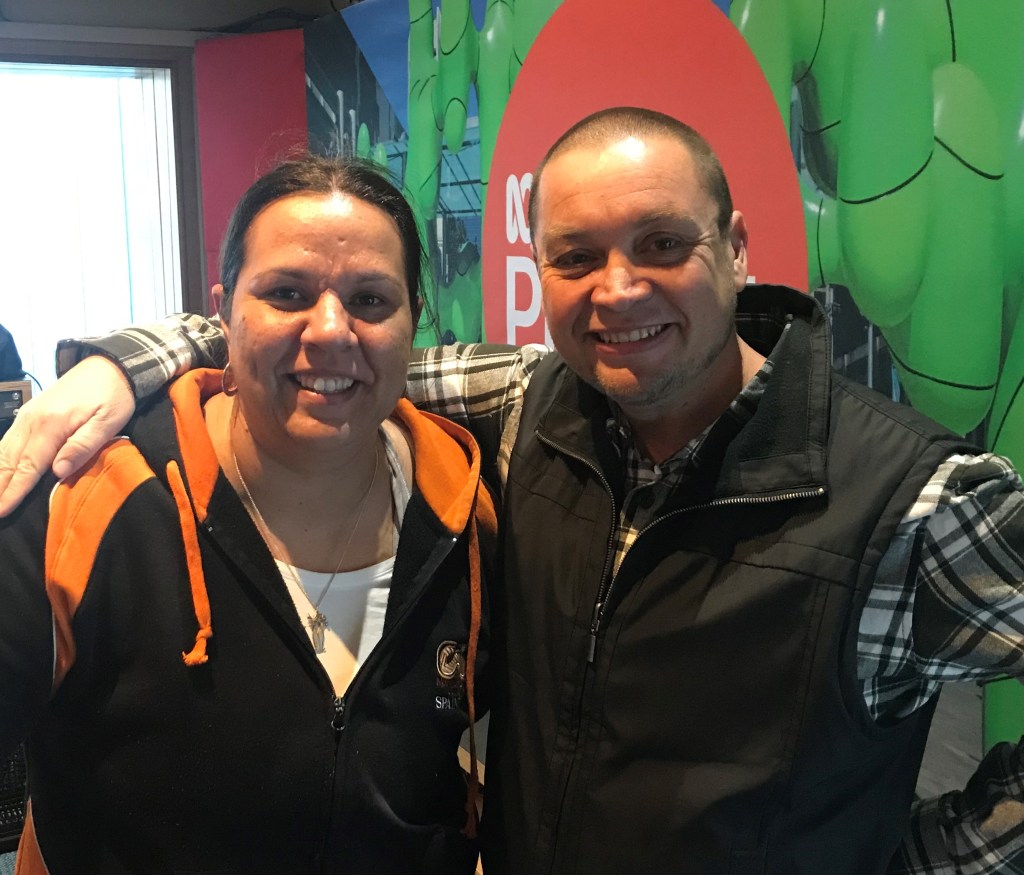
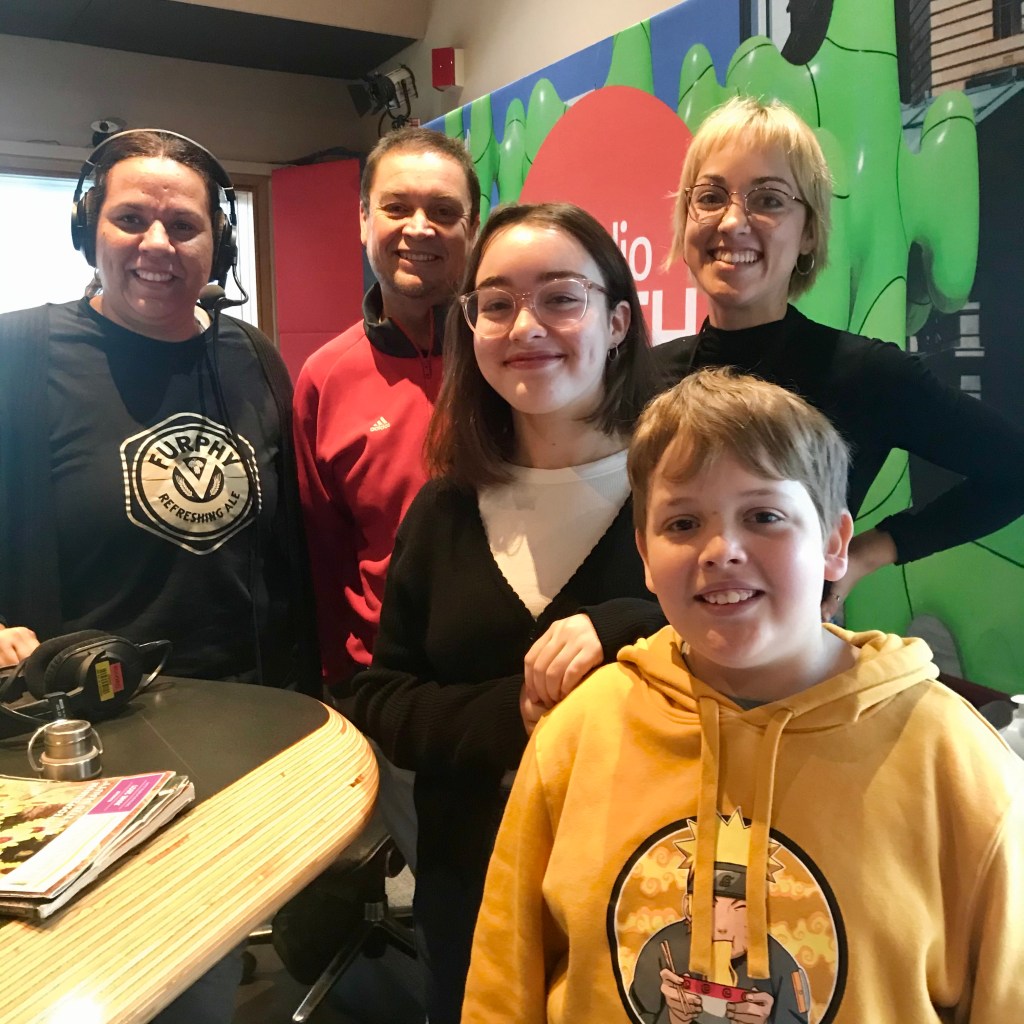
A full studio, full of fun with Ro, Molly, Matilda and Tom all part of the action. How cool is the ABC? Participating in making great programs and having my kids watching it all come together is very special. For this edition of Hidden Treasures we recounted the recent experience of a trip to Armadale that included Tom and his mate Nick.

Armadale is tucked up against the south eastern corner of Perth.  This side of the hills but right on the edge of them.

With our Hidden Treasures we often talk about one of the characteristics of a Hidden Treasure being that they’re often bypassed or driven through at a great rate of knots.

Armadale is a great example of a suburb that gets driven through a lot that is worth slowing down for and having a look around.

It was always the first taste of the city for me when we’d make the drive up in the Toyota Crown.  You’d hit those first traffic lights and be in awe of the city traffic and annoyed that Mum hadn’t stopped at the Pioneer Village. I always wanted my picture on one of those ‘Wanted’ posters.

It’s become Perth’s version of Melbourne’s Daylesford. Lots of places with the words wellness, calming, spiritual, organic and retreat in their names.

Ro loves her sport and so let’s start at the Champion Lakes Regatta Centre.  If you’ve ever wondered when flying into Perth what that big rectangular area of water is, it’s the home of rowing and there’s even a beach and some good walking and cycling tracks around the lake.  Remember, rowers row early if you want to catch the action.

Armadale Visitor Centre – lots of information and free maps with walking trails for trekkers, families and dogs. There’s also local produce including chutneys, jams, pickles and …. lemon butter!

Bert Tyler Vintage Machinery Museum has really well restored and refurbished agricultural machinery and there’s even a Furphy water cart.

The History House Museum has some good recognition exhibits of Aboriginal history in the district and also some very cool old harpsichords, pianos and organs with musical links to many of the old churches in the area.

Urban Art Trail – big murals by local and international artists.  How cool are murals? This is a walking tour through the urban heart of Armadale that has identified tired old spaces and turned them into breathtaking, inspiring places.

Heritage Tree Trail – Lou from the Armadale Visitor Centre has written the Heritage Tree Trail Guide that takes you on an urban walk to 13 of the best-looking senior flora citizens in Armadale.  There’s a Sugar Gum planted in 1910, Moreton Bay Figs planted in 1890, a Jarrah tree more than 500 years old, a carob tree which is the sole survivor of an orchard back in 1900 and lots of others all waiting for you to give them a big hug.

30km’s of Bridal Trails in Darling Downs, which isn’t an old 1950’s radio serial, it’s a horse inspired residential area in the southern Armadale area. (properties connected by the bridal trails.

Brackenridge Village and Retro Rescue Antiques and Collectibles is one of those shops where you keep saying, “I used to have this!”  I looked at the Skippy melamine cup and plate and was thrown back to my childhood having a vegemite sandwich and apple juice.  From daleks to car badges, glow mesh purses to optic fibre lamps, this store has more than enough for anyone who loves the stuff we used to have.

Locke View Poultry Zoo requires a call before you visit.  Astrid was kind enough to allow myself, Tom and his mate Nick to visit unannounced … but only after I made Tom and Nick clean out the cages and move a load of firewood. 

Astrid showed the boys some quails as they were hatching and how she helps the little chickens who are born unable to walk.  She makes little braces with bandaids and is a lot easier than making little crutches out of toothpicks.  She had such an impact on Tom that he is no longer saving his allowance for Nintendo games, he wants chickens.

Canns Road and Soldiers Road are part of the Armadale Hills Scenic Drive.  On the map you think you’ll take about half an hour to get from one end to the other but you end up taking three hours as, along the roadside, are signs that say, ‘Honey Here’, ‘Fresh Persimmons’ and other local produce as well as kangaroos that are paid by the Armadale Visitor Centre to sit in the bushland of Wungong Regional Park and wait for you to stop and get out of your car for a photo before skipping away.

Armadale is a hidden treasure within a hidden treasure.  There’s a lot that’s easy to discover in the heart of Armadale but if you take the time to get up to the hills and onto some winding backroads you’ll find even more treasure.

ABC Saturday Breakfast: Hidden Treasures discovers a shipwreck and how many rocks it takes to name a suburb

King Neptune from Perth’s iconic past … the Atlantis Marine Park

Click on the link below for a Hidden Treasures discussion about unexploded ordnance, a shipwreck, an icon and a suburb that’s more like a town:

https://www.abc.net.au/radio/perth/programs/saturdaybreakfast/hidden-treasures-chris-parry/13365360

Hidden Treasures recently crossed the fine line that exists between a ‘Sunday drive’ and a ‘road trip’. 

On this episode of Hidden Treasures on ABC Saturday Breakfast, Ro and I walked up and down dunes and along windswept beaches to find a shipwreck, find lost statues from Perth’s iconic past and find out how many rocks it takes to name a suburb.

How many suburbs in Perth would you find an internet description that says; 

“Large sections of the suburb are fenced off due to unexploded ordnance left behind from past military activity in the area.” 

How many Perth beachside suburbs would have a beach sign at a prominent lookout spot that warns of;

“No lifesaving service, steep stairs, dangerous current, submerged rocks, dumping waves and snakes.”

Welcome to Two Rocks. Perth ends here.

Two Rocks is the furthest northern extent of the Perth metropolitan area.  It’s over 60 kilometres from the Swan River.  Its better-known neighbour, Yanchep, is 7 kilometres to the south.

It’s a big suburb, more than 50 square kilometres with the suburb’s population living in just 2.3 square kilometres.

Two Rocks has a distinct feel.  It’s more like a seaside town than a suburb.  There are dinghy’s on street verges.  Flotsam and jetsam gathered after storms adorn the verandas of houses like some sort of trophy collection. In the southern suburbs we hang Christmas lights. Up here, they hang what the sea has hurled at them.

The adorning doesn’t stop there.  To complete the seaside town impression, many of the street poles have opportunistic handwritten signs selling a local service or seasonal produce.  Octopus is a current favourite for $20kg! I’m sure when the time is right there are signs that say, “Crays 4 Sale”.  Not lobsters.  Crays.

Not a bad price. I think it would be better to just say ‘Occy’

As you head up Two Rocks Road turn left at ‘The Spot’.  It’s a sandy track to the best left-hand break surf spot we’re allowed to talk about.  It takes a bit of paddling to get out to the break and if the waves are more than a metre there’s normally a rip.

As I drive into carpark at ‘The Spot’ I feel like a new cowboy in town swinging open the saloon doors.  All heads turn to look at this Narrogin plated vehicle that takes the last bay at the end of the line.  Tying my car up to the rail I turn and see that the faces are all still turned towards me.  Not only do I have Narrogin number plates but I’m wearing a flannelette shirt.

The black steamer wet suit clad lads give me a “G’Day” and I give one back and then we’re all friends, talking about the conditions and which way I need to trek to find the Alex T Brown, a shipwreck that reveals herself differently each season, depending on the wind and tides. 

The track from the car park to the shipwreck of the Alex T Brown

The Alex T Brown was a 65m, four masted schooner that blew ashore on this day(29 May) in 1917. Many parts of its hull and rigging can be found in Two Rocks and Yanchep, including the Yanchep Inn.  For my visit, I found a long line of metal rivets attached to a beam, possibly the backbone of the hull.  I sat next to the wreck, looking out to sea for a while before the trudge back to my mates in the carpark, a round trip of about 700 metres through up and down dunes and very soft beach.

A schooner lies here, the Alex T Brown

From the history of the sea to the history of iconic Perth let’s head to the lightly wooded and weed entangled paths of the old Atlantis Marine Park and make our way to King Neptune who sits on top of a small hill with a big smile and an impressive trident held in his mighty limestone hands.

Atlantis Marine Park was the place to go throughout the 1980’s.  Built at the beginning of the 80’s and closed at the end of them.  There were dolphin shows and lots of water related adventures that involved tubes, mats and slides while wearing a pair of stubbies, a terry towelling hat and no sunscreen.

These days the remains of the park rival anything you’ll find in the Valley of the Kings in Egypt.  As well as King Neptune you can be an amateur Perth cultural icon archaeologist and discover statues of dugongs, narwhales and elephant seals and if that’s not enough statue action for you, head up to the gardens at the local tavern and you’ll find many other marine themed statues that were in the park.

Check out the local bakery and cafes that overlook the marina.  It’s a great spot to hold a coffee in one hand, pastie in the other and watch boats being launched and retrieved, old hulls being sanded and kids fishing from the marina jetty.

From the Tavern, cafes or bakery, it’s a great view of the action in the marina

Are there two rocks in Two Rocks?

There are definitely a couple of very impressive rocks that are at either end of the beach that begins at Wreck Point and then further up the beach at the Marina end.  The rock off Wreck Point has a raggedy hole that is a photographers dream in any weather.  The beach allows dogs and it doesn’t take more than a few minutes to walk to the other end where this bigger rock is a bit like a bridge with a tunnel at the bottom, that allows the breaking waves to impressively spray from. 

One rock
The other rock

Two Rocks is a hidden treasure because it’s a suburb that doesn’t feel like a suburb. It feels like the seaside town you used to visit and wish you could get back to.  You can.  It’s called Two Rocks. Perth ends here.

ABC Saturday Breakfast Hidden Treasures: Midland … the end of line and loving it.

The Amazing Ro Edwards on ABC Saturday Breakfast, getting Perth up and about every weekend

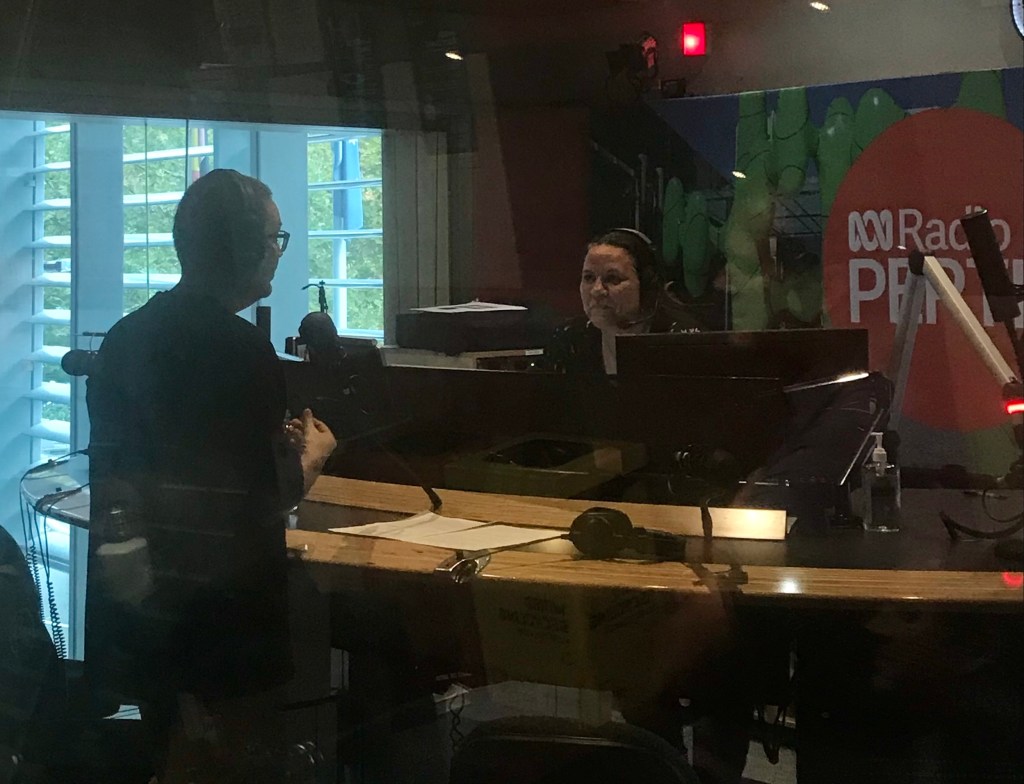
Ro Edwards on ABC Saturday Breakfast is getting Perth up and about every weekend and being a part of her show is exciting and a lot of fun. Our program Hidden Treasures is making a habit of discovering places that have always been there but maybe you just haven’t stopped there before.

Midland was originally proclaimed and named as Midland Junction in 1891 because it is the junction of major roads leading to Perth from the north and east.

Midland is the suburb where many adventures begin as travellers head east on Great Eastern Highway, or north on the Great Northern Highway, and it’s where travellers to Perth give a big sigh and say, “We’ve made it.”

Midland is the end of the line.  Literally.  The eastern metropolitan train line starts from Perth and finishes in Midland. Although I reckon that most Midland locals are adamant that the train line actually starts in Midland and finishes in Perth, making Perth the end of the line.

It’s the railway that is as connected to the community and history of Midland as a carriage on the tracks. 

I once had a conversation with the Sultan of Johor about his favourite town in Johor, called Muar.  He wanted Muar to be like Melacca, just up the road to the north.

I said ‘I’ve been to Melacca. I’ve been to Muar. They are both great.  Why do you want Muar to be like another town just up the road?  Why would you go to the trouble of becoming like something else that you then have to compete with anyway? Be yourself.  Be known for your history and build on that.’

I thought it was pretty good advice and so did he.

Midland is a bit like Muar. It’s not the best house in the street but it’s got really good residents who are really proud of showing off what they’ve got. Up the road there’s the historical glitz and glamour of Guildford, off to the north there’s the Swan Valley vineyards to sozzle your senses and over the back fence to the east are the hills of the escarpment, overlooking Midland.

Like so many of our Hidden Treasures, it’s not that you have to dig deep to find the treasure, you just have to know where to look.

Let’s stick with the history bit first, move through what you can do now, eat out of an old lunchbox and finish with a sport that’s huge in Midland and America.

For history, anyone who has driven out that way would know about the Midland Town Hall. 

Midland Town Hall

It’s impressive and always feels like you’re going to drive into it as you head along Great Eastern Highway which takes a gentle curve to the right as you drive past this great building is Midlands most recognisable building. Just like the road in front of it, it’s got a gorgeous curve to it that makes it not just impressive as Federation architecture but it’s charming and elegant.  With the addition of the clock atop its dome serving as a memorial to local men who lost their lives in war, it’s also a reminder of the sacrifice made by those men and their loss to the community.

After a Mayoral Ball to mark completion of renovations, it’s now a popular cabaret venue and hall for hire (which isn’t as dodgy as it sounds).

The Midland Railway Workshops were the burning, molten metal heart of Midland.  You could hear the work being done for nearly a hundred years by a workforce that came from all over Perth but mostly came from the surrounding streets of Midland.  These days, a walk through and around the sheds is remarkable. 

Midland Railway Sheds

They are towering buildings with big industrial doors and windows and while they’re industrial buildings they are beautiful, magnificent and inspiring.  In the years ahead they may become spaces for sport, for the arts, for movie studios, for many things but for now just get out there and enjoy exploring these big buildings that built trains and rolling stock are also a photographers dream in any light.

Midland Railway Sheds

Trillion Trees partners with the ABC tv series Fight for Planet A and the nursery grows more than 200,000 seedlings each year and is a great oasis to wander around and purchase some native plants from volunteers from a range of diverse backgrounds and employment training programs. They’re also working with local schools, including Woodbridge Primary School and Moorditj Noongar College, teaching the kids about cultural ecology.

The Midland Junction Arts Centre is the cultural heart of Midland provides workshops for all ages, has three galleries, workspaces for artists and want-to-be artists and works really hard to engage the community in creative ways.  A huge range of workshops are available including after school ceramics for the kids, life drawing for the adults and tactile tours for participants with disability to experience the arts through discussion and touch.

Blue Beautiful Exhibition at the Midland Junction Arts Centre (Yes you can have a slushy! Beat that Banksy!)

The Robot Bun Factory is an example of the quirky cafes springing up all over Midland, some selling records and bric-a-brac, others selling local art but when a café gets you coming back you know it’s not just about the robots and free board games, it’s about bao buns served in 1950’s style tin lunch boxes and a local crew doing their best to put a funky pin in the map of Midland.

There’s always action at the Robot Bun Factory Cafe

The Midland Farmers Markets are one of the oldest markets with the freshest fruit and vege produce alongside live music and pickles, cakes and jams. The next one is tomorrow and its out the front of the City of Swan offices on Market Square.

While Guildford has the antique shops, Midland has second hand shops and charity shops that are a rummagers delight and my teenage daughter Matilda’s obsession as she searches high and low for clothes or diligently and silently flicks her way through boxes of old records.

Watch some baseball or teeball at Charlie Hodder Baseball Field.  Baseball has a rich history going back to the 1940s and a rich competition that is great fun to watch in the stands with a hot dog.

Photo courtesy of the Swan District Baseball Club

Midland is a hidden treasure because it’s not trying to be like something else.  Surrounded by glamourous neighbours, it has dug its heels in and supported by a rich rail history, they are building a community and attracting visitors for the art and culture, fresh produce, funky cafes, collections of charity shops and sport you might have only seen before in the movies and on tv.