Enjoy listening to the 6PR radio story below on just how Rockingham demands that you stay and play for more than a day:


At the drop of a hat!
Enjoy listening to the 6PR radio story below on just how Rockingham demands that you stay and play for more than a day:


Below is a link to a radio story I presented on turtle release programs:
The writer and his family were guests of the Little Ferry Company.
What a difference people make. The experiences we have when we travel are always made better by the people we meet. Those who greet us, escort us, serve us and manage our expectations turn a good time into a great adventure.
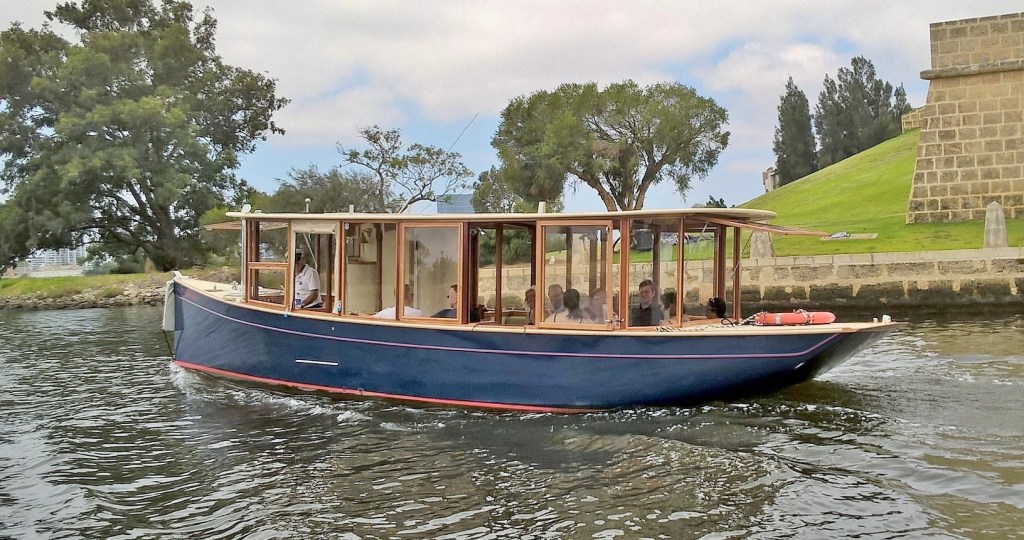
Skipper Kevyn, the owner and operator of the Little Ferry Company, may not be as pretty as his two little vessels but he’s a man of passion for his craft and his river.
The Little Ferry Company operates two electric vessels on the Swan River. The design of the boats is inspired by the Gatsby era of the 1920’s. A brass bell, curved windows and elegant cedar trim are decadent maritime styling and stepping aboard is a wonderful feeling of comfort and nostalgia.
Casting off from Elizabeth Quay is a bit confusing for the ears. Expecting a chug-chug from the engines there is nothing to hear. It’s quieter than a Prius. It’s also more fun.
The two German electric motors operate on lithium batteries. The Germans learnt how to make electric marine motors for their renowned U-boat fleets of World War I and World War II. It’s a long way from the North Sea to the Swan River but the heritage is clear to see, hear and smell. These are vessels that are void of vibration, fumes and noise.
As we make our way out of Elizabeth Quay on yet another blue sky Perth day, we turn to port and make our way up river. Sticking with the river channel boat traffic, there’s no getting away from the fact that these boats attract a lot of attention. Perth boating traffic is always a bit friendlier than the road variety and the smiles and waves are certainly evidence of how attractive these vessels are.

Skipper Kevyn gives impressive commentary ranging from the past, the present and the future. He talks passionately about the history of the Western Australian Rowing Club building, the current buildings along the foreshore and those that are up and coming, such as the remarkable Ku De Ta restaurant site on Point Fraser and the imposing Perth Stadium on the eastern bank opposite Claisebrook Cove.
For the kids, the vessels are a delight in not having to sit still. There are windows to stick heads out of, plenty of comfortable seats to try out and a skipper who’s only too happy to give a young sailor the opportunity to ring the brass bell as we enter Claisebrook Cove.

Claisebrook Cove is an opportunity to grab a coffee from the numerous cafes or a beer and a meal from the Royal Hotel. Doing a walk around the precinct, including Trafalgar Bridge which spans the inlet, takes about 15 minutes and stretches the legs nicely before the return trip back to Elizabeth Quay.
There’s a great feeling of optimism about Skipper Kevyn and his Little Ferry Company. With the increase of services and attractions on the Swan River, the opportunity to travel to fresh new destinations in vessels that are beautiful and comfortable will appeal to day trippers, overseas tourists, wedding parties and old salts just wanting to get on the water.
Fact Box
The two vessels cruise the Swan Rover every day between 10am and 5:30pm and are located in Elizabeth Quay. The ferry can be boarded one way or return from Elizabeth Quay or Claisebrook Cove in East Perth.
Single fares for adults are $12 while a return fare is $22. A family fare return is $58.
For details on Little Ferry Company special offers and news call Kevyn on 0488 777 088 or check out the website on www.littleferryco.com.au
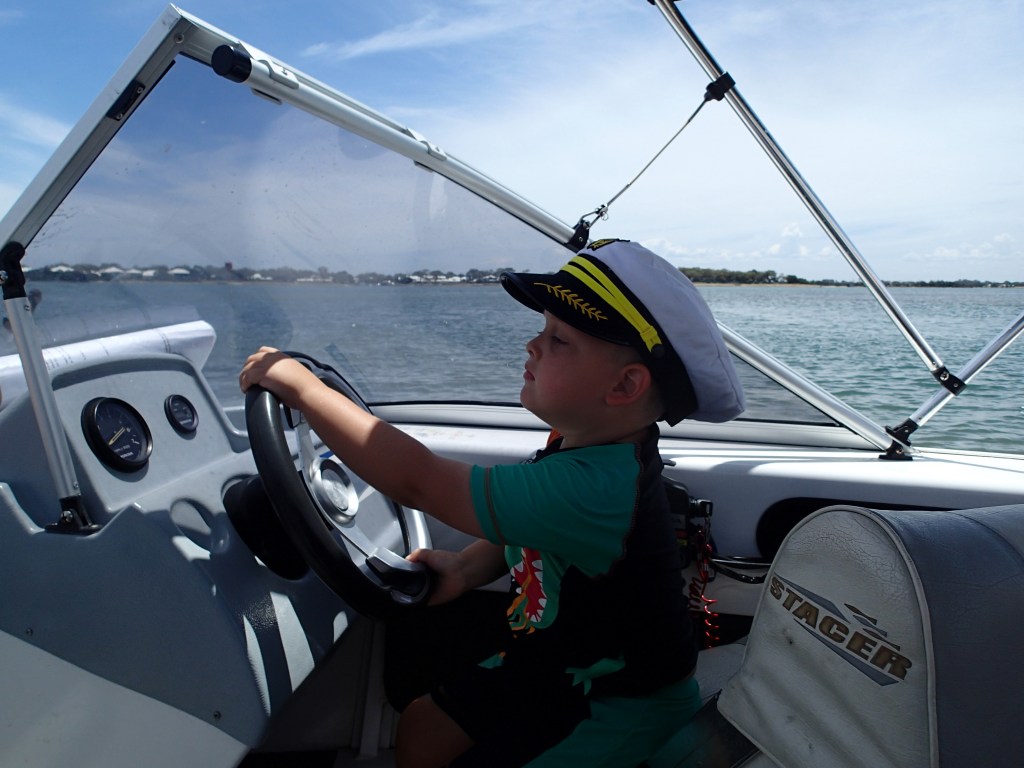
Taking the opportunity of a summer holiday day trip to Mandurah, I’ve hired a Bowrider Runabout from Mandurah Boat and Bike Hire. The drive from Perth to Mandurah takes less than an hour on the Kwinana Freeway and exiting at Mandjoogoordap Drive will lead you directly into Mandurah.
Driving a boat around the Mandurah canals and estuary isn’t as relaxing as being on open water. It’s a busy waterway system and even though you don’t need a Skippers Ticket to hire a boat from Mandurah Boat and Bike Hire, I’m glad I’ve got mine and know a few of the rules to keep things safe and friendly.
Less than a minute from leaving the jetty and while the kids are still laying down their towels on the bow lounge seats I spot dolphins ahead of us, just relaxing in the water in front of the huge Moreton Bay Fig tree at Stingray Point.
The tree was planted in 1930 and has been surviving well until in recent years too many cormorants have been nesting in the tree and the toxicity of their droppings has been burning the foliage.
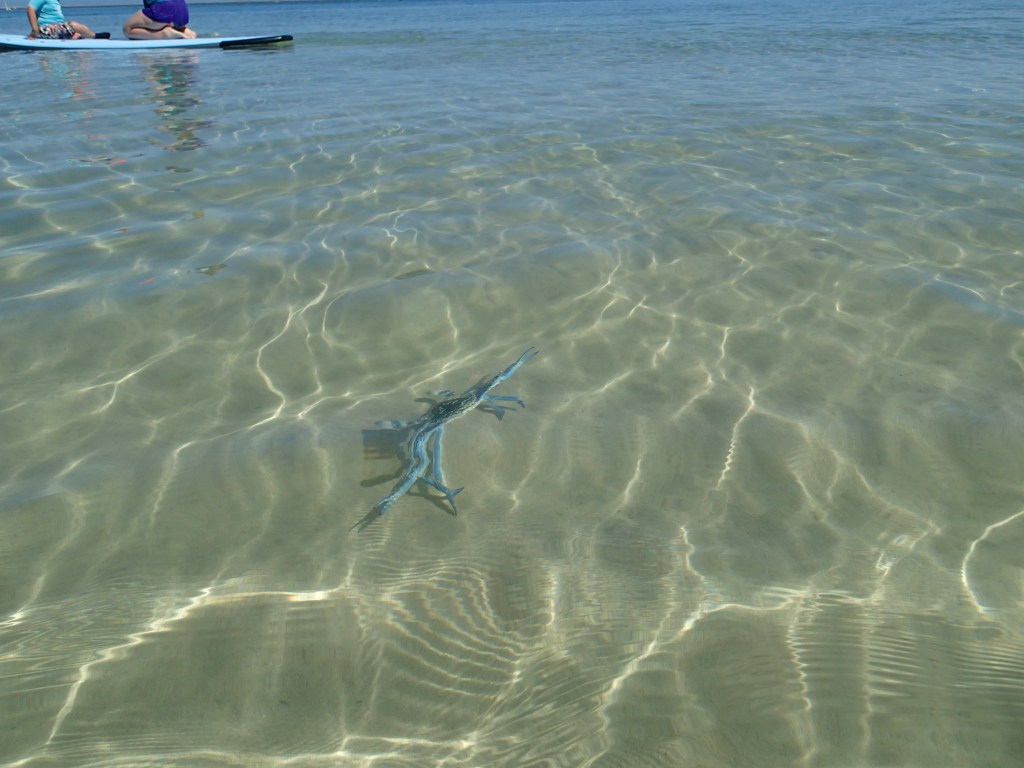
After a slow chug through some of the nearby canals, admiring boats as big as houses and houses as big as castles, we head out to the estuary. At Boundary Island we cut the engine and drift up onto the beach. It’s a popular spot to stretch your legs and have a swim, although walking through the shallow water may result in undesirable interaction with the resident crabs.
Heading out into the broad expanse of the estuary the kids jump off the back of the boat and do a couple of laps of the boat before climbing aboard. We make our way back to our departure point at the same time as a lot of boats are heading back to various pens and ramps.

Many of the boats on the water are pontoon hire boats and look to have two or more families on board. Fully shaded and with plenty of seating they look perfect for a day on the water with plenty of room to move about. Typical of my ungrateful mob, I am derided for not hiring a pontoon boat so I nudge our bow into the wake of a passing boat, slip sideways and allow a nice amount of water to spray over the bow and drench the wretched children.
Before returning the boat we take another look in the canals and easily locate more dolphins. I idle the engine and let the kids spot them surfacing, taking bets on where they’ll surface next.

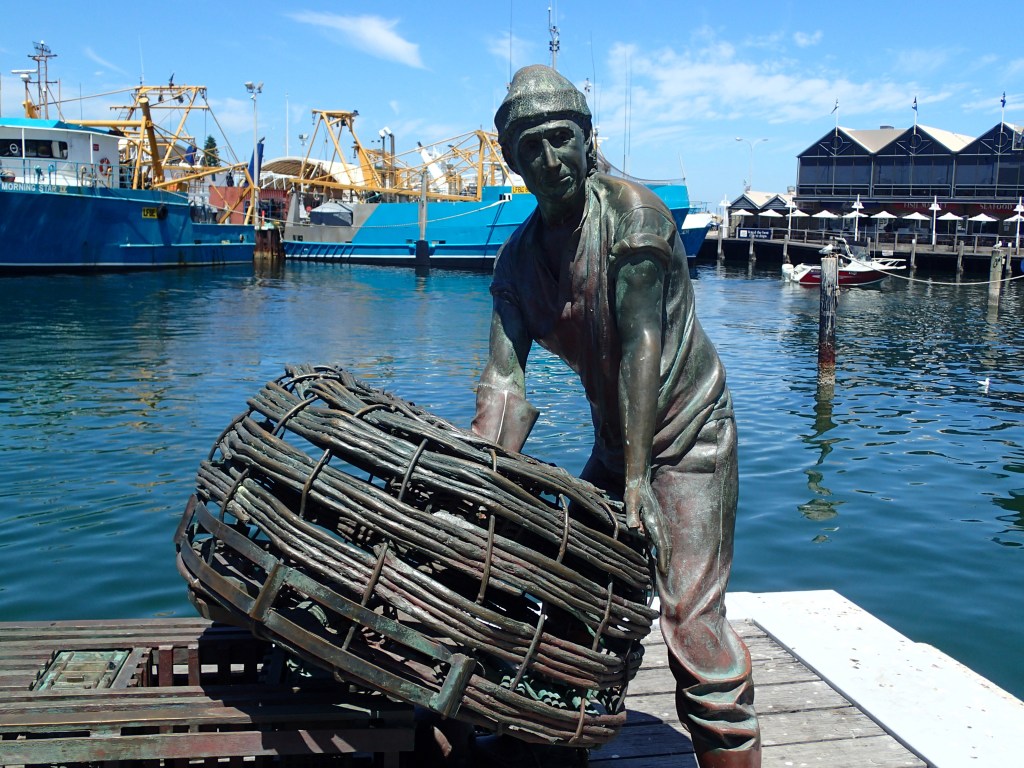
After we return the boat we walk along the boardwalk, admiring the public art on display, and enjoying some Cicerello’s fish and chips and Simmo’s ice cream before heading back to Perth.
It’s an easy day trip break that hasn’t broken the bank or left us completely knackered. I reckon we’ll be back again next year but I’m guessing we’ll be on a pontoon boat with friends. That’s fine by me.
Beginning a weekend escape in Fremantle is tough. Markets? Museums? Fish and chips? Coffee? Ice Cream? Suddenly, with a burble and then a roar, a new contender emerges to kick off our weekend like a cork leaving a bottle; jet boat.
West Coast Jet Boat met my brief for some fast speed action by cranking up an 80’s soundtrack of Aussie rock classics as the throttles were pushed forward on open water. As Midnight Oil’s Beds are Burning pounded the ears, the boat stopped and spun, pounding us with a tonne of water that rose up from the bow.

As we circled the Duyfken like some dorsal finned predator from the deep, I recalled the significance of this little replica ship. In 1606 the original Duyfken sailed around Cape York, met Aboriginal Australians and chartered 350 kilometres of the Cape York coast.
Albeit of less historical importance, our jet boat ride was a great experience for the family to share, enjoy and to get wet. With the amount of water coming into the boat it’s surprising there’s any water left in Gage Roads. Through salt blasted eyes, I notice Matilda in the row in front of me throw her arms up while I grip the rail behind her seat to keep myself steady. It’s a great ride and slide that lasts longer than I expected and is the perfect way to kick start our Fremantle weekend.

Leaving the boat, we walk, dripping wet, across to Esplanade Park. Before checking into the Esplanade Hotel Fremantle by Rydges, we have a ride on the Tourist Wheel Fremantle. Installed in 2013, this impressive wheel has comfortable gondolas to view Fremantle from a height of 40 metres. It’s a great way to look down on the port city and put everything in perspective; the harbour, museums and old west end are to the north of the park, shops and markets to the east and just below and to the west of us is Fishing Boat Harbour, sometimes called the fish and chips precinct.

With our ride over we continue across the park and enter the Esplanade Hotel.
The first time I was at the Esplanade Hotel was in 1987. It was the Americas Cup and I was in the lobby when Marc Pajot, skipper of French Kiss, burst in through the entrance, brushing aside anyone in his way, including me. He’d just lost a race to KZ7, the New Zealand challenger, and was a bit upset.
Arriving now with my family beside me, it’s a very different feel from 1987. There’s not the chaos of 1987 and there are less Lacoste shirts and deck shoes as well. What I pick up right away is that wonderful sound you get when you enter atrium style hotels. It’s a hum. There is a life to this hotel. It makes you feel a part of it right away and the warm sunlight streaming in from windows high above the centre of the hotel add to the light, active atmosphere.
As I make my way across to the reception I find myself singing the WA tourism jingle from the late 80’s, “G’day from WA” (Give a smile and say, G’Day from WA!).
It’s not that the hotel reminds me of the 80’s, it’s just that it was a defining moment in our states history and the history of this hotel (the America’s Cup, not the jingle) and I’m finding it hard to shake (the jingle, not the America’s Cup).
There’s so much to do in Fremantle but we’ve elected to choose an easy path for this weekend. I haven’t got a bad word to say about Fremantle museums but for this trip I haven’t got any good words either. We’ve decided to stay away from the Museums and spend some time in the hotel pool. While the kids launch a giant inflatable pretzel, their parents enjoy a drink from the poolside bar before fighting the kids for rights to lay on the pretzel.

As the sun sets on our afternoon by the pool, adjoining rooms provide plenty of space for all of us to get ready for dinner. We walk up to South Terrace and meet some friends for dinner at Pizza Bella Roma. Even though the sun has set, there’s still that floating summer evening light and it’s easy to see just how many people are out early for dinner. Along with the throng, cars drive slowly down the strip not for pedestrian safety but so that their drivers can imagine that everyone is remarking on what a wonderful job they’ve done polishing their cars all afternoon and making sure the stereo bass goes up to eleven.
After bruschetta, pizzas and vast veal schnitzels we search desperately for room in aching stomachs for ice cream. Resurrected by the summer breeze on the Cappuccino Strip, we make our way just up the street to Dolce Vita Gelato. No Neapolitan here. This is quality ice cream with a great choice of flavours and plenty of space to pull up chairs and all sit together. As I enter the age that my father was when I was a small boy I am now enjoying the flavours he did that I didn’t. Spearmint milkshakes. Rum and Raisin Ice cream.
With barely the energy to bid goodnight, we part company from good friends and mosey our way back to the hotel, just a short walk away, not quite enough to burn off even the tip of my waffle cone.
The next morning it’s off to the Fremantle Markets. Refurbished and revitalised in the mid 1970’s, the markets draw locals and tourists together.

As a kid, I used to love the market shops and hated the time mum would want to spend choosing the fruit and veg. Now the fresh produce is what I’m drawn to and I have to drag the kids along, telling them we have to look at all the fruit before picking the best and cheapest.
Within the markets, stall owners spruik and buskers of all ages seek a coin for their talents. Outside the markets there are street performers who are engaging and enthralling. Thankful for having my carefully chosen grapes to snack on, the kids sit down to watch as flaming torches are juggled, swords are tossed and spectators are heckled in good fun.

Back at the hotel, there is time for another swim before the Esplanade Hotel High Tea. Three tiers of scones, sandwiches, mini lemon meringue tarts and crème brulee’s in little pots with shortbread lids is the flourishing finale to our Fremantle weekend. What began with a wet, wild rush has ended in splendid, indulgent elegance.

I featured Labuan Island in a recent interview on 6PR radio. This article was written for Grand Dorsett Labuan.

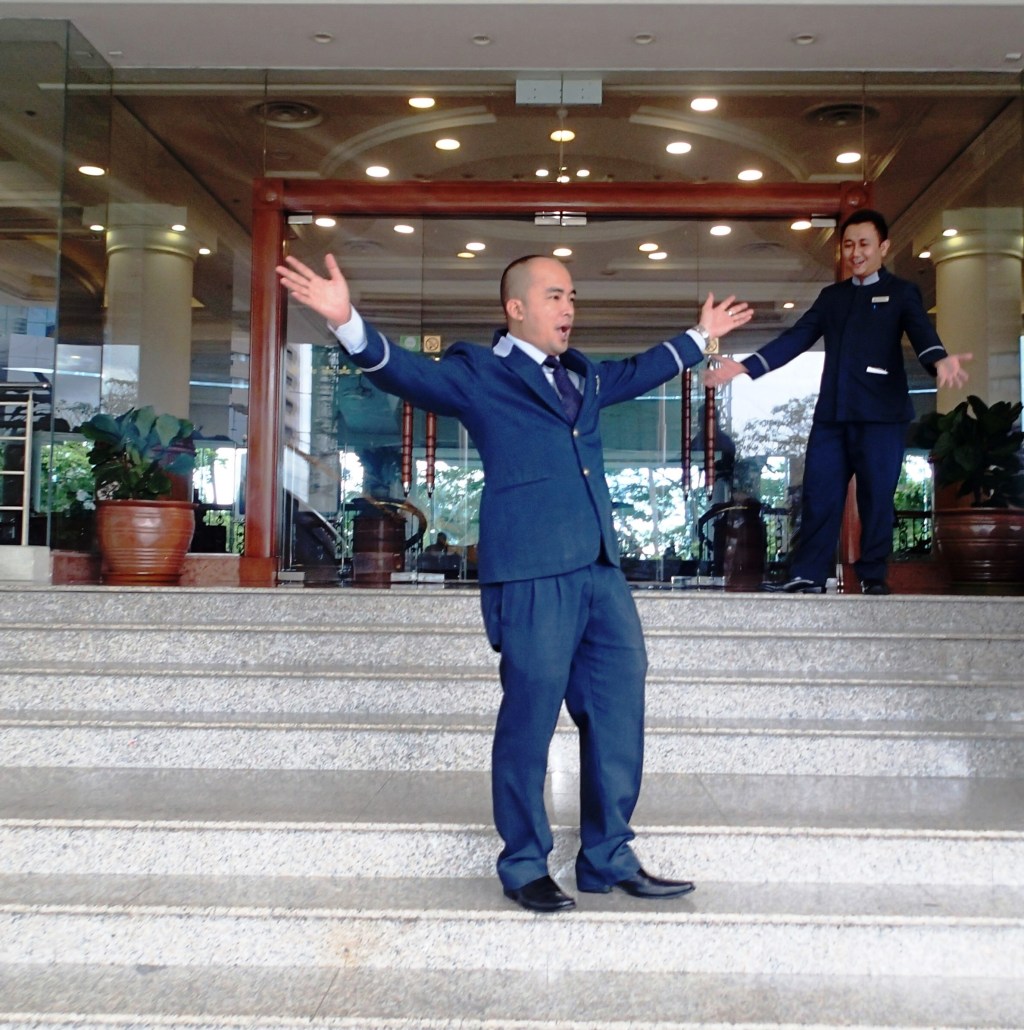
I’m standing in the lobby of the Grand Dorsett Labuan amidst a crew of Dorsett Grand Labuan staff. They are about to perform their welcome song for my crew, an assortment of trekkers from various parts of Australia who have recently completed the Sandakan Ranau Death March Trek, retracing the footsteps of Prisoners of War in 1945.
I’ve been pulled into the group and handed the song sheet which is in English and Bahasa Malay. I keep up reasonably well even though I don’t know the tune and speak very limited Bahasa Malay.
The one image I have of this experience is looking up from my song sheet across at the singers alongside me as they belt out the line, “We welcome you to Dorsett Labuan!” and they’re singing with smiles on their faces. They’re not embarrassed and there’s no reluctance to show their pride and enthusiasm for their hotel.
My group of trekkers are spellbound. Many have travelled throughout the world and it’s the most heartfelt greeting any of them have received in a hotel. I used to think being gonged on arrival and handed a peach iced tea was pretty special but these guys are the best I’ve seen at welcoming guests.
The Dorsett Grand Labuan is the only five star hotel on the island and just minutes from the airport, waterfront and the busy town centre. The hotel receives regular awards for its customer service and with their singing staff I think they also have a good chance of winning Malaysia’s Got Talent.
Labuan Island is a territory of Malaysia off the western coast of Borneo and to the south of Kota Kinabalu, the capital of Sabah. It can accessed easily by plane or ferry or if you’re slightly more adventurous, by speed boat. Electing the speed boat route takes 20 minutes from the mainland and you motor past islands, shipwrecks and red hulled offshore drilling ships waiting for their next job.
The island has a wonderful pace about it and even the traffic is slower than you’ll find in other parts of South East Asia and distinctly more courteous.

While most tourists come for the great duty free shopping, particularly the textiles and technology, there is also a very good museum with free entry located five minutes’ walk from the Dorsett Grand Labuan. The colourful history and cultural themes of Labuan is well documented with many interesting and interpretive displays.
The first Governor of Labuan, James Brooke, was better suited to his original inspiration for coming to Borneo in the 1800’s. After some strategic discussion at the Raffles Hotel in Singapore, Brooke set off across the South China Sea to rid Borneo of its Pirates. He was better at being swashbuckling than sitting behind a desk but those who took his place have done a magnificent job of creating an island where the shopping is brilliant, the history is rich, the hawker markets are cheap and delicious and the diving and fishing is just about unbeatable anywhere in the world. For those with a love of reality tv, Survivor Island, where the first ever Survivor series was set, is located nearby to the north and tours allow you to wallow in the same mud pools as the contestants, including a nude Richard Hatch.
My trekking group have come to Labuan to bind together the Sandakan Death March Trek that began with many days of trekking through mountainous Borneo jungle and then riding a stock carriage train to the coast, then a fast boat to the island. Every step we’ve taken and the stories we have talked about have led us to Labuan War Cemetery, the final resting place for the few whose remains are known and the many who are only ‘Known Unto God’.

As we walk the lines of memorial graves we think about the Australian and British Prisoners of War who perished at Sandakan and Ranau and on the three death marches in 1945. We think about how the final 15 prisoners were shot and killed 12 days after the war had finished. From 2434 Australian and British Prisoners of War, only 6 survived.
We stand in front of Richard Murray’s grave. He stepped forward from a line of men and said that he alone stole rice, knowing he would be killed. Stealing rice was a capital offence and he sacrificed his life so that others may live.
We stand in front of Captain John Oakeshott’s grave, a doctor who had the opportunity to escape but decided to stay with the sick. He was one those killed 12 days after the war had ended.
As a fighter jet from the Royal Malaysian Air Force flies over the Cross of Sacrifice at the cemetery we also remember the sacrifice of so many local people from Sabah and Sarawak who were killed during World War II and the bravery of those who provided assistance to the prisoners.

It is a beautiful war cemetery, well maintained by Labuan authorities and staff are on site Monday to Friday from 7am to 4:30pm.
While the trek has been physically exhausting the walk through Labuan War Cemetery has been emotionally exhausting. Returning to the Dorsett Grand Labuan, our group is quiet and some choose to just sit in the lobby while others go off to breakfast, for a swim or a play with the resident sun loving cat.

For each us, in our own way, we find the space to reflect on our journey. I’ve cried during this trek but for now I am smiling. As I remember the staff at the hotel who sang to us I know I have to come back and share this experience with others, for the history of the past and for the friendships of the future.

First published by the West Australian newspaper.
When my wife and I lived in Kalgoorlie more than 10 years ago, we were good friends with a local television journalist. We all used to laugh at how often she could continue to get away with introducing her stories with “Out here in the Goldfields, things are done differently.”
Things are still done differently in the Goldfields and, heading back to Perth on the train, I felt sure my kids would one day reflect similarly on how differently things can be 600km east of Perth.
Our holiday began with the early morning departure of the Prospector from East Perth. The darkness, cold and bright lights of the train platform had the kids wide-eyed and questioning everything they could make out through their foggy breath.

As we cut a swathe through the suburbs, it was clear the Prospector is just as comfortable as flying, and with more to see. If you turn away from the view of fields and regional towns flicking past the huge windows, you can plug into a good range of programs provided on the entertainment system. There is even a “traincam” so you can watch the track ahead.
Arriving in Kalgoorlie, we collected our car from the only hire-car business I could find that would meet us at the train station rather than require us to get a taxi out to the airport to collect a car.
Geoff from Racey Rentals had a booster seat fitted for Tom which, unlike a recent hire car experience in Broome where we were left to fit the seat ourselves, was welcome. Out here in the Goldfields, things are done differently.
Our first stop was dear old Paddy Hannan who looks down at the pavement in front of the Kalgoorlie Town Hall and waits for thirsty passers-by to take a fill from his water fountain drinking bag. He became a reference point for the kids over the next couple of days, as everywhere we travelled had to be via Paddy.
That night we made our way to dinner, which I had built up with the embellishments that only a father can get away with.
We had booked months in advance to have dinner on the veranda of the Kalgoorlie Hotel overlooking Hannan Street, with the Kalgoorlie Town Hall on the other side of the road. I had told Matilda and Tom that I had organised for the City of Kalgoorlie-Boulder to light up the town hall just for us.
I am so blessed to have two children who love me enough to hang on to, and believe, every word I say.
Arriving on the veranda, I was stunned. The restaurant was empty. What had become of this once-straining veranda? I stepped inside and knocked on the office door and found the hotel owners Jenny and Craig Alderdice.
It was with Jenny that I had made my booking for dinner a couple of months earlier, anticipating Friday night would be busy. Jenny and Craig asked us to follow them onto the veranda and there, on the spot I had described on the phone when I made my booking, was a fully set table with four chairs.
They had decided not to open the restaurant on this particular evening but had kept my booking (something about my enthusiasm for wanting to revisit my past and share it with my kids). The veranda was ours for the night. The staff for the kitchen and restaurant downstairs catered to our every need. Out here in the Goldfields, things are done differently.
We headed east out of town the next morning for the short drive to the old Kanowna townsite and cemetery. It’s not a ghost town, it’s a townsite.
The layout of where things were is clear to see and its starkness teaches you about the reality of life in the Goldfields: you struck gold, built a town, heard there was gold somewhere else, packed up the town and moved there.
Kanowna was gazetted in 1894 with a population of over 12,500 by 1899. By 1953, the alluvial gold had gone and the town was abandoned. Walking through the cemetery was the best way to get a sense that people once lived there.

Returning to Kalgoorlie, it was time to get to the kids’ number-one on the hit parade: the Superpit. On previous travels I have sometimes been guilty of playing up the sights to the kids, which has led to some astounding pronouncements of anguish: “That’s not a pink dolphin!”; “That’s not a pink lake!”
I should have learnt my lesson but I was excited as well and the Superpit didn’t disappoint. In preparing my kids for the big hole, I had researched it well enough not to rely on the information boards.
Nearly 2km long, 600m deep, 50 years to fill up with groundwater. Only one in seven of the haul trucks has high-grade ore containing gold, and that one lucky truck may just have enough gold in it to fill a golf ball. And they don’t stop, ever. They just keep filling up those trucks 24 hours a day. Out here in the Goldfields, things are done differently.
Leaving the Superpit behind, I make our next stop the Metropole Hotel in Boulder. Disappointed it is no longer painted the blue that I remember (I had promised the kids a blue pub, so as we pulled up there were cries, “That’s not a blue pub!”). Explaining that the real reason we’re here is for what’s inside, I stride into this wonderful hotel and triumphantly point down to the floor next to the bar.
Covered over with a very solid piece of glass is a shaft that used to allow miners to come up and trade a piece of gold with the publican for food and a beer. These days, you can drop a coin into the shaft, where it enters an old bucket and is hauled to the top by the publican who hands it over to local charities.

Next it’s the Palace Hotel, built in 1897, on the corner of Maritana and Hannan streets. While the exterior of the Exchange Hotel across the road is probably more photographed than the Palace, the interior of the Palace is, just as likely, more photographed than the Exchange.
As you step into the foyer you are met by a plush, ornate carpet and a beautiful curved wooden staircase that leads up to the accommodation and restaurant. Near the staircase is the enormous and elaborate Hoover Mirror, a gift to the hotel from Herbert Hoover, later the president of the United States. Hoover spent time in the Goldfields and fell in love with a Palace Hotel barmaid.
It’s yet another example of how everything in the Goldfields seems and usually is, bigger. The holes in the ground, the trucks, the road width and the mirrors. Out here in the Goldfields, things are done differently.
At the WA Museum Kalgoorlie- Boulder we take in the history as best you can with kids. The wooden bike, gold vault and viewing platform from the red mining headframe leave the lasting impression you hope for as a parent doing whistlestop tours.
The Hannans North Tourist Mine offers the kids the opportunity to pan for real gold in muddy water, and see gold emerge from the dust and dirt of a dry blower, the way most gold was found with water being such an expensive commodity back then.
The kids scramble over haul trucks, sit in big tyres and then participate in a round of two-up with local two-up historian Danny Sheehan. As a boy, Danny attended illegal bush two-up gatherings organised by his father.
Danny explains how important the game was in the Goldfields, as the very nature of so many of the people who travelled to the area was to gamble with everything they had to try to secure a fortune.

With Danny’s own two-up currency, we negotiate our bets with others around the ring. Very quickly, the crowd turns from shy tourists to loud and absorbed faux-gamblers intent on watching Danny’s deft flip of the coins.
With not a lot of time left, we make a stop under blue skies at Hammond Park, a wonderful playground surrounded by kangaroos, emus and cockatoos, one of which delights in calling out to departing visitors, imploring them to spend more time watching him dance on his branch.
Within the park is a structure that stands out as a well-known local feature.
The Hammond Park Rotunda, built in 1903, was originally named the Victoria Park Rotunda, where it was located. Crowds would gather around to listen to brass bands and orchestras.
The rotunda, one of the biggest in WA, has an onion dome, spire and crescent moon, inspired by Muslim architecture and perhaps a tip of the hat to the Afghan camel drivers who travelled through the Goldfields delivering much-appreciated supplies.
An Islamic-inspired rotunda: out here in the Goldfields, things are done differently.
Originally published by the West Australian Newspaper and on the Rottnest Island Authority website http://www.ria.wa.gov.au.
Do you remember as a kid going to a classmate’s birthday party and as an outdoor activity, because they were all outdoor activities, being given a treasure map? Was it tea stained, burnt around the edges and perhaps missing an entire corner because whoever had used the match lost their concentration for a second?
The best maps were those of fictional islands. What’s not to love about islands with small coves and sweeping bays all ringed by a vicious ship eating reef with only one small, deep passage through? On the island would be palm trees laden with coconuts, a mountain or volcano and lots of sneaky quicksand. It’s possible I’m now channelling the old television program, Danger Island, so I’ll leave it there for island descriptions.
Surely I’m not alone in finding all maps exciting but it’s the hunt that is even more exciting. The competitive challenge to outwit your friends was always more rewarding than a shoebox full of musk sticks and clinkers.
Back to channelling television programs, I have recently discovered an activity that closely resembles the immunity idol searches on Survivor. That frustration of knowing you’re in the right area but can’t pin down the location of an object you know must be there but you don’t know what it looks like.
Geocaching. It’s a great name for the modern day treasure hunting activity. The worldwide geocaching mantra seems spot on; if you hide it, they will come.
It’s more than treasure hunting though. There’s a different reward at the end which brings me back to the hunt being almost more fun than the find. With geocaching you find something but it’s not valuable and you needn’t take anything from it. In fact, you’re invited to contribute something to it.

Geocaching is the search for registered small stores of items or written notes that are generally very well hidden or where they’re not hidden may be very tricky to open. Using a smart phone or GPS (Global Positioning Satellite) device, geocaches can be found worldwide and registered through Geocaching.com which is managed by Groundspeak. The goal of Groundspeak is to ‘make everyone an explorer and to put an adventure in every location’ and ensure caches are appropriate and safe for people to search for.
It’s the ideal activity for anyone who likes the outdoors and their smartphone but especially for a family whose young members have an insatiable appetite for technology and whose older members love the outdoors.
Think about the line in ‘What A Wonderful World’ where Louis Armstrong sings, “I hear babies cry, I watch them grow, they’ll learn much more than I’ll ever know”.
I know what he means. My kids, Matilda 11 and Tom 5, are so adroit with technology and the absorption of information.
With that memory of the best treasure maps being islands and wanting to get really stuck into geocaching, what better opportunity could there be than to explore Rottnest Island and its trail of registered geocache sites?
While Rottnest has become renowned for its snorkelling and dive trails, embarking on the geocache trail is a land based adventure that gets you exploring the island and seeing things like you’ve never seen them before.
Before we travel to Rottnest I catch up with Griffin Longley from Nature Play WA. Despite Tom’s reluctance to accept Griffin’s invitation to make a cubby by the river’s edge near Nature Play WA headquarters, the CEO of Nature Play WA accepts my declaration that my kids really do enjoy the outdoors.
Griffin explains that geocaching is supported by Nature Play WA because of the benefits that align with so many of the activities they promote and undertake across Western Australia.
What I’m really taken with is his description of community awareness and connection. By geocaching you gain a greater understanding of what’s in your community and a greater connection to your community by knowing more about it, including of course where things are hidden.
GPS units are available for hire from Nature Play WA. While a smart phone has the capability of locating geocaches, a GPS unit has many advantages; they’re straightforward with easy to navigate menus, they are rugged, splash proof (some are even waterproof) and, particularly for children, they represent yet another technological device that they can master quicker than I could manage to open the battery compartment.
Our first search is out near Kingston Barracks and the swinging arrow on the compass of the GPS directs us to the coordinates of a geocache and then it’s up to us to scramble, peek, prod and scrape for an object that fits the description on the Rottnest Geocache Register.
We find what we’re looking for and it’s exhilarating! While the cache itself is not remarkably exciting I come back yet again to the hunt being more fun than the find.
One thing that is clearly apparent even at this early stage of our weekend but we keep coming back to in our observations is that it’s so important to remember that when you’re searching for caches in bush locations you need to be careful about where you put your hands and feet. Geocaching heightens your awareness of your location, particularly the beauty of the bush, so making sure you don’t damage flora and fauna is important.
It can be tough though. Some of those caches just about demand whoops for joy and jumps of elation. I’m being very mindful in this article not to give spoilers but when an online hint suggests that a cache is located at waist height and ends up being found on the ground I’m just glad Matilda didn’t log my comments on the accredited geocache website.

The geocaches I most enjoy are the ones where we all search and then one by one our enthusiasm falters as we reach our point of perplexion. Tom is always the first, particularly when we explain the geocache is never found on bugs, or in bugs.
I’m normally next, I like to have a quick squirrel about and then under the guise of, “Best I leave it for the kids!” I back away to observe proceedings as Matilda and her mother stoop low, stretch high, check coordinates on their GPS’s, look around and then start the routine all over again. I think there’s an opportunity to label this the ‘Geocache Dance’.
At last count over two million geocaches have been hidden all over the world. Wherever you travel, just search online for geocaches in your location and see what you can find. In Western Australia there are hundreds of registered geocaches in the Perth metropolitan area and throughout the state; from Rottnest Island to Quairading, Busselton to Denmark, Wedge Island to Grass Patch, Corrigin to Karajini and Kununurra to Exmouth. Here’s one to look for this weekend if you happen to be in the area; Mount Archie in the Little Sandy Desert at GPS coordinates S25, 33.915 E123, 14.331 (WGS 84) and it’s at an elevation of 471m.
There are a number of geocache types you can search for. The traditional cache is a container of some type with a log sheet and maybe a few items left by previous geocachers. Some of the traditional cache containers found by my family across the state include plastic containers, old ammunition tins, mint tins and handcrafted wooden boxes.
Mystery or puzzle caches can involve complicated hints to determine the coordinates or maybe a cache that is easy to locate but difficult to open. Earth caches are geological formations of interest that you can locate and learn about as the required coordinates are usually accompanied by some educational notes.
As an activity, geocaching is intriguing. While you can pack up the family and friends and travel for the purpose of geocaching it’s also possible to search for geocaches in any location you find yourself. Next time you have to travel to far flung sporting fields on a weekend or attend a wedding in the hills, do a search on a smart phone (or GPS if you happen to have one of those) and see what’s in your location. There might be a geocache hiding in the fork of that tree you can see, just over there.
Geocaching is a special way to use technology to have a lot of fun on your own, with friends, competitive teams or with your family. I’m surprised my family enjoys geocaching. It seems that every time a favourite item is lost in the house and desperate searches ensue, it brings out nothing but bitter recriminations and declarations of war on the state of bedroom clutter. Yet somehow, being outdoors together, consulting technology and hunting together for an unidentified object brings out laughter, support, a gentle sense of competition and a great sense of adventure.
The writer and his family were guests of the Rottnest Island Authority.
To learn more about geocaching go to the Groundspeak website at www.groundspeak.com, www.geocaching.com or Nature Play WA on www.natureplaywa.org.au
The writer was a guest of the Mandarin Oriental, Singapore Flyer and Tiger Air.
For a recent trip to Singapore, travelling from Bali, my family elects the Singapore headquartered Tiger Air to carry us. Tiger Air is now part of the Value Alliance, the world’s largest partnership of leading low cost airlines.
Our flight meets and exceeds our expectations. We leave on time, arrive early and get our bags quickly. I could leave it at that for my expectations but there are also some other experiences that deserve a mention. Before the flight, Tom (6) is invited to the cockpit to meet the pilots and study the dizzying array of instruments. He talks to the pilots who have noticed his t-shirt has an aircraft print on it. It’s a visit I’m allowed to photograph and will later feature in his presentation for class news when school resumes.
Taking our seats, Matilda and Tom are each presented with Tiger Air gift bags with a soft tiger toy. It settles the kids well, particularly given their concerns for not having movies to watch like the full service airlines provide. It’s easy to forget a time when there was no personalised inflight entertainment offering games, tv shows, movies and music. Tiger Air have got around the lack of entertainment by providing a friendly service that includes making conversation and taking the time to look after the kids.
For most of our family, we have visited Singapore before. For our youngest member, Tom, it’s a first look at this remarkable island. We only have two days and Tom is still a bit short to go on many of the rides available at the theme parks on nearby Sentosa Island.
Ruling out Sentosa we also decide to give Singapore Zoo a miss this time. It’s a spectacular zoo that we have enjoyed by day and by night in years past (sans Tom).
Singapore has so much to offer that even without being drawn to the drawcards of the zoo or Sentosa Island we have decided to spend our time within walking distance of our hotel.
We arrive at the Mandarin Oriental hotel, perfectly placed in the heart of Singapore and looking out in all directions thanks to its oriental fan shape design. The Mandarin Oriental has 527 rooms and suites and we’re lucky enough to have two rooms overlooking Marina Bay.
For a number of years I have heard people describe atrium style hotels as outdated but it’s not my love of all things 80’s that is responsible for my love of atrium style hotels. I love that wonderful sound you get when you enter atrium style hotels. It’s a hum. You can hear the life of the hotel. It makes you feel a part of it right away and the warm sunlight streaming in from high above the centre of the hotel add to the light, active atmosphere. Glass elevators glide up the sides of a column that rises up from the centre of the hotel.
As night falls, Marina Bay becomes one of the most spectacular city sights in the world. Each of our two rooms has a wall sized panoramic window that feels as if the activities on Marina Bay are there to entertain just us. Way out to the left are the Gardens By The Bay while dominating the Marina Bay landscape is the Marina Bay Sands Hotel with its three tiers, topped by a structure surely inspired by Noah’s Ark. In front of the Marina Bay Sands Hotel is the ArtScience Museum, described as resembling an opening lotus flower and often referred to as the welcoming hand of Singapore.
Further around the bay is the Fullerton Hotel. The former 1920’s post office basks in its colonial past with architecture designed when the British Empire was at its height. In front of the Fullerton Hotel is the Merlion statue, water cascading from its mouth into the bay. Closer to the Mandarin Oriental is the Esplanade Theatre building, resembling the biggest durian fruit you’ve ever seen and on the waterfront near the hotel is a street food market with sizzling satay sticks and giant crabs trussed up, waiting to be cooked with black pepper or maybe chilli and garlic.
Having taken in the view, taken a breath and taken in the view again, it’s time to head out. We’ve got a booking on the Singapore Flyer, one of the world’s greatest giant observation wheels. In your capsule at the top, you are 165 metres off the ground and you have 360 degree views of Singapore and the sea beyond.
The Singapore Flyer doesn’t stop and you step into your capsule as it slowly rotates through its orbit. For half an hour you can look at the islands great landmarks and you have plenty of time to try out the various features of your camera to get some spectacular photos.
It’s a great way to start your Singapore adventure. While it’s gentle and relaxing, the anxiety starts to build that there is just so much to see and do. Perhaps it would be better to do the Singapore Flyer at the end of your adventure so you could look out at everything you’ve done. I’ll leave it to you to decide.
The Singapore Flyer venue includes hawker style food stalls and a gift shop with plenty of merchandise to stock up for friends, family and work colleagues.
On our way back to the hotel we walk along the waterfront and through a food market busy with locals all bustling for the food being sizzled and grilled to order. Back in our room we’re just in time to sit at our window and watch the laser show that takes place on Marina Bay each evening. Streaks of purple and green scan across the bay but tiredness is setting in and as we take the shopping bags off the beds they are quickly replaced by sleepy heads.
The following day the family spend some time in the 25 metre swimming pool that while not quite on the rooftop is certainly up high and has great views of the city skyline.
Singapore has always used space very well. There is room to work, rest and play, and breathe. The Mandarin Oriental similarly uses its space very well. Apart from the space created by my beloved atrium, the views from the in-house Chinese restaurant are of a green belt of foliage on a large balcony, beyond which is the congestion of buildings clamouring for the sky. Around the pool deck there is wide open space and more foliage that breaks up the city skyline.
While the family are swimming, I have gone to the hotels spa for the signature spa treatment. They have their work cut out for them with me. I have had one spa treatment before in my life and as I tell the staff, it resulted in me mistaking the disposable underpants as a hairnet. Added to this sense of unfamiliarity and anxiety is the damage I have done to myself in recently climbing a mountain. We discuss my blackened toes and agree that they should not be touched. I’m not sure who was most relieved not to touch them.
The signature spa therapy devised for me considers my anxiety and desire for a simple experience that is enjoyable and therapeutic. I answer a questionnaire about my health as honestly as I can and in consultation with my therapist we selected oil aromas that calm me and actually stop my mind and body fighting each other. I stop thinking about what’s coming up next in my life. I stop thinking about what I need to do for my family. I just stop. I relax.
I returned to my family still with blackened toes but with a spirit that was soaring higher than any summit I’ve stood upon.
My rejuvenation was quickly tested by our next Singapore excursion. It’s time to pick some shopping malls to visit and close to our hotel is the Raffles City Mall, Suntec and Marina Square, all renowned for having plenty of opportunities for all ages to find something to buy.
Our mission is to make Matilda’s day. She has read somewhere, months earlier, about Bonheur Patisserie who specialise in gorgeous macrons. Macarons and Matilda go hand in hand, or hand to mouth as the case may be. We make our way to Raffles City Mall, pausing for a photo with the kids outside the Raffles Hotel. The Long Bar is calling me back after many years of absence but Matilda’s needs are greater.
Watching her gaze in wonder at the assortment of macarons at Bonheur Patisserie is a greater joy to me than any Tiger beer and a bowl of peanuts at the Long Bar could ever provide. We all choose a flavour to savour and not a word is spoken as we ensure each little crumb is gathered and devoured. My Rum and Raisin is rich and strong while the Earl Grey, Nutella and Salted Caramel all carry distinctive flavours that linger.
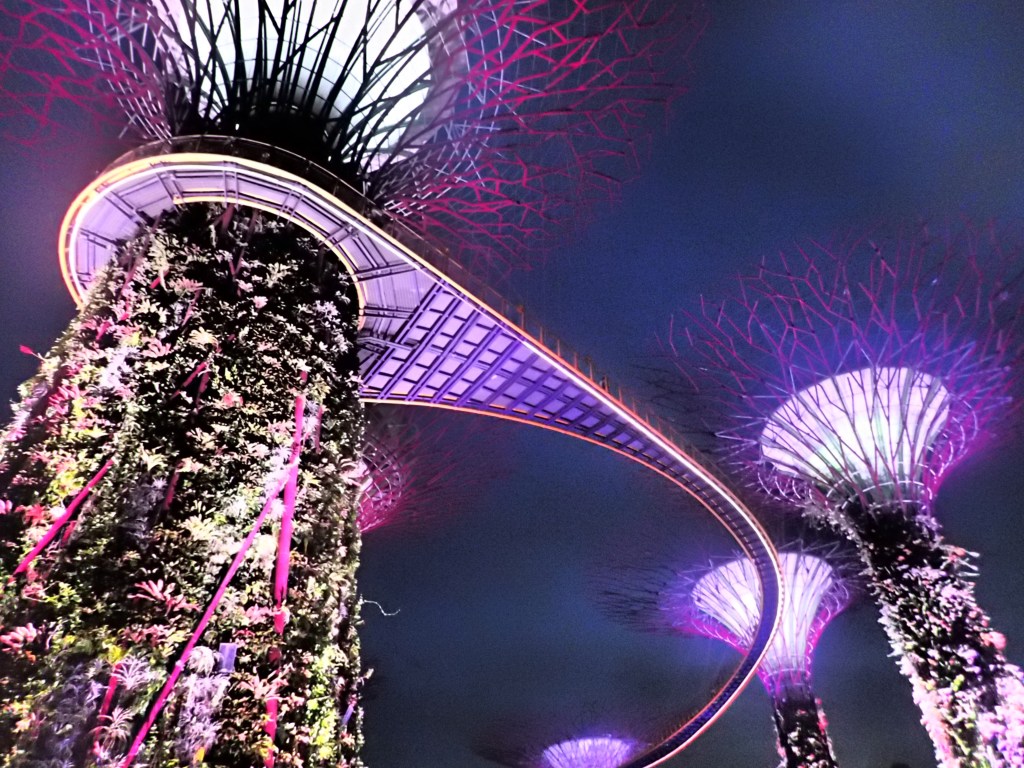
That evening we walk over to the Shoppes at Marina Bay Sands and have a superhero themed dinner at the Super Heroes Cafe before walking to the Gardens By The Bay. For the time we have and the little legs wearing out we decide to forego exploring the 101 hectares of pavilions, domes, lakes, sculptures and conservatories and make our way straight to the Supertrees. These giant structures are between 25 and 50 metres tall, filled with vertical gardens and come to life at night with a display of light and sound described by Tom as ‘Epic!’
I’ve secured tickets for the OCBC Skyway, a steel platform that links several of the Supertrees together. It’s 22 metres off the ground and 128 metres long.

We’re allowed just fifteen minutes to walk on it and take in the view of this amazing botanic park and the city lights beyond. It’s our last adventure in Singapore before heading to Changi airport and it leaves a wonderful impression on all of us.
We leave Singapore having met our challenge. More than that, we have had fun together without having to go our separate ways. We’ve stayed in luxury together, eaten and shopped together, enjoyed adventures together and we’ve done it all by walking distances that weren’t too much for even the youngest member of the team. Not bad for just two days. Next time we’ll make it four.
Originally published by the West Australian and also by the United Nations Indian Ocean South East Asian Marine Turtle Memorandum of Understanding.
I enjoy travelling for the experiences I give my children. To see them wide eyed and able to have sensory encounters is remarkable for the influence it has on their confidence with animals, their imagination when drawing, telling stories and their understanding of the world around them.
I am torn now. I don’t even want them to read this article. Our most recent animal experience may not have been in the best interests of the animal. Our most recent animal experience may not have been in the best interests of the participants, including my son and daughter who received a certificate to acknowledge their achievement.
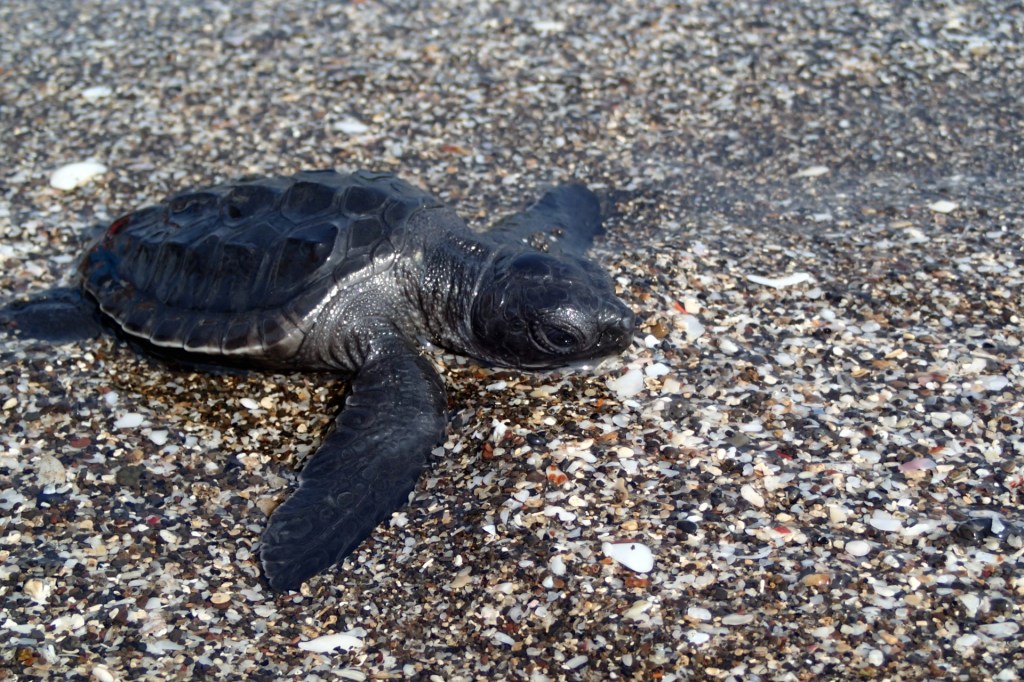
They had very proudly and reverently each released a baby turtle.
After recently returning from an overseas holiday I had some niggling curiosity, not yet concern, about a turtle release we had participated in.
It’s not important where we did the release, I don’t want to shine a light on the resort or even the country. There are numerous countries world-wide that are offering tourists the opportunity to release a turtle from a beach.
I was curious about what I had been brought up to believe about turtles; that the mature females return to the beach where they were hatched to lay their eggs. If this beach was particularly rocky, or strewn with drunken tourists like some turtle release beaches are, what chance was there of a fully grown female turtle returning to this beach and successfully laying her eggs and what were the chances of survival for any hatchlings?
I mentioned earlier that I don’t want to shine a light on a particular resort or country. I have to make my point by shining a light somewhere though. Let’s start with myself, a tourist.
Over the years my family has experienced close encounters with orangutans, elephants, bears, lions, tigers and even attended a piranha feeding where my children were ushered to the front and invited to pour in a container of live goldfish for the piranha to shred before our eyes, for our …eco education.
I am laying myself wide open by declaring what my family has participated in. I’m not calling for a campaign to save the animals by not participating in eco-tourism activities. I’m not saying all experiences are wrong. I’m not saying eco-experiences can’t have great worth for knowledge, understanding and appreciation for life itself.
I am saying that we need to understand that what we are doing, in some instances, may be wrong.
I have been able to contact marine biologists specialising in turtles in Australia and around the world. I’m writing this article because it was at this point that my curiosity became concern.
I spoke with Dr Colin Limpus, the Chief Scientist for the Threatened Species Unit at the Department of Environment and Heritage Protection in Queensland.
Dr Limpus explained that these release programs contravene the biological rule of operation for hatchling turtles.
There can’t be many people who haven’t seen a wildlife documentary showing the plight of little turtles scuttling to the sea. The narrator’s voice informs us of the dreadful survival rate which always seems to be something like, “8 out of 10 hatchlings won’t make it to the water’s edge.” We flinch as various predators pluck them off the sand.
For many cultures, turtles and their eggs are traditional food. As suitable nesting areas continue to decrease this has created an egg poaching industry and black market for turtle eggs and meat. Removing the eggs to a hatchery is certainly reducing the poaching and black market activity.
One turtle release program website says that in the past two years they have taken 50,000 eggs from beach nests and have an 80% hatch and release rate.
So we think that by taking the eggs to a hatchery and releasing the hatchlings at the water’s edge, free from poaching and predation, that we are definitely increasing their rate of survival. It’s what makes this experience feel wonderful. We believe we are helping!
I think we’re wrong.
In my discussion with Dr Limpus he tells me how the hatchling comes out of the nest with an internalised yolk sack that it feeds off for energy over the first three or so days of its life. It’s like an inbuilt can of Red Bull, powering the little turtle down the beach and then swimming nonstop out to sea, maybe as far as 80km before it hits the currents, where it drifts and feeds on jellyfish and other little bits and pieces it finds on the seas highways.
With a scheduled tourist activity like releasing a turtle, the hatchlings are held for a few days to build up enough numbers for the booked participants. By the time they are released the effects of their little Red Bull have worn off and they no longer have the energy to swim the required distance offshore. This means they tend to stay close inshore where they are not exposed to the food they require and may be at increased risk of predation by fish and birds.
By now I was in touch with marine turtle experts from around the world, all responding to my curiosity with photos, essays and opinions.
From the University College of Cork in Ireland, Emeritus Professor John Davenport supported Dr Limpus’ comments, adding that his worldwide marine turtle studies show that most ecotourism interactions with turtles are poor and actually exploit them. Positively, he added that conservation education for children usually leads children to remain conservation conscious for life.
Dr Mark Hamann from James Cook University says that as a parent he understands the conflict between animal welfare, ecological benefit and education. Professor Hamann sees that clearly there are ecological concerns but rarely have the educational benefits of this interaction been examined.
For the Indian Ocean, there is a South-East Asian Marine Turtle Memorandum of Understanding. This is an intergovernmental agreement that aims to protect marine turtles and monitor their habitats.
The Coordinator in Thailand for this group, Douglas Hykle, described to me how a better starting point for our awareness and contribution to the survival of turtles should be with an activity that doesn’t depart from something that occurs naturally.
This is because any change is less likely to be as good as what nature intended. Maybe we should be keeping the nests intact and sitting quietly in our huddled masses as we watch the hatchlings emerge and begin their trek to the water.
My network of marine turtle experts all offered comments to a similar affect; if we teach our children to question and learn from these types of experiences then long term conservation might be in a better place. The resort where my family participated in a turtle release has a strong community focus, employing local people and supporting local conservation programs. Just like the experts I’ve spoken to, the resort believes in the importance of children having educational conservation experiences.
The relationship we all have with wildlife has come a long way. We now all agree that you can’t have a circus anymore with bears on bikes and whips cracking to goad lions to jump through fiery hoops.
We need to learn more about how we can best have an experience with a baby turtle that is meaningful to us, particularly our children, but more importantly doesn’t upset the balance of a process that’s been around a lot longer than we have.