My love of islands came before my love of travelling. Making tea stained treasure maps after reading Treasure Island, imagining tropical beaches as I listened to Harry Belafonte sing, Island in the Sun.
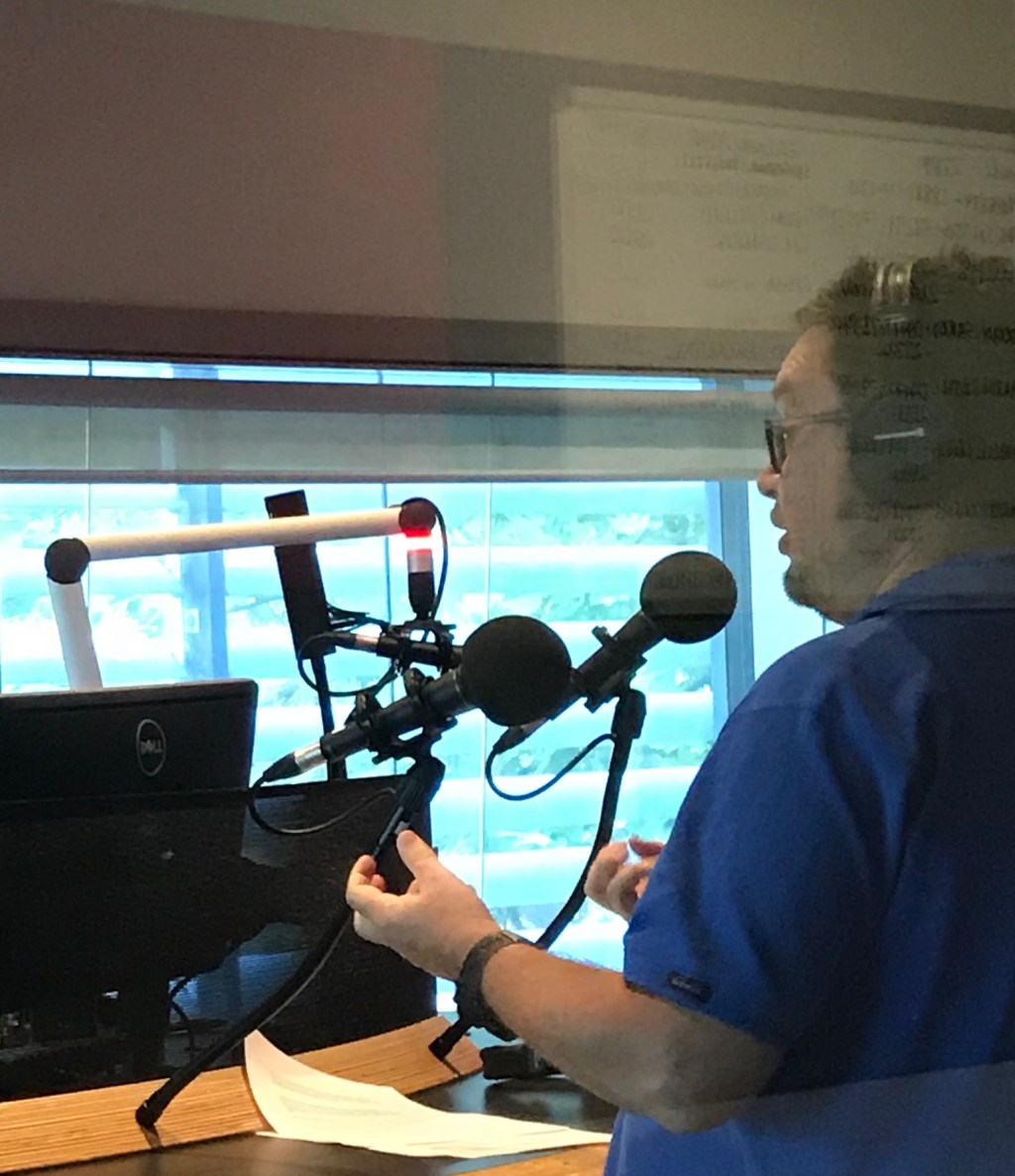
With Burgo on 6PR we spent the evening going ashore on Rottnest, the Abrolhos, Borneo, Hong Kong and others.
Islands have history and culture, some have pristine beaches and impenetrable jungle and others are full of shops.
Whatever your island, go ashore and have the adventure of a lifetime!
It was lots of fun to learn where our best bakeries are. Heats in Cockburn was a surprise that many callers say have the best donuts. Rottnest Bakery wasn’t a surprise nomination and it’s a great example of what we like about our favourite bakeries when we travel. They’re part of that rite of passage moment that defines your arrival. You haven’t really arrived on Rottnest until you’ve been to the bakery.
Williams Woolshed has a sausage roll that will get you through the day and Mount Barker with its range of gourmet pies was a popular choice.
A good bakery can be a reason to travel or it might just be the traditional break on your way to somewhere down the road.
The cream bun at Rottnest Bakery will give you the sugar rush you need to cycle around the islandWilliams Woolshed sausage rolls have become a reason to stop in Williams for my family (pic Williams Woolshed)Many bakeries are on the main streets of country towns. The Toodyay Bakery has a balcony veranda overlooking the Main Street, perfect for watching the world go by as you wait for your cottage pie to cool down.
Enjoy the story above, published in the summer edition of Have A Go News Newspaper. Have A Go News has a circulation of more than 80,000 copies around Western Australia and is also available online and on your favourite social media platforms.
This story features a weekend adventure with my son Tom to do the stuff you might not know about. Some of it has always been there and some of it is new.
Next time you’re on this amazing island, do what you always like to do and do something new as well.
That’s a whale and seal watching face, and a slightly drenched face as well!
While our Hidden Treasures are traditionally within areas that maybe you haven’t considered visiting before, our next Hidden Treasure is all about what you might not know, or have experienced, at one of our most treasured destinations.
It’s not Broome, it’s not Margaret River and it’s not Three Springs or Narrogin.
It’s Wadjemup!
Enjoy listening to the broadcast – live from Wadjemup – on the link below and enjoy reading below, about a couple of days on Wadjemup with my Producer, Tom Parry.
I’ve done a few stories on Wadjemup over the years, including a rite of passage visit with Matilda which was all about snorkelling at the Basin, getting a cream bun and a choc milk from the bakery and riding a bike and only stopping for quokkas, dugites and Ashton Agar.
I’ve covered the island’s remarkable ANZAC Day Dawn service and more recently Tom and I jumped across to the island in a seaplane, lifting off from the Swan River and spending time on the island to help Tom find his spirit quokka.
This sand-in-your-toes destination has the effect on West Australians that I described in last weekends staycation discussion. You know you’re going to have fun but it’s the ability to relax and take on a pace of life far removed from your normal city life that is so appealing to us.
If you haven’t been to the island before you will typically hit the Basin, Geordie Bay, cycle around the island, hit the bakery three times a day and try desperately to remember what your Maths teacher taught you about angles when trying to capture a selfie with a quokka.
Interestingly, if you have been to the island before, you’ll probably still just do those same activities and experiences. As Jerry Seinfeld would say, “Not that there’s anything wrong with that.” but as I would say, “Let’s see what treasure is still to be discovered on our favourite island in the sun.”
Let’s discover a few of the experiences that those who work on Wadjemup wish visitors spent some time doing … just for fun and just for a bit of understanding.
A cultural tour is where a Wadjemup rite of passage should begin. Before you put the flippers on or hop on a bike, put your cultural curiosity into gear.
Enjoy a walking tour of the island that’s much more than a tour, it’s an experience that enriches your understanding of the island from an Aboriginal perspective.
Some of it is devastating and notorious but there’s also the beauty of a dreamtime story that describes how important the west end of the island is to Aboriginal people. There are traditional songs and a very special sand ceremony that reminds you of a time when Wadjemup was connected to the mainland.
The Wadjemup Museum has been recently renovated and full of new displays and new stories and ways of interpreting old stories through touchscreens and audio experiences. Also, out the front is a new engaging space with a mini amphitheatre and installation of sculptures with interpretations of the island.
New sculptures at the Wadjemup Museum
A military maze of tunnels that take you underground and give you an understanding of the importance of Wadjemup during World War II. You descend down steep stairs into the bowels of Wadjemup and from there the artillery shells for the big guns on Oliver Hill were stored and plotting rooms calculated the required trajectory of the big guns that protected the sea lane approaches to Fremantle. Make sure you ask lots of questions because your guides know more than Google. It’s a well paced tour with lots of opportunities to learn and even more opportunities to go ‘Wow!’.
Into the bowels of Wadjemup we go
If you don’t have a boat when you’re at Wadjemup there are a few ways to get on the water and see the island from a different perspective. This summer there are fishing trips for kids to catch some herring and whiting and there are whale watching tours which mean you’re right in the middle of the action rather than departing from the mainland. If you don’t mind getting completely drenched, try the Rottnest Express Adventure Tour which races around the island but slows down and gives way to seals and whales.
Whales, seals and a good drenching
Wadjemup sits in the middle of the Leeuwin Current and this explains why the waters around Wadjemup are always a bit warmer. As I said to Tom, “You can’t blame the seals for the water being warm.”
The Thompson Bay Jetty is perfect for catching a squid in the evening. Cast a line with your mate, hold the torch light on the jig as it floats in the water looking like a prawn on its way to a nightclub and wait for a Kraken from the deep to slide its tentacles over the jig and then pull him in and try and avoid the spray of black ink as he leaves the water.
Herring, whiting, stingrays and squid … there’s a lot going on at the end of Main Jetty
Geocaching is modern day treasure hunting that gets kids outside while using their devices! How cool is that? Across more than 190 countries there are more than 3 million geocaches and a sneaky number of these little hidden stores are on Wadjemup.
As part of your geochaching expedition, or to see Quokkas in the wild and not just outside the shops or inside your cottage, try one of the walking trails that criss-cross the island. The trails are a favourite hangout for the rangers who love sitting quietly and seeing what Quokkas do when they’re aren’t cake crumbs around.
The path well-travelled on Wadjemup inevitably leads to the bakery. While the bakery is a wonderful rite of passage in its own right and eating a cream bun in the shade of a big old Moreton Bay Fig tree is a real treat, try a road less travelled and grab a felafel wrap loaded with jalepenos from the Lane Café, on the other side of the mall. Actually, even better than the felafel wrap is the Cray Dog. I’m no food reviewer but I know the words to use; succulent, dreamy, fresh, indulgent and joyful.
Cray Dogs. That’s right. Cray Dogs.
Wadjemup is a hidden treasure because there are tours and opportunities to get a better understanding of the Aboriginal experience and stories of Wadjemup … and because you can still snorkel and ride your bike but there’s time to explore bunkers and tunnels … and you can still have a cream bun and a choc milk but you can enjoy a felafel wrap as well. Or a Cray Dog. Or two.
So next time you’re on Wadjemup, think about how you can discover some hidden treasure.
But the band plays Waltzing Matilda, and the old men still answer the call, but as year follows year, more old men disappear, someday no one will march there at all.
The line above is taken from the Eric Bogle song, ‘And The Band Played Waltzing Matilda’.
I remember a time in the 1980’s when there seemed to be a popular sentiment that ANZAC Day would fade away when there were no more old Diggers to march.
It didn’t work out that way. Across Australia, ANZAC ceremonies continue to grow and the sense of importance it has in our communities is encouraging people to travel to ANZAC services in communities abroad.
Maybe not quite ‘abroad’ but one of the dawn services in Western Australia that is increasingly resonating as a remarkable experience, beyond just the significance of the event, is the Rottnest Island ANZAC Day Dawn Service.
One of the best characteristics of a dawn service is that it takes a small level of commitment to get up at a time when you would rather be sleeping. There’s a feeling that the small effort you have to make to attend the service is part of the respect you are paying.
As a family, we arrive at Hillarys at 4:00am for the departure of the 4:30am ferry. The queue is noticeably different for a Rottnest bound ferry. There is no tangled pile of bikes being hoisted in cages aboard the boat. There are no fishing rods, eskies and towels slung over shoulders. It is also very quiet.
Speaking to people on board, it’s apparent that most of us are attending the Rottnest Dawn Service for the first time. Dawn, a rather apt name, remembers her father who had been in the merchant navy always saying he would have liked to have been out at sea and seen the sun come up over Australia on ANZAC Day. Merv, a Rottnest Volunteer Guide, is looking forward to preparing our Gunfire Breakfast after the service.
I haven’t been on a sea in darkness for many years. Standing at the stern of the ferry and looking down at the churning white wake and then looking up at the stars I thought I was about to reminisce about my younger days on sailing ships but with the moment at hand and on my mind I thought about the ANZAC’s making their way ashore in a variety of small craft, ill designed for the landing. At that moment, I thought what it must have been like to be heading towards an enemy shore, not just running around Blackboy Hill at the foot of the Darling Ranges.
A ships modern radar that may have been helpful at the Dardenelles in 1915
It is the first time Rottnest Fast Ferries have taken a ferry from Hillarys for the Rottnest Dawn Service. Up in the wheelhouse I meet James, the skipper, and in between safely navigating in the darkness around bulk cargo carriers and cruise ships we talk about the appropriateness of Rottnest Island for a Dawn Service. In 1915, the first ships from the first convoy from Australia left Fremantle a day before the ships in Albany. Their last look at Australia was Rottnest Island.
Our Rottnest Fast Ferries skipper guiding us in to Thomson Bay on Rottnest Island
Arriving at Rottnest just before 5:30am, we were directed to Thomson Bay beach where the service was due to commence. On cue, the first hues of orange began to rise from the east, backlighting the Perth city skyline, across the sea and land, 30km away.
While the roar of a crowd can be uplifting, the silence of a crowd can be more inspiring. I remember as a kid the Narrogin ANZAC Day Dawn Service, dark and cold, frost crackling under feet as we would make our way across the grass to the memorial, towards the orange glow of cigarettes being drawn on by old diggers, followed by a few raking coughs up and down the line.
The lack of banter, the lack of chat. The will to gather in a silence that says so much.
All over the world, as the sun rises, those of us at ANZAC Day Dawn Services are quiet. The service is held under the protection of flights of pelicans that glide overhead. The wreath laying includes representation from the Beaconsfield Primary School Rottnest Island Campus, 9 students who attend school on the island and who have also made a paper poppy display in the Old Salt Store.
With the growing light I am able to look around at the crowd and I am stunned. I had thought that gathered around my family was about 500 people but clearly there is a crowd of at least 1500.
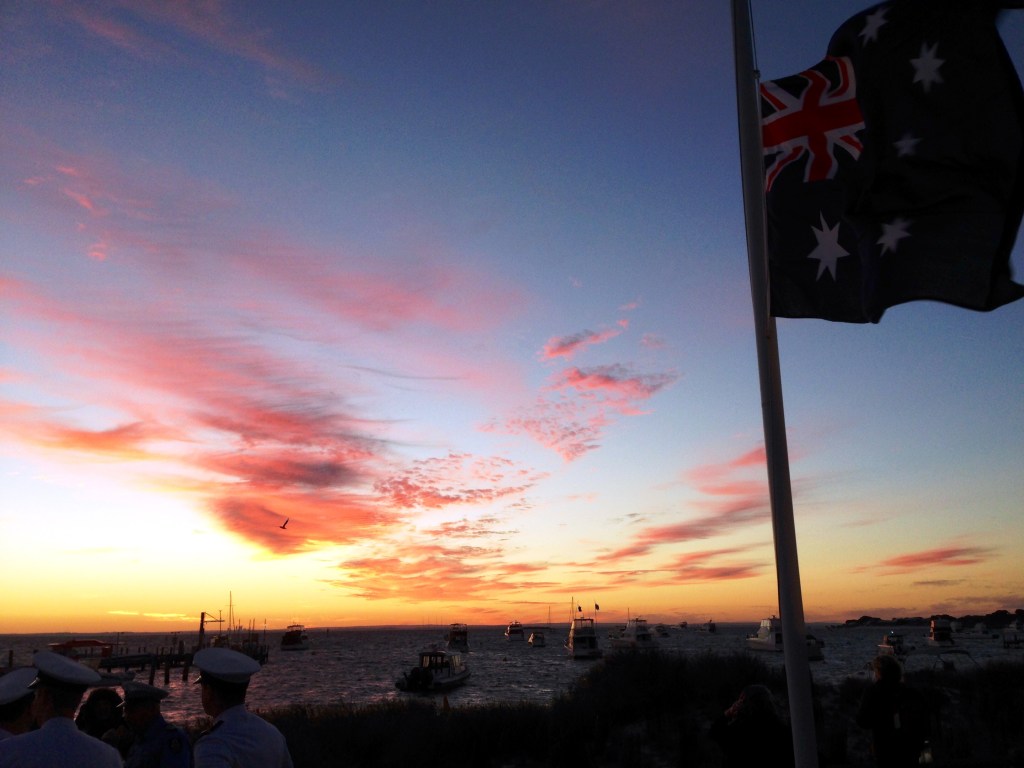
After the service I speak to Penni Fletcher-Hughes from the Rottnest Island Authority. We stand in the Gunfire Breakfast queue and after discussing the numbers of people who have attended we both agree to just enjoy what is unfolding around us. People are standing at the shore of Thomson Bay, hugging each other and looking out to the rising sun over Perth, others are capturing photos of the Australian flag with the dawn sky behind and in the long breakfast queue a bracing breeze passes over us, carrying with it on the air the promise of bacon, eggs and onion in a warm roll.
Gunfire Breakfast
I also speak to the Chairman of the Rottnest Island Authority Board, John Driscoll, who was the Master of Ceremonies for the service. John makes the comment that the wreath laying in particular is an example of the deep and broad community feeling for ANZAC Day on Rottnest with a wide variety of government agencies and volunteer groups represented.
We depart the island for the trip back to the mainland at midday. As always, when it’s time to leave Rottnest it’s not the happiest trudge down the jetty to board the ferry. This time it’s a bit different. I feel connected to a new story, a new perspective and a new community of people so passionate about this remarkable event.
Rottnest has given my family an engaging and enduring experience. It always does, but this is different. We are all a bit tired but more than a bit proud to have been a part of a spectacular Centenary ANZAC Day Dawn Service that the Rottnest community made a lot of effort to deliver.
Also from ‘And The Band Played Waltzing Matilda’;
And the young people ask, what are they marching for? And I ask myself the same question.
I think we’re all marching. We’re all marching to ANZAC services all over the world. We’re all marching to remember.
A recent conversation with the ever bubbly Andrea Gibbs on ABC Perth Saturday Breakfast explored some destinations that took us around Western Australia, over the border to some of my favourite states and finally overseas to a destination that’s just so cool to say and even better to experience.
Firstly, with ABC Producer Molly Schmidt firmly twisting my arm, we explored her hometown and holiday hangout, the Porongurups and Albany. Then we ventured across the coastline with some descriptions of Elephant Rocks, Greens Pool, a bit of beach driving at Peaceful Bay and the discovery of giants in the forests around Walpole.
ABOVE: WALPOLE TREETOP WALK
Then we had a chat about new ways to see new destinations and Rottnest is a great example of this. This familiar destination is a rite of passage for Western Australians and a bucket list item for most tourists to the state. With the new seaplane service taking off from the Swan River in front of the city you’re on Rotto in 20 minutes and can explore this incredible island, both on land and beneath the waves, before making your way back on one of the many ferry services available.
ABOVE: SWAN RIVER SEAPLANES TAKE OFF ON WATER AND LAND ON … LAND.
ABOVE: THE BASIN AT ROTTNEST ISLAND, MORE THAN A FAVOURITE, IT’S A RITE OF PASSAGE.
Next we took a trip to Tasmania and Andrea got very excited by my descriptions of the more than 20 gin distilleries to be found on the island and various DIY gin courses that are available. We then came back to the mainland and to our great neighbour, South Australia. There’s so much to see and there’s more to see than amazing wineries. There’s some cage diving with Great White Sharks and a slightly more sedate wildlife encounter at Whyalla in the Spencer Gulf you’ll find the opportunity to snorkel with giant cuttlefish.
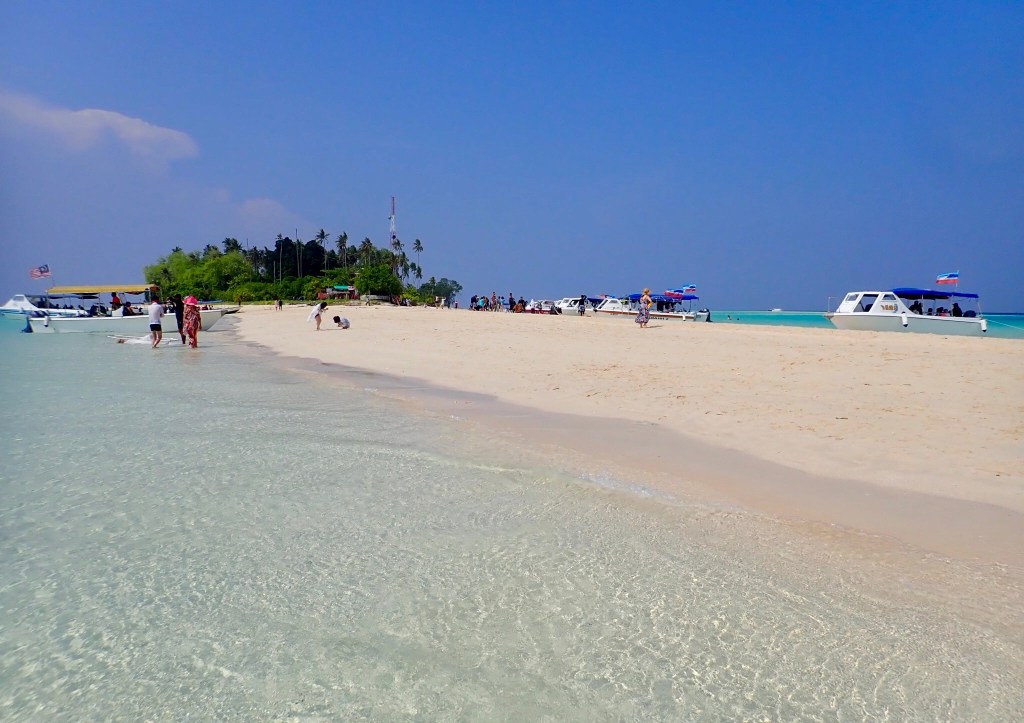
To finish our travel tour we hopped on a plane to Malaysia and visited Malacca. I love just saying it. Malacca. The Straits of Malacca have been an important sea trading route for centuries and led to an influence in this gorgeous town of food, culture and architecture in the styles of the Portugese, Dutch and British. Interestingly, as well as having world heritage significance, funky hidden bars, evening river cruises and smiling faces everywhere, it is also one of the first large towns anywhere in the world to ban smoking in public. Malacca. Say it with me. Malacca.
ABOVE: AN EVENING CRUISE IN MALACCA
ABOVE: MALACCA, OR MELAKA.
Travel discussions can lead you down a rabbit hole of inspiration. This year try and think a little bit about trying to benefit the destination you’re going to. Consider, for example, amazing destinations like South Australia who need our help as tourists to recover from the bushfires, particularly on Kangaroo Island. In Western Australia, try a road trip to a country town you haven’t visited before or find a new way to visit a familiar destination, like a seaplane ride to Rotto.
Enjoy your travels, don’t be put off travelling, just try and contribute with your travelling.
There’s a little island off the coast that for quite some time now has attracted Western Australians, other Australians and increasingly the international traveller seeking a genuine sand-in-your-toes destination or maybe just an insta-worthy-pic with the worlds cutest animal.
Wadjemup (Rottnest) has just taken a couple of Red Bulls and is revved up for a summer that can still remain laid back or it can put you on your back with exhaustion.
Skydiving, fishing tours for kids, water parks, walking tours and new facilities like refreshment vans on the west end of the island now mean you don’t need to carry litres of water on your bike (plus, always remember that the various tour sites with volunteer guides carry lots of water that you can use to top up your water bottle ….. for free).
Tom and I began our day a bit differently for a trip to Wadjemup. Rather than Barrack Street, Freo or Hillarys, we head to the South Perth foreshore. Within minutes of our arrival, the Cessna Caravan from Swan River Seaplanes comes diving out of the morning sun and lands smoothly on the water in front of us.
Above: From South Perth to Wadjemup
The take off was more graceful than my graceless body surfing at City Beach. The aircrafts pontoons lift off the water in the direction of Crown Casino and the Optus Stadium before banking to the west.
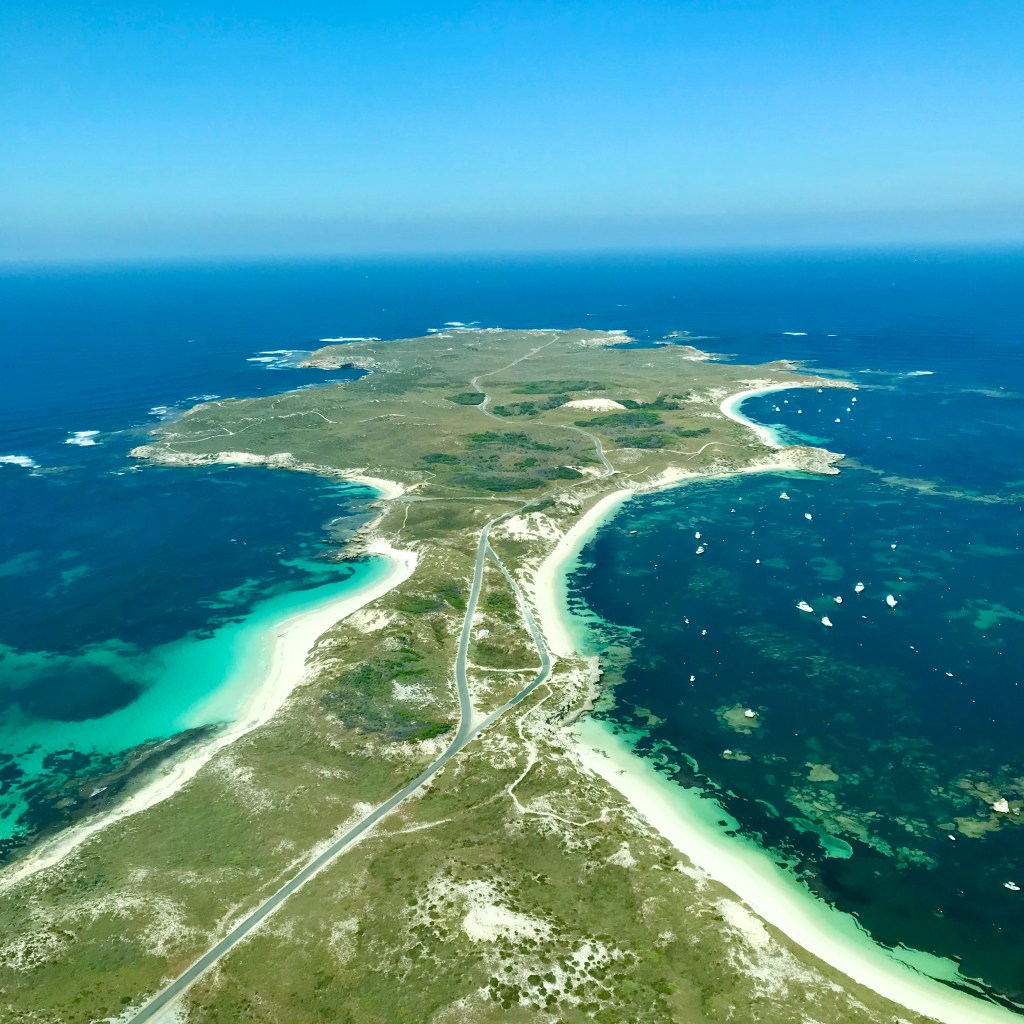
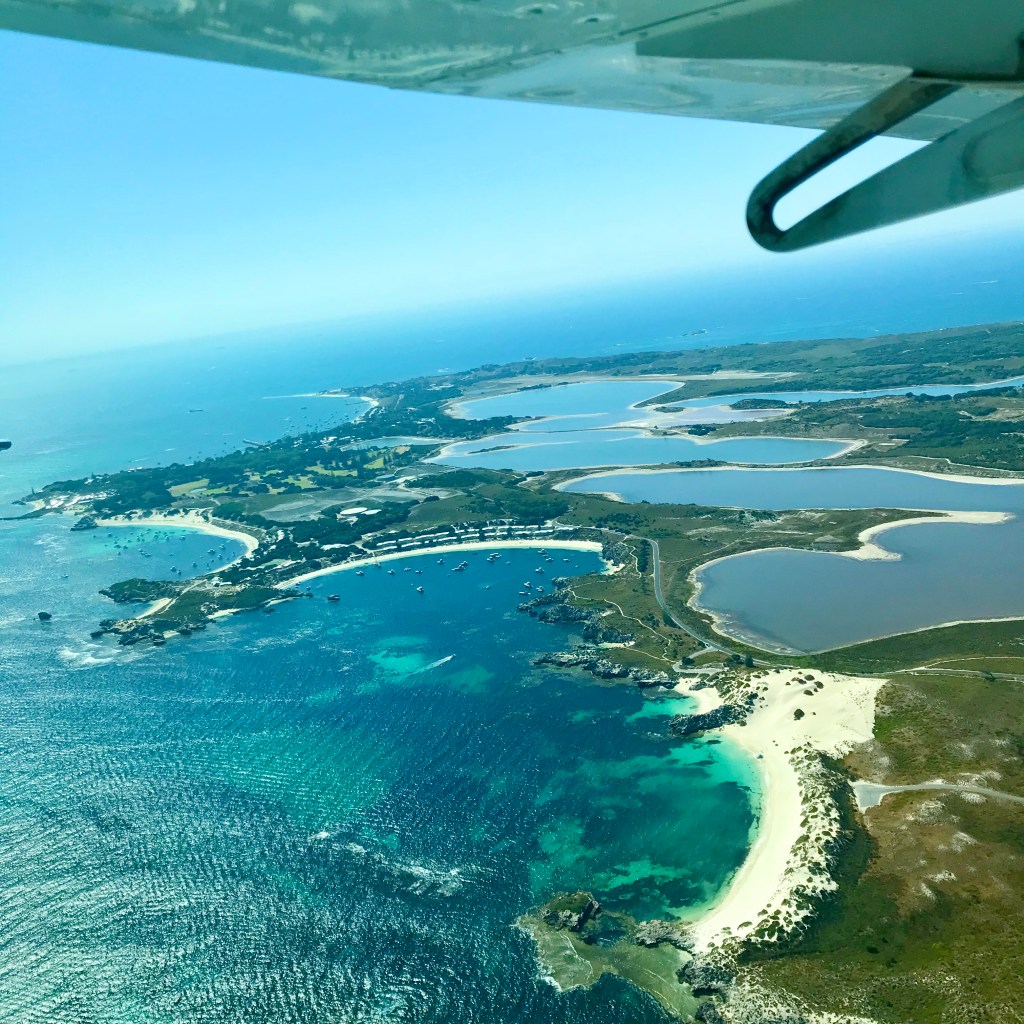
There was time to take in the view of the city, the coast, the ocean and then Wajemup came in sight.
I was scheduled to go live on air, in the air, with 6PR radio to describe the experience but the flight was so fast we’d landed at Wadjemup before they could cross to me. Even with two laps of the island to take in the view the flight was only 20 minutes.
Above: Wadjemup from the air with Swan River Seaplanes
Meeting us on the island is the Rottnest Island Authority Executive Director, Michelle Reynolds, who has very generously accepted the challenge of showing us around the island. For the next few hours we are regaled with historical stories, modern day plans and have the opportunity to learn and experience the island like I have never done before.
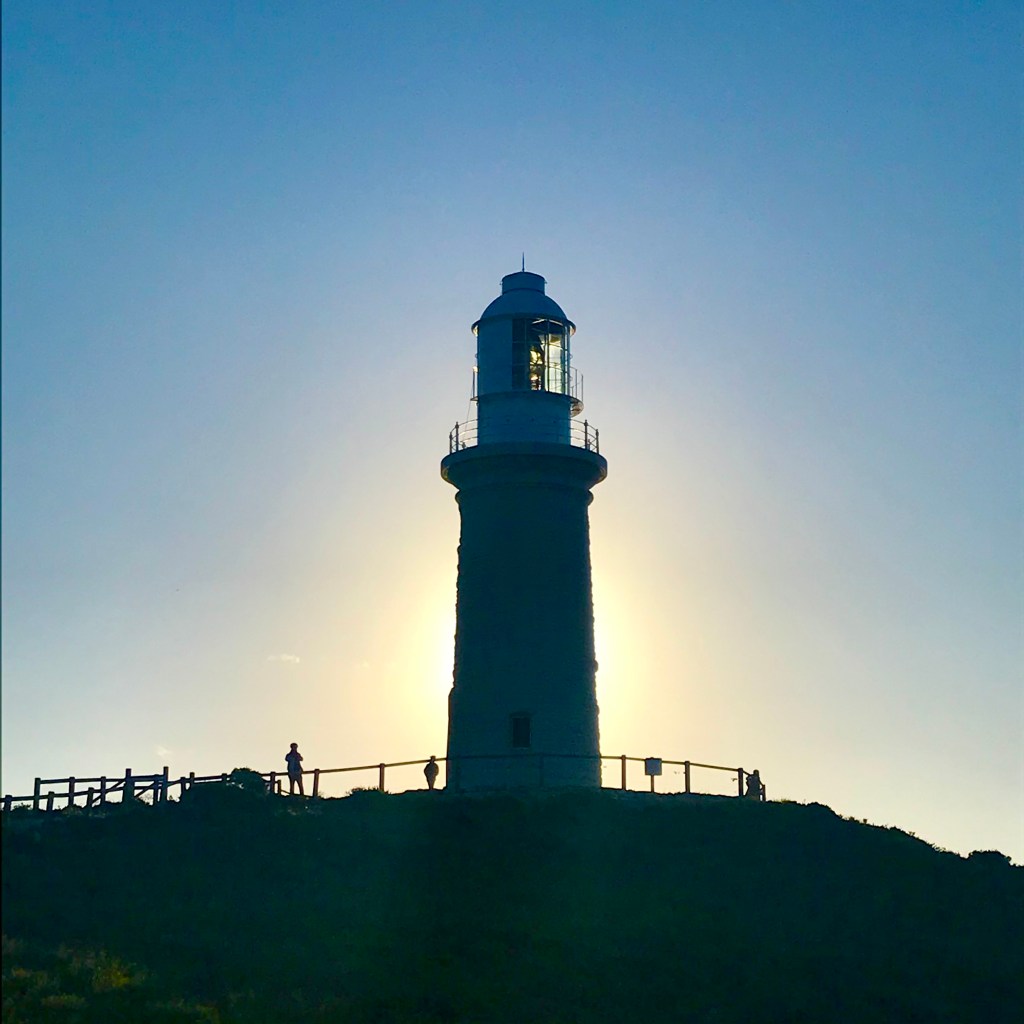
A climb of the Wadjemup Lighthouse is 155 steps and because I’m a father I’m allowed to generate the odd dad joke or two so I asked Tom how many steps it was coming down. Easy. Remember he’s only ten.
Above: Wadjemup Lighthouse and one of the new refreshment vans
We visit the bays, inspect the beaches, salt lakes and tuart groves and watch as ospreys nest and seals bask and loll. We buy refreshments from the new vans and felt a bit guilty, as we entered Michelle’s airconditioned car, that we were possibly depriving a thirsty cyclist of a much needed peach iced tea.
Above: Refreshments from the van at Fish Hook Bay
When we parted ways with Michelle it was with a new appreciation for the work that is going into making Wadjemup better but also for acknowledging what people love most about the island experience, a laid back lifestyle where even sunburn and grazed knees just don’t seem to hurt as much as they do on the mainland.
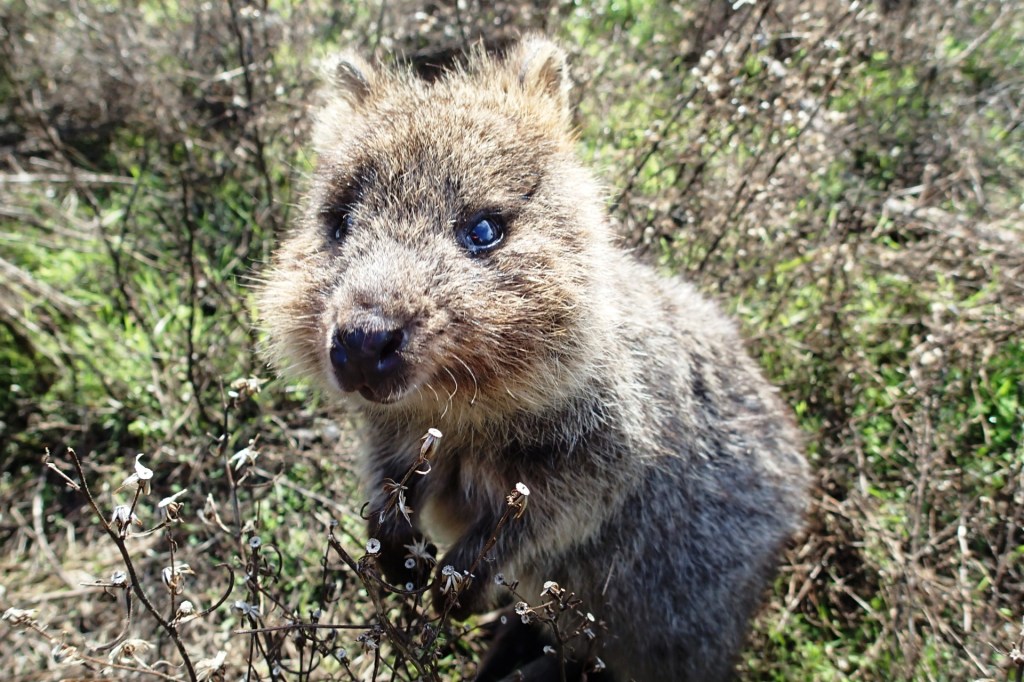
Tom and I headed to the bakery to get a well deserved cream bun and a choc milk before making the ten minute walk to The Basin for a well anticipated swim. Along the way Tom met his spirit quokka. We didn’t attempt a selfie but first contact was made as Tom got down to eyelevel with a quokka and his outstretched finger was sniffed and touched by this amazing little animals nose.
Above: First contact. Meeting your spirit quokka.
At The Basin, a Christmas choir was singing from the waters edge and even the fish were joining in. As carols reverberated off the limestone cliffs Tom and I swam along the reef edge and spotted all sorts of fish that were bigger than my foot, in fact both feet put together! Bream, Trevally, Snapper and even a couple of retired old cods, just hanging out by a weed bank discussing the latest flotsam, jetsam and tidal trends.
Above: The Basin
The fast and comfortable journey back to Perth by SeaLink ferry was made even better by the opportunity for Tom to take the captains chair on the bridge and monitor the compass as we made our way into Fremantle Harbour. He was in his element, scanning from river bank to river bank and warning pelicans to get out of the way.
Above: Tom gets instructions from the SeaLink Skipper
On the ABC Perth Radio Breakfast Show we recently discussed the continued popularity of dark tourism.
It doesn’t have to be morbid but it does have to involve death in wars, disasters, murders, terrorism or assassinations.
The darker side of history has meat on the bone and the gristle as well. We try to put ourselves in the shoes of the fallen and maybe sometimes in the shoes of those responsible.
It’s about confirming our fears, confronting the reality of the history books we grew up with and perhaps providing closure on those images we’ve seen on tv’s in our own lounge room, like that Paris tunnel in 1997 or the New York City skyline in 2001.
The rise in tourist numbers at destinations such as Chernobyl, Fukushima, the concentration camps of World War II, prisoner of war camps in Sandakan and Ranau and the killing fields of Cambodia are all examples of a phenomenon that is attracting those seeking a broader understanding of the events that took place at those sites.
In Australia, many events and sites may be seen as dark tourism. Off the Western Australian coast on the Abrolhos Islands in 1629 the Dutch East India Company ship Batavia ran aground and the ensuing mutiny saw 125 men, women and children brutally slaughtered. The islands can be visited for an understanding of these events and there are also museum exhibitions in Geraldton and Fremantle, displaying grisly skulls marked with the slashes of the mutineers swords.
In Snowtown, South Australia, the little bank where the bodies in the barrels were discovered in the late 1990’s is a popular stop for people wanting to take a quick pic.
Most issues in our lives have a line that we decide we will or won’t cross. Dark tourism has many lines that cross in different directions, challenging our sense of morbidity, appropriateness and thresholds of respect.
It’s a great topic for publication and radio and sure to get you thinking about your own dark tourism bucket list.
Please enjoy the discussion below on ANZAC Travels, particularly to Western Australian memorial services on Rottnest Island, at Geraldton, Albany, Boyup Brook and Grass Patch.
From ‘And The Band Played Waltzing Matilda’;
“And the young people ask, what are they marching for? And I ask myself the same question.”
I think we’re all marching. We’re all marching to ANZAC services all over the world. We’re all marching to remember.
Picture Above: Rottnest Island Dawn Service
Picture Above: A hot Rottnest Island Dawn Service Gunfire Breakfast made by the Rottnest Island Volunteer Guides
Kundasang War Memorial – one of many war memorials across the world that are attended by Australians throughout the year and especially on ANZAC Day.