Remembering how to make gravy on Christmas Day, and maybe a Nasi Lemak

Written for the Malaysian Consulate-General

December 2016

With Christmas upon us, it is often a difficult time for diplomatic staff around the world. Their loved ones may still be living in their home country of origin and missing the customs and traditions of home, sometimes the weather and most certainly the food.

Whether Christmas is celebrated or not, it is a time of year when we feel very strongly about our connection to our family, our country and our community.

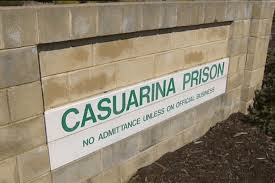
Just before Christmas, I was given an opportunity to attend a very special visit to Casuarina Prison by the Consul-General for the Consulate-General of Malaysia in Perth, Mr Nazarudin Jaafar. Throughout the year, Mr Jaafar encourages his staff to visit Malaysian nationals who have unfortunately been sentenced to prison for crimes under Australian law.

Mr Jaafar has worked with the Western Australian Commissioner for Corrective Services, Mr James McMahon, to build a trusting relationship that allows Malaysian Consulate-General staff to sit unguarded with prisoners, often in the privileged comfort of a staff room rather than a prison interview room, and to also bring in traditional Malaysian food and converse in Malay.

For this visit, Mr Jaafar has also made sure there is enough food for some of the prison staff, one of whom is very quick to say, ‘Terima Kasih!’

Casuarina Prison is the main maximum security prison for male prisoners in Western Australia. It is a large, spacious complex of nearly three square kilometres with vast areas of well-maintained lawn and gardens and currently has over 900 prisoners.

It’s just one prisoner that we’re visiting today. A young man still in his 20’s who has a wife and young baby in Malaysia. He used to run his own food stall cooking the best Nasi Lemak in a local street market but unfortunately his circumstances now see him imprisoned in Western Australia.

While we wait for him to arrive I think of a famous Australian song by popular artist Paul Kelly. The song is called, ‘How to make gravy’ and it’s about a young man who is in prison and he is writing a letter to his brother a few days before Christmas. He describes in his letter the Christmas he knows he will miss out on. He won’t get to laugh with friends and family, he won’t get to hold his children and he won’t get to make the gravy for Christmas lunch.

To be in prison on Christmas Day must be a very distressing time for prisoners, no matter what crime they have committed. To be in another country must be particularly difficult.

When he arrives it is obvious he is pleased to receive this visit. To speak in Malay, to smell traditional food, to sit with countrymen and share his story is a welcome respite from an environment none of us would choose to be in.

I don’t speak Malay and at times Mr Jaafar stops the conversation between his staff member, Mr Hisham Ahmad, and the prisoner to let me know what is being discussed. There is conversation about the conditions in the prison, the opportunities to work and learn in prison, his life back in Malaysia and of course, prison food.

For me, I’m fairly happy with cornflakes for breakfast but for the Malaysian palette this is far too plain and boring. Most mornings, he can’t bring himself to eat the breakfast because it is not interesting and even upsets his stomach.

It’s at this time that Mr Jaafar presents him with some cooking that they have had prepared especially for him and the prison staff have approved.

There is a homestyle chicken curry that has delicate pieces of chicken on the bone and has a beautiful, fragrant sauce made of coconut milk, chicken stock, curry leaves and spices. To soak up the sauce there are roti jala, the famous net crepes of Malaysia.

Also for his enjoyment are crunchy vade’s with just enough chilli to make you need a glass of water and accompanying the vade’s are some karipap sardin, bursting with fishy flavor and just the right amount of coriander, cumin and garam masala.

vadeWell spiced vades

To complete this mini-buffet of delights are some beautifully wrapped banana leaf pulit inti, a heavenly combination of sweet, grated coconut, pandan leaf and palm sugar.

At the end of our one hour visit, the prisoner requests a book on how to pray. His spiritual requirements are being met in Casuarina but he needs guidance with his prayers. This is something Mr Jaafar and Mr Ahmad assure him they will seek to provide.

I have found this visit profoundly inspiring. As part of my research for the story, I called Consulate-Generals from other countries and couldn’t find one that made such a commitment to imprisoned nationals and certainly not one where the Consul-General made visits.

For comparison, I spoke to the Australian Department of Foreign Affairs and found out that last year 1551 Australians were arrested in foreign countries and 391 Australians received consular support while in overseas jails.

While much of this assistance was related to legal and family liaison issues I’m not sure much Australian consular assistance included the provision of traditional Aussie food and just making the time to talk and to listen.

Casuarina Prison is a maximum security prison and looks like it. Despite the spacious, well maintained gardens and outdoor sporting facilities we walked past, there is no hiding the razor wire fence that surrounds the complex. It’s a reminder that for Mr Jaafar, Mr Ahmad and I, we can walk out, get back on the freeway and be in the city in just a few minutes, free to get back to work, go for a walk and maybe just take a minute to think about how lucky we are to have our freedom. This visit wasn’t about forgiving a man for his crimes, it was about letting him know that he is not forgotten.

There is no doubting that a visit such as this makes me grateful for the life I lead. It also makes me grateful to have met a Consul-General who is defining a new brand of diplomacy whereby engagement is so important.

Mr Jaafar’s ability to engage at all levels is truly inspiring and should encourage all of us to seek a new understanding of all the people in our life.

Terima Kasih. Selamat Hari Natal.

Labuan: A very surprising and welcoming island

I featured Labuan Island in a recent interview on 6PR radio.  This article was written for Grand Dorsett Labuan.

OLYMPUS DIGITAL CAMERA
Grand Dorsett Labuan

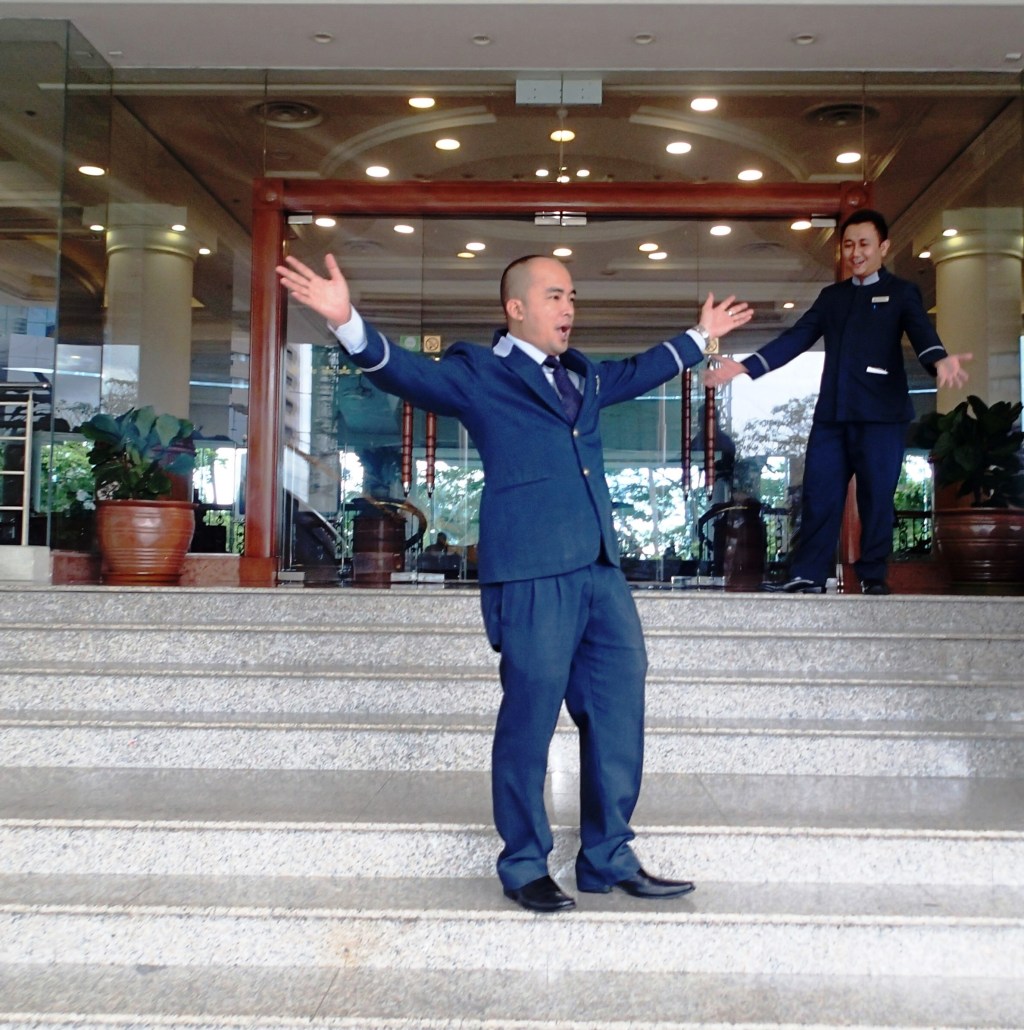
I’m standing in the lobby of the Grand Dorsett Labuan amidst a crew of Dorsett Grand Labuan staff. They are about to perform their welcome song for my crew, an assortment of trekkers from various parts of Australia who have recently completed the Sandakan Ranau Death March Trek, retracing the footsteps of Prisoners of War in 1945.

I’ve been pulled into the group and handed the song sheet which is in English and Bahasa Malay. I keep up reasonably well even though I don’t know the tune and speak very limited Bahasa Malay.

The one image I have of this experience is looking up from my song sheet across at the singers alongside me as they belt out the line, “We welcome you to Dorsett Labuan!” and they’re singing with smiles on their faces. They’re not embarrassed and there’s no reluctance to show their pride and enthusiasm for their hotel.

My group of trekkers are spellbound. Many have travelled throughout the world and it’s the most heartfelt greeting any of them have received in a hotel. I used to think being gonged on arrival and handed a peach iced tea was pretty special but these guys are the best I’ve seen at welcoming guests.

The Dorsett Grand Labuan is the only five star hotel on the island and just minutes from the airport, waterfront and the busy town centre. The hotel receives regular awards for its customer service and with their singing staff I think they also have a good chance of winning Malaysia’s Got Talent.

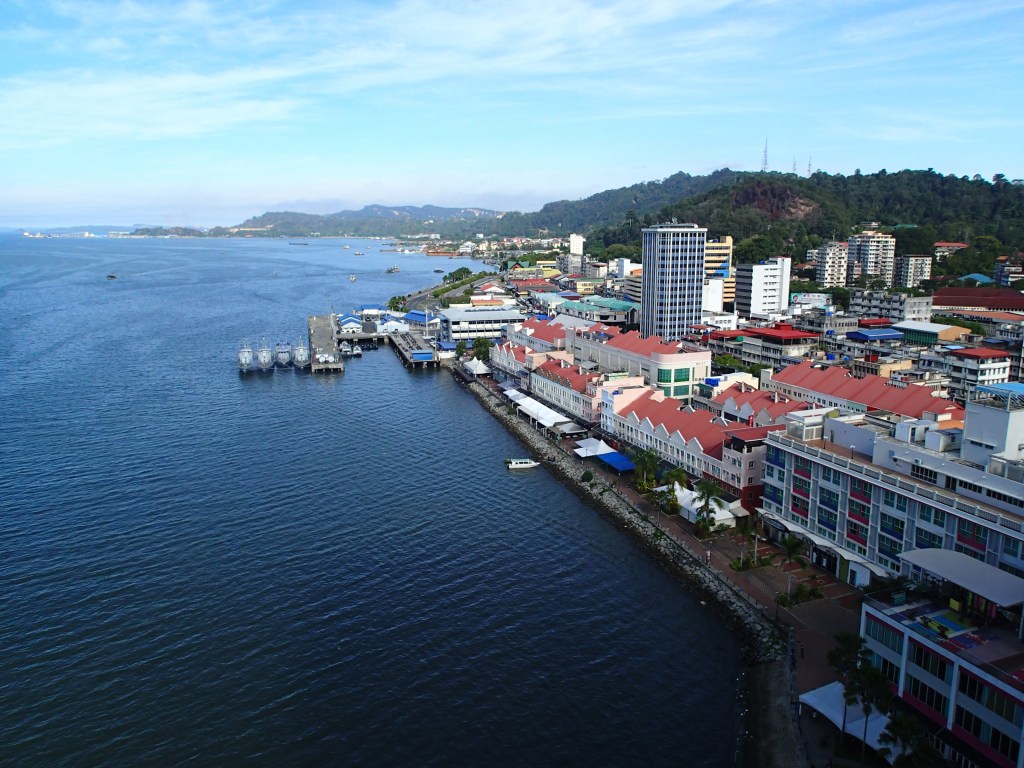
Labuan Island is a territory of Malaysia off the western coast of Borneo and to the south of Kota Kinabalu, the capital of Sabah. It can accessed easily by plane or ferry or if you’re slightly more adventurous, by speed boat. Electing the speed boat route takes 20 minutes from the mainland and you motor past islands, shipwrecks and red hulled offshore drilling ships waiting for their next job.

The island has a wonderful pace about it and even the traffic is slower than you’ll find in other parts of South East Asia and distinctly more courteous.

OLYMPUS DIGITAL CAMERA
Labuan:  Where even a Ferrari will slow down to let you cross the road.

While most tourists come for the great duty free shopping, particularly the textiles and technology, there is also a very good museum with free entry located five minutes’ walk from the Dorsett Grand Labuan. The colourful history and cultural themes of Labuan is well documented with many interesting and interpretive displays.

The first Governor of Labuan, James Brooke, was better suited to his original inspiration for coming to Borneo in the 1800’s.  After some strategic discussion at the Raffles Hotel in Singapore, Brooke set off across the South China Sea to rid Borneo of its Pirates.  He was better at being swashbuckling than sitting behind a desk but those who took his place have done a magnificent job of creating an island where the shopping is brilliant, the history is rich, the hawker markets are cheap and delicious and the diving and fishing is just about unbeatable anywhere in the world. For those with a love of reality tv, Survivor Island, where the first ever Survivor series was set, is located nearby to the north and tours allow you to wallow in the same mud pools as the contestants, including a nude Richard Hatch.

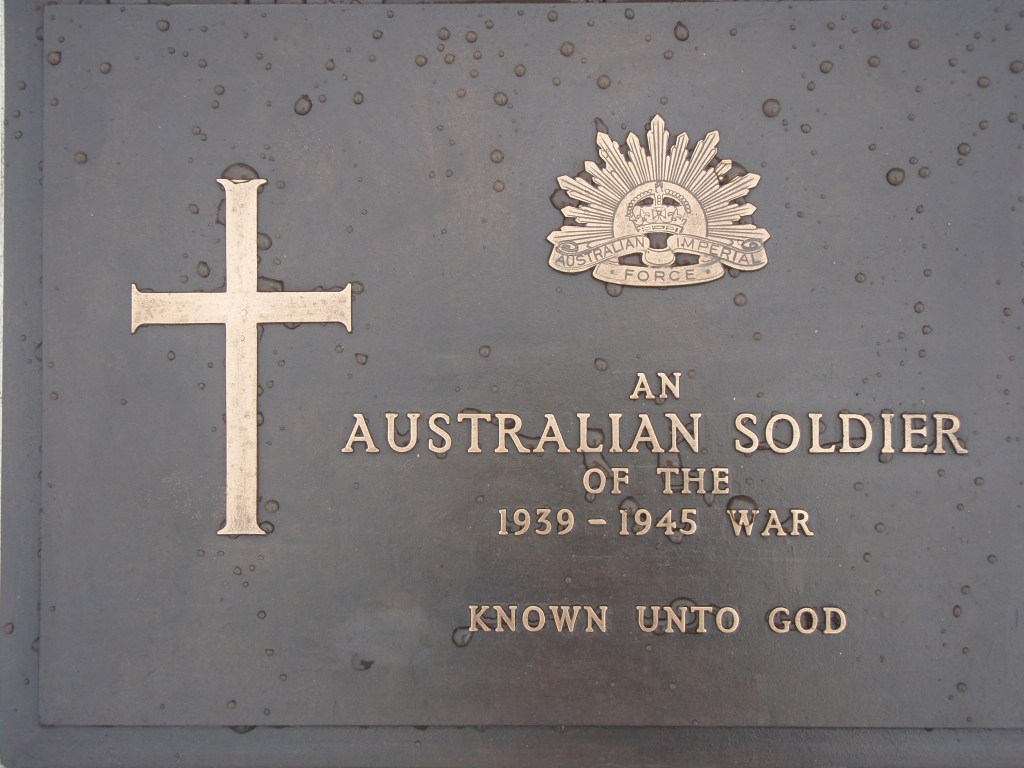
My trekking group have come to Labuan to bind together the Sandakan Death March Trek that began with many days of trekking through mountainous Borneo jungle and then riding a stock carriage train to the coast, then a fast boat to the island. Every step we’ve taken and the stories we have talked about have led us to Labuan War Cemetery, the final resting place for the few whose remains are known and the many who are only ‘Known Unto God’.

OLYMPUS DIGITAL CAMERA
Labuan War Cemetery

As we walk the lines of memorial graves we think about the Australian and British Prisoners of War who perished at Sandakan and Ranau and on the three death marches in 1945. We think about how the final 15 prisoners were shot and killed 12 days after the war had finished. From 2434 Australian and British Prisoners of War, only 6 survived.

We stand in front of Richard Murray’s grave. He stepped forward from a line of men and said that he alone stole rice, knowing he would be killed. Stealing rice was a capital offence and he sacrificed his life so that others may live.

We stand in front of Captain John Oakeshott’s grave, a doctor who had the opportunity to escape but decided to stay with the sick. He was one those killed 12 days after the war had ended.

As a fighter jet from the Royal Malaysian Air Force flies over the Cross of Sacrifice at the cemetery we also remember the sacrifice of so many local people from Sabah and Sarawak who were killed during World War II and the bravery of those who provided assistance to the prisoners.

OLYMPUS DIGITAL CAMERA
The Royal Malaysian Air Force pays tribute to the fallen from the Empire.

It is a beautiful war cemetery, well maintained by Labuan authorities and staff are on site Monday to Friday from 7am to 4:30pm.

While the trek has been physically exhausting the walk through Labuan War Cemetery has been emotionally exhausting. Returning to the Dorsett Grand Labuan, our group is quiet and some choose to just sit in the lobby while others go off to breakfast, for a swim or a play with the resident sun loving cat.

OLYMPUS DIGITAL CAMERA
Susan Carlos is a wonderful General Manager of the Grand Dorsett Labuan but this cat is truly in charge.

For each us, in our own way, we find the space to reflect on our journey. I’ve cried during this trek but for now I am smiling. As I remember the staff at the hotel who sang to us I know I have to come back and share this experience with others, for the history of the past and for the friendships of the future.

OLYMPUS DIGITAL CAMERA
Back to Borneo, the race is on!

Travel Warnings Warning: Do your own research.

Looking at the adventures I have had and who they have been with I am torn between solo jungle treks and family resorts as what I have enjoyed the most. That’s really what defines the joy of travel for me; no matter what I do, it’s always better than sitting at home.

When I am sitting at home and find myself looking at travel destinations, part of my research is to check the Department of Foreign Affairs and Trade (DFAT) website. Travel advice and bulletins have been available on their Smartraveller site since 2000.

The advice you’ll find highlights the range of threats you may encounter at your destination and may include information relating to health, security, local customs and laws and natural events and disasters, such as the recent Bali flight disruptions caused by the ash eruptions of Mt Raung.

Minister for Foreign Affairs Julie Bishop says that the Australian Government frequently consults with foreign governments on a range of issues as part of normal diplomatic relations, including on matters relevant to the safety of Australians.

“DFAT also engages with other stakeholders, including in the travel industry, to understand any changes in the local threat environment,” the Minister said.

Many Australian publications maintain an editorial policy not to encourage travel to destinations where travel warnings are sufficiently serious enough to advise that people do not visit. It’s a completely responsible decision that I don’t disagree with but it got me thinking about countries that have travel warnings issued against them and the actions being taken to improve the safety, security and health of travellers.

As an example, the Smartraveller advisory for the east coast of Sabah is, ‘reconsider your need to travel’. I have travelled to the Malaysian state of Sabah several times as a trekker and as a father. Whether it’s the jungles, mountains, caves, wildlife, shopping or the resorts, there’s much to love about this Malaysian state at the top of Borneo.

Sandakan, on the east coast, has a remarkable connection to Australians, including many Western Australians who died there during World War II. The tragic and infamous Sandakan Prisoner of War Camp and the three death marches to Ranau at the foot of Mount Kinabalu cost the lives of 2428 Prisoners of War (1787 were Australian and 641 were British) and thousands of locals who were made to work for the Japanese and many of whom were caught providing assisting to the prisoners.

The east coast of Sabah is at present experiencing security challenges in meeting the threat of armed insurgents from the nearby Sulu Archipelago chain of islands that make up the southern Phillipines.

Since 2013, the severity of insurgent attacks on the people of Sabah and kidnapping of foreigners has intensified. Two foreign tourists were attacked in their resort off the coast of eastern Sabah and a male tourist was murdered and his wife kidnapped and held captive for several months. In 2014 a foreign tourist and a local employee were kidnapped from a resort and in May this year a gunman with links to insurgents operating in the Sulu islands abducted the manager and a local customer from a restaurant near Sandakan.

It all sounds a bit grim doesn’t it? You’d think it’s not the sort of place to tell my parents that I’m taking their grandchildren to so they can see orangutans in the jungle when they can see them in comfort at the Perth Zoo.

OLYMPUS DIGITAL CAMERA
Orangutans from Sepilok Orangutan Rehabilitation Centre near Sandakan

Having a look at Smartraveller I source their latest update on worldwide kidnapping threats. 27 countries have a current prevalence of kidnapping and there are broader areas of concern, including North Africa and parts of West Africa. Since June 2014 when the last reported kidnapping involving a foreigner occurred in eastern Sabah there have been 16 kidnappings involving foreign nationals in 8 countries across the world and none of them happened on the east coast of Sabah, or anywhere in Malaysia for that matter.

In March 2013, the Malaysian Prime Minister Datuk Seri Najib Tun Razak, launched ESSZONE, the Eastern Sabah Security Zone, and the main enforcement agency ESSCOM, the Eastern Sabah Security Command.

Within ESSZONE, the capabilities of land, sea and air defence and surveillance forces has been upgraded to include new police stations and military forces comprising of five full strength battalions stationed in the area. Naval ships with helicopters and quick response teams are located off the eastern Sabah coast and an oil rig is being utilised as a permanent sea base for ESSCOM forces. The Royal Malaysian Air Force is transferring fighter jets to cover the area and armed attack helicopters will also be attached to ESSCOM.

According to Prime Minister Razak the security levels will remain high as a deterrent to further insurgent activity and increase the confidence of local people and those travelling to Sabah.

The vision and mission for ESSCOM is for its operations to lead to the safety and the wellbeing of the people in eastern Sabah by 2017 and to work with all agencies to increase the ability to gather intelligence and information sharing.

Every travel advisory from the Smartraveller website is reviewed and reissued at least twice a year. The travel advice is a summary of the most likely risks that a traveller may face. According to DFAT it takes into account the overall threat environment, including the capabilities and responses of local authorities.

What’s lacking in travel warnings is a link to the countermeasures being undertaken by a country with a travel warning issued against it. Also, rather than just taking into account the capabilities and responses of local authorities when forming an advisory, it would be useful to disclose what the capabilities, responses and resources of local authorities are.

OLYMPUS DIGITAL CAMERA
Sandakan

It’s a serious situation in eastern Sabah that is reflected by the travel advice of the DFAT travel advisory but unless a traveller is provided with information on the evidence of countermeasures to the situation then it’s only half the story. The Malaysian Government has reacted to the issues by establishing significant police and military forces in the area and is working with the community and other agencies to ensure that security is maintained and information is shared to reduce the risk of insurgent action.

The Smartraveller website provides effective, useful and important information that all travellers should utilise prior to travel and during travel. What the website is not providing is the opportunity to be a one stop shop for travellers to self-assess a situation in another country. While DFAT explain that the internal affairs of other countries, including law and order and public health, are the responsibility of those countries, DFAT is having an impact on the internal affairs of countries by issuing travel advisory information that doesn’t present the full story to travellers undertaking their travel research.

Let me just tell you who recently travelled safely to Sandakan on the 15th of August 2015 for Sandakan Memorial Day; tour groups, including ex-Prisoners of War, school children from across Australia, our Governor-General Sir Peter Cosgrove, the British High Commissioner Vicki Treadell and senior staff from the Australian War Graves Commission in Canberra.

Perhaps it’s still not enough for you to travel to the east coast of Sabah, despite the increased security in place, but at least you have more information to make your own assessment.


The Sunday Times newspaper: Legoland – The building blocks for an amazing family adventure

Published by Escape travel supplement for Australian Sunday newspapers.

https://www.escape.com.au/destinations/asia/malaysia/best-way-to-enjoy-legoland-malaysia/news-story/cdfcfefbc9c6721ef0797c279c5f2902

The writer and his family were guests of Tourism Malaysia, Tourism Johor and Tiger Air.

In life, when we have a straightforward decision to make we often use the expression that the decision is black and white. This means it’s an easy decision to make. There aren’t a lot of options or consequences.

For a family holiday the typical black and white decision might be something like, ‘Shall we holiday in Australia or go overseas?’ or ‘Shall we have an adventure or enjoy the luxury of a resort?’

I have just discovered that life is not just black and white. It is also blue. It is red. It is green and yellow and orange. It is just about every colour you can imagine. Life is Lego.

Without doubt one of the most wonderful memories I have of arriving at the Legoland Hotel was all of us bursting out laughing with sheer happiness at how wonderful the hotel looked.

Two adults and two children were just in awe of this hotel that looks like it’s built of Lego bricks. It’s got big blue turrets, an exterior staircase made out of oddly coloured Lego bricks and over the entrance is a gigantic green dragon whose bottom has smashed through the roof.

legokids4

If you needed any persuading that it couldn’t possibly be as gloriously bold and bright as I’m describing, let me just refer you to the doorman’s stand at the entrance. You know that stand you go to outside a hotel front door when you want to ask the doorman to get you a taxi or ask if there is an umbrella you could borrow? Well this stand is a big green Lego brick. Even the signs that the security guards carry at the entrance to the theme park that say, ‘Security Check’ are made of Lego.

If you’ve missed the exterior of the hotel upon your arrival the interior is even brighter and is chaotic. There is a large Lego castle and Lego pirate ship in the middle of the reception area and there pits full of Lego bricks where children are deliriously building whatever they want, no instructions required.

legokids3

Have you ever wanted to burst into song in a lift full of strangers? If you are shouting out ‘Yes!’ then make your way please to the Legoland Hotel at Jahor Bahru, Malaysia. As the doors close in each lift a mirror ball starts to spin, flashing lights swirl in the confined space and disco music begins. I feel sorry for those people who are on the lower floors as Dancing Queen is only just getting going when they have to get out. We get a longer ride and by the time our doors open we strut out of the lift still singing and striking poses that ABBA’s Agnetha and Anni-Frid could only dream about.

The 249 rooms throughout the hotel are all themed. We’ve got ourselves an Adventure room overlooking Legoland. On the shelves and walls of our room there are life-size Lego monkeys, parrots, lizards and snakes while in the bathroom above the toilet is a giant Lego tarantula and above the sink is a giant Lego scorpion. On another wall in the bathroom is a Lego hat like Indiana Jones would wear.

legokids

The carpets are themed. The walls are themed and the bed linen and pillows all represent your theme. Even the hallways outside your room continue your theme.

I’m not sure what dangers lurk on the Kingdom and Pirate themed floors but whenever we leave our room Matilda and Tom keep pushing me over, trying to save me from falling down the ‘open trap doors’ on the carpet.

Not long after we settle into our room the kids complete the quiz that reveals a code to the room safe (guarded by a large Lego monkey). Inside the safe there are prizes for the kids and then there’s a knock on the door.

At the door is Daphne Tan, the Public Relations Manager, Sales and Marketing, for Legoland Malaysia Resort. I’ve been keen to meet Daphne who is so enthusiastic about the resort facilities.

I don’t know if she’s ever seen a more excited family than ours and with our loud voices and the kids running around, I’m sure that when she got back into one of those disco lifts she enjoyed the relative peace and quiet.

With a few hours before sunset and a bright blue sky outside we decide to head out to the water park. From our room, down the disco lifts and out to the water park takes us less than five minutes.

We head straight for the Build-A-Raft River, a lazy winding river with lots of tubes to drift on. There are giant Lego clams that squirt water at you and there are Lego bricks that drift by and you can collect them and build your own raft. Our construction is more like flotsam than a raft but it does the job as Tom perches on top and it’s kept stable by his patient sister.

legokids2

Next stop is the wave pool. Quite shallow and with waves regularly rolling through, it’s an opportunity to actually have a peaceful float, looking up at the giant Legoland sign on the hill and studying the amazing architecture of the hotel.

Moments later I’m told it’s time to move on, not by one of the numerous life guards but by two children desperate to ride the Red Rush. This ride is a very high and wide waterslide and you climb into a big circular life raft to make your descent. It spins around enough to cause a few screams but not scary enough to stop the kids bolting back up to the top to do it again…and again.

We slow down the pace after multiple Red Rush rides and try out the make-a-boat. This is the moment where I am back in my own childhood in my old cast iron bath with claw feet. I’d build boats out of my bricks and sail them on storm tossed seas made by swaying my legs back and forth. Occasionally my waves would spill over the top, carrying my boat over the edge and breaking into pieces on the bathroom floor.

Matilda and Tom are building a boat and I set to work making my own. When we’re finished we run to the start of the obstacle course that the boats have to make their way down. There’s a starters gate and we count down for our race and are held up momentarily by other kids who also want to race their boats.

Moments later they’re off and my boat immediately twists to one side and is rolled underwater by another boat and crushed, just like my dreams of victory. Somehow, Matilda and Tom’s boat escapes the carnage and reaches the bottom first, a triumph for the little family from Australia!

A few more slides, a few more thrills and it’s time to go back to the hotel, to have a shower with the tarantula and scorpion in the bathroom (using Legoland Hotel soap in the shape of a Lego brick of course).

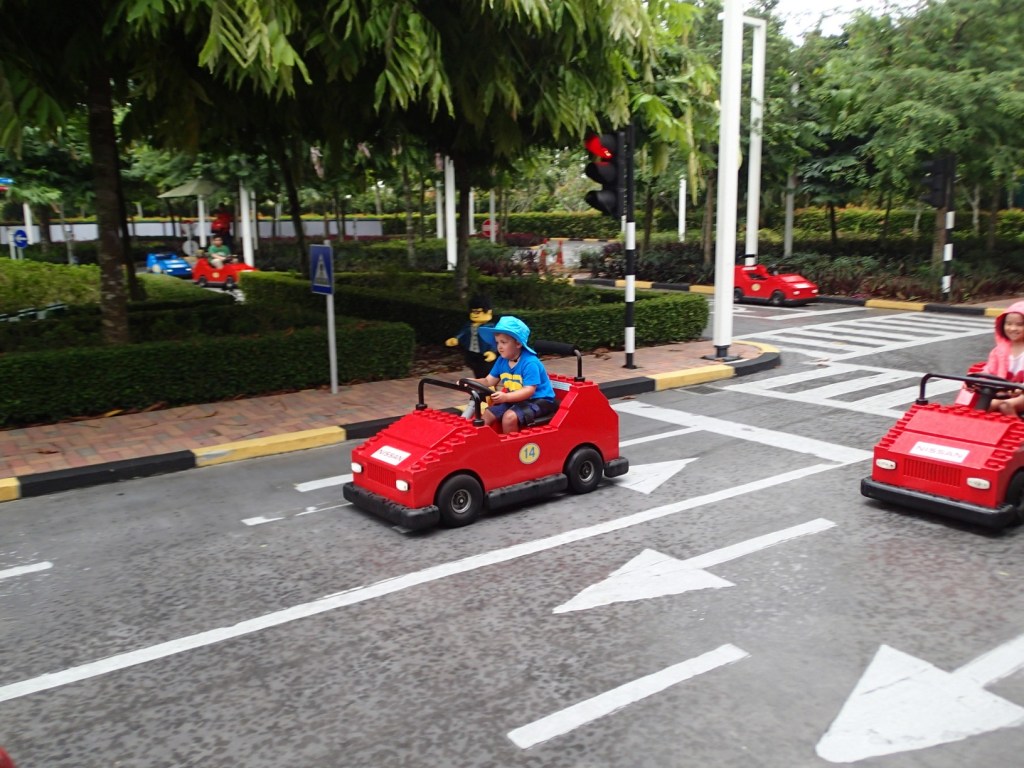
The next day we make the five minute walk to Legoland, this time without our bathers. After having a chat with the red Ninjago character we head off towards our first stop, Legoland Driving School. After a DVD presentation on the rules of the road and a briefing from an instructor on what they learnt from the DVD the kids make their way outside to the vehicles. The course replicates a real road environment complete with traffic lights, roundabouts and all sorts of signs.

I have a photo of Tom driving his car that I will pass on to his driving instructor in about ten year’s time. Despite the lessons, despite the briefing, despite the six foot bright white arrow painted on the road, there is Tom, looking intently ahead, on the wrong side of the road.

About this time last year Tom was lucky enough to spend some time with Formula 1 Grand Prix driver, Daniel Riccardio. They had a chat and Tom gave Daniel one of his Hot Wheels cars. Perhaps Daniel gave Tom some tips on using the road a bit differently to the rest of us.

Legoland has more than 70 rides and exhibitions. Throughout the day we are on rides, off rides and looking at amazing Lego creations, including the recreation in Lego of Asian landmarks in Miniland and the Star Wars exhibition. Watching the Millennium Falcon rise up while being blasted by little Star Wars Lego Stormtroopers with blinking lights coming out of their blasters was amazing … for all ages.

There are roller coasters to ride before lunch, and some you shouldn’t go on after lunch. There are also opportunities to get creative by building your own designs. We have a go at constructing a high rise building and then hitting the earthquake button. I’m glad we don’t live in any of the buildings we made. We make cars and race them down a slope. Just like the boat building challenge of yesterday, my skills are old school and obsolete. I am lost. I sit at a table trying to work out how various pieces fit together but my fingers look up at me as if to say, “Give up now old man. Leave it to the kids.”

The trick for any theme park is to be something for everyone. Legoland works because Lego transcends age and ability. Even though I couldn’t put together a car using Lego Technic, there are old school bricks and there are big Duplo bricks for the really little kids. That consideration of all ages is really what defines the Legoland Hotel and Legoland water and theme parks.

Thinking of everyone is difficult but it’s what Legoland does best. Even the toilets have low facilities for little kids, accompanied by low sinks and hand dryers.

What surprised me the most during our time in the land of Lego was meeting so many Australian families who had just driven across for a day trip from holidaying on Singapore. We stayed for two nights at the Legoland Hotel and in that time had easy access to the water and theme parks. We also travelled through Jahor Bahru to the whimsical Hello Kitty Town and saw the amazing shopping centres that attract Singapore locals.

For one evening we travelled out of Jahor Bahru to the Sungai Lebam for a firefly cruise. Far from the dizzying sights and sounds of Legoland we sat in silence, apart from the gentle splashing of the mangroves by a crewman to awaken the fireflies.

Tom and Matilda held fireflies in gentle, cupped hands. We proved that great experiences for kids can contrast. Legoland is full of splendour and spectacle that has your senses reeling by the end of the day. For the firefly cruise, my kids had their senses reeling by just sitting still and watching the flights of light float around them.

As part of this evening adventure we also had an extraordinary dinner at the jetty used by our cruise vessel. The Restoran Bujang Terapung served us some of the best fish and crabs I’ve ever eaten and gave us a tour of the live seafood pens afterwards, including the gentle handling of a huge horseshoe crab which resembled a cross between one of Sigourney Weaver’s aliens and a Roomba vacuum cleaner.

OLYMPUS DIGITAL CAMERA

When we leave for Singapore, I talk to our driver, Habib, about my love of Nasi Lemak. All of a sudden we’re off the beaten track and we’re just around the corner from where Habib lives, at his local street side eatery. Minutes later we’re seated around local families he knows well, I have a new baby in my arms from the family sitting next to us and on our table are four huge bowls of cendol, plus a banana leaf wrapped nasi lemak for me and plates of fish batter sausages, deep fried bananas and donuts for the rest of the family. The cendol is the best I have ever had. The savoury mix of corn kernels with kidney beans and the sweetness of the pandan flavoured jelly in the shape of string beans, all mixed together with ice and coconut milk is a delicious treat to be long remembered for the experience and the taste.

If Legoland is your destination then make it your accommodation as well. The hotel is an adventure in itself and access to the theme parks is easy, particularly considering hotel guests are granted access to Legoland an hour before the gates open to the public. You will also have the time to have adventures and experiences around Jahore Bahru that will astound you. If even the Singapore locals go to Jahor Bahru for the shopping that should also tell you something about the worth of having a longer stay in this part of the world.

So, it’s not a black and white decision to just visit Legoland. It is a fabulous, bright, multi-coloured decision that, chosen wisely, will see you experience a wonderful theme park and a beautiful part of the world.

GETTING THERE

Legoland Malaysia is west of Johor Bahru, the capital city of Johor. Fly to Singapore and take a taxi across the causeway to Johor Bahru or fly to Kuala Lumpur and then catch a short flight down to Johor’s Senai International Airport. It is a one-hour drive from Singapore’s Changi International Airport and 20 minutes from Johor’s Senai Airport.

Many airlines fly from Australian capital cities to Singapore and Kuala Lumpur, including Qantas, Malaysia Airlines, Malindo Air, AirAsia and Singapore Airlines. My family travelled to Singapore from Bali on Tiger Air.

STAYING THERE

At the Legoland Hotel, all deluxe and suite rooms can sleep up to eight people. All standard and premium rooms can sleep up to five people. An Adventure-themed premium room will cost about $203 and each room has its own treasure hunt, Lego bricks to build (and step on) and all guests have entry to the Legoland Theme Park and Legoland Water Park one hour before the gates open to the public. An adult one-day ticket combo includes entry to the theme park and water park and is RM180 ($A56). A child one-day ticket combo is RM144.

EATING THERE

The hotel’s buffet restaurant caters to all ages, tastes and styles while the theme parks have a variety of fast food restaurants and snack bars. Just make sure you save the burgers for after the roller coasters.

For some excellent traditional Malaysian cuisine, try the street stalls throughout Johor Bahru. One highlight is the slightly bizarre cendol, a traditional dessert made with green jelly noodles, ice and coconut milk with added extras on request such as beans and corn.

Borneo – Go for the past, stay for the present


OLYMPUS DIGITAL CAMERA

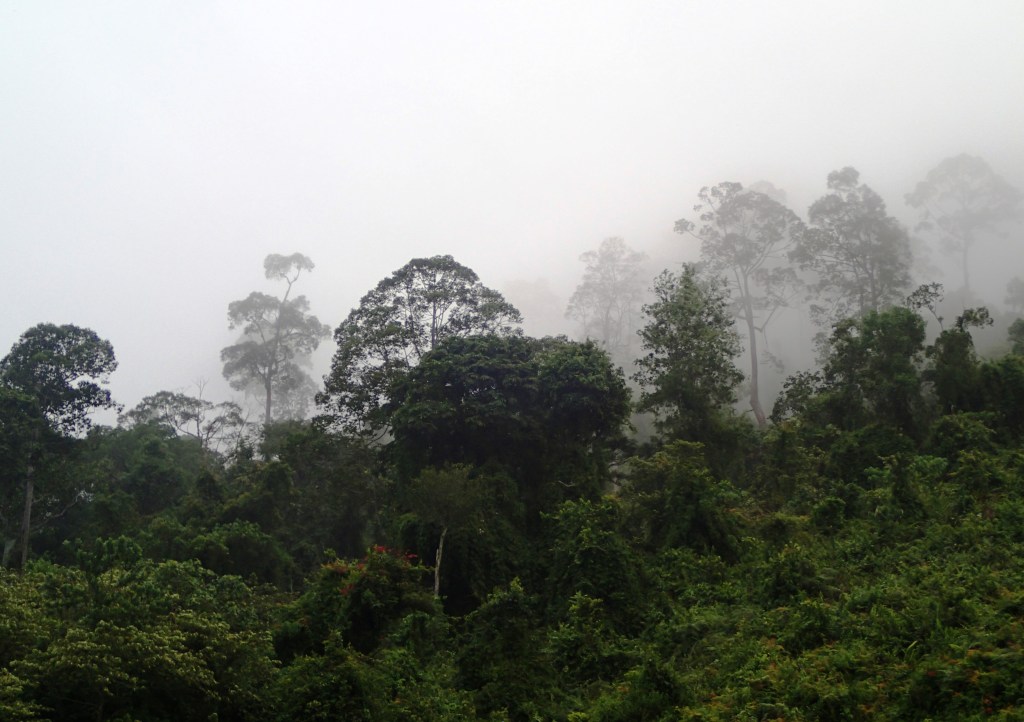
A jungle so hot and humid I couldn’t wear my wraparound sunglasses because the heat and humidity were so high that the glasses had formed their own terrarium in front of my eyes, constantly fogged and dripping.

A jungle so dense that the overhead canopy blocks light from reaching the jungle floor.

A jungle so enveloping that it was described by World War II Australian and British Prisoners of War (POWs) as the ‘green cage’.

It’s for the story of these POWs that I am here in Sabah on the island of Borneo.

I thought of that experience over a week later when I was in Kota Kinabalu, the capital of Sabah, enjoying a gorgeous scoop of pandan ice-cream. I was with Ervina Masduki from the Hyatt Regency Hotel, enjoying the comfort of luxury accommodation at the end of a gruelling trek on both body and mind.

Ervina knew about the trek and some of the history. She has seen trekkers, nearly all of them Australians, stagger into the air-conditioned lobby of the Hyatt, muddied boots and trekking poles making a mess of the polished, tiled floor.

It was in 1942 that Australian and British Prisoners of War (POW) were transferred to Sandakan from Singapore. They were there to build an airfield but by 1945 it was clear that as the Allies advanced, the airfield would never be operational. Fearful of an invasion at Sandakan and not prepared to release their prisoners, the Japanese forced them to march to Ranau, at the foot of Mount Kinabalu, a distance of 240 kilometres.

Over three marches, the horrific conditions for those who remained at Sandakan camp and those who made it to Ranau, only 6 survived from a total of 2434. The final 15 were killed on 27 August 1945, 12 days after the war had ended.

Those that died on the track weren’t to know it but it had been cut by locals who had been instructed by the Japanese to make it. Thinking it must be for Japanese soldiers, the locals made the track as difficult as possible; up and over difficult mountains and avoiding flat ground, rivers and villages where food could easily be obtained.

When locals saw the POWs on the track they were distraught and many risked their lives by passing food whenever possible to the men as they walked past them.

For those who want to trek, the terrain will test you physically and mentally. For those who want to learn more about the Sandakan story, you will also be tested physically and mentally. There are opportunities to visit memorial sites, listen to locals and walk at your own pace in the footsteps of men who, for the most, didn’t survive.

The trek is designed to allow participants to learn and understand not just the loss of life to POWs but also recognise the sacrifice and bravery of many local Sabahans who provided assistance anyway they could.

Before the trek commences in Sandakan we visit the English Tea House for dinner. This colonial inspired restaurant sits high on the hill overlooking Sandakan town and harbour. Choosing to sit outside on the grassed terrace I adopt the atmosphere and sip a Gin and Tonic while reclining in a wicker lounge. Clink. It’s the gentle sound of wood on wood. I watch as others in my group play a game of croquet while being attended by a waiter with a drinks cart.

I turn away and focus my attention down below, past the lights of Sandakan town and out to the darkness of Sandakan Bay. It was from out there that the POWs had slowly steamed into the harbour on the dilapidated steamship Ubi Maru in July 1942. Just months earlier the Japanese had taken possession of British North Borneo after the fall of Singapore.

The next day we visit St Michaels and All Angels Church. When the POWs arrived in Sandakan in 1942, many spent the night in the church before being marched off to the camp. It’s a beautiful stone church that was one of the few buildings to survive the air raids in World War II.

In recent years the addition of the stained glass Windows of Remembrance by Australian stained glass artist Philip Handel has added a remarkable tribute to the Sandakan story. The windows show St Peter, under sentence of death. The windows are abundant with representations of flora, including Australian Bottlebrush, Banksia and Everlastings, British Shamrocks, Thistles, Bluebells and Roses and Borneo Orchids, Cordylines, Hibiscus and Vines.

The main window consists of 2,500 pieces – one piece for each POW sent to Sandakan. Each piece of glass was fired up to three times in Philip Handels own kiln.

A small area at the front of the church commemorates the POWs. There is a banner with the following words from Lord Byron;

“For there are deeds that should not pass away, and names that must not be forgotten.”

After St Michaels, we visit the Sandakan Memorial Park. Evidence of the past is here in the present. The boiler and a train locomotive alternator that was part of an intricate process to generate electricity sit upright and defy all attempts by the rust to topple over. Nearby, the Ruston Bucyrus excavator that the Japanese thought would speed up the job of building the airfield sits with its bucket resting on the ground. It’s doing about as much work as it did then thanks to some subtle acts of sabotage by the POWs.

A little further on are the concrete remains of the Japanese kitchen and quartermaster’s store. One of the six survivors, Keith Botterill described what it was like:

“The cooks would feed the dogs with swill, the kitchen rubbish. They’d pour it in this trough. We’d all hit together, the dogs and all of us. If you’ve ever tried to pull a bone out a starving dogs mouth you’ll know what it is like. The dog would fasten onto your wrist to take the bone off you and you’d still be putting the bone in your mouth.”

There is also evidence on a hill, now populated with pine trees, of the trenches that contained many of the bodies of POWs who died at Sandakan.

The last prisoner alive at Sandakan was Private John Skinner from Tenterfield in New South Wales. He was beheaded on the 15 August 1945, the day Japan announced its unconditional surrender.

As we leave the park there are children enjoying trying to catch dragonflies that flit among some lilies. Newly married couples position themselves in front of flowering gardens for photos and joggers make their way around the various tracks. It’s a peaceful, happy place that sits on ground with a tragic past. So long as we don’t forget the past, I think it’s wonderful that the land has found new life that is maintained and nourished by the people who visit it.

The trek begins early the next morning. There’s no way of easing us into it. This is jungle that is impenetrable without the sharp parang of our guides. This is jungle that hasn’t been trekked for nearly 8 months and in that time has completely regrown.

It was one of the great problems for the War Graves Commission when they returned to retrieve the bodies of the fallen after the war. The jungle reclaims itself so quickly that even with the experience of locals who had walked the track and with Bill Sticpewich, one of the six survivors, it was difficult to determine where the original track was.

There are steep short ascents, steep long ascents and descents that are sometimes easier to slide down than walk (well, that’s what I kept telling everybody). There is mud, there are rocks and there are massive trees that have fallen across your path and depending on your dimensions you need to make a decision how you’re going to go over, or sometimes under.

There are water crossings and there is walking in rivers, sometimes above knee height.

There are one-at-a-time suspension bridges that look and feel like they should be in an Indiana Jones movie.

There are leeches. There are ticks.

At times there are flying lizards, rhinoceros beetles and the best named creature in the world, the macrolyristes imperator, or giant long-horned grasshopper.

Each evening is spent debriefing the days walk and then briefing everyone on the next day. Everyone is keen to know how many water crossings there will be. More than ascents and descents, it’s the fuss of water crossings that cause irritation. The process of ensuring your feet are dry when you put your socks and boots back on is a routine you have to get right. If you don’t, your damp feet will easily cause blisters.

Most evenings are fairly short. After dinner there’s gear to be sorted for the next days walk, bruises and scrapes to be attended to, then a restful sleep.

Mid trek, we stay in a bamboo long house at the Sabah Tea Plantation. With each step sending a domino effect of creaking through the long house it’s a difficult late night walk to the toilet.

Along the way each day, we stop to talk about the lives of Australian POWs who are known to have died at particular locations on the track. We talk about their pre-war lives. We even sing for those who it’s known loved a bit of country music.

Our trek finishes at Ranau and we conduct a ceremony at the Kundasang War Memorial. We search the memorial walls for the names we have learnt, we look up at Mount Kinabalu.

The locals believe that Mount Kinabalu shrouds the souls of the dead while for the POWs they came to hate the ever present mountain that was always there, watching them from above.

As I look at Mount Kinabalu’s long, jagged peak I am proud to have reached the end of this trek and even prouder to know more about a story that unfortunately remains unknown to most.

Before I walk away I take a look out to the jungle past Ranau and imagine Keith Botterill hiding in the jungle with Nelson Short after escaping from the final camp not far from here. He hears a trampling on the undergrowth, big heavy footsteps that don’t mind revealing their presence. He thinks to himself that he’s had it, the Japanese soldiers have found him. His head slumps down as the footsteps stop in front of him. He looks at the boots and something is not right. Over two and a half years of captivity have taught him what a Japanese soldiers boot looks like. He looks up, and up, and up. It’s a great big Australian soldier, Lofty Hodges, who looks at him and his mate and says, “How ya going boys?” They were safe. They had survived.

While our trekking is complete, our journey is far from over. We now need to travel to the Labuan War Cemetery on Labuan Island where the graves of the Australian and British Prisoners of War from Sandakan are to be found.

Labuan Island is a territory of Malaysia off the western coast of Borneo and to the south of Kota Kinabalu, the capital of Sabah. It’s accessed easily by plane or ferry or if you’re slightly more adventurous, by speed boat. Electing the speed boat route takes 20 minutes from the mainland and you motor past islands, shipwrecks and red hulled offshore drilling ships waiting for their next job.

Our accommodation on the island is at the Dorsett Grand Labuan. I arrive before our group and I soon find myself standing in the lobby amidst a crew of Dorsett Grand Labuan staff. They are about to perform their welcome song for my crew.

I’ve been pulled into the group and handed the song sheet which is in English and Bahasa Malay. I keep up reasonably well even though I don’t know the tune and speak very limited and badly pronounced Bahasa Malay.

The one image I will always have of this experience is looking up from my song sheet across at the singers alongside me as they belt out the line, “We welcome you to Dorsett Labuan!” and they’re singing with smiles on their faces. They’re not embarrassed and there’s no reluctance to show their pride and enthusiasm for their hotel.

My group of trekkers are spellbound. Many are well travelled and it’s the best greeting any of them have received in a hotel.

The Dorsett Grand Labuan is the only five star hotel on the island and just minutes from the airport, waterfront and the busy town centre. The hotel receives regular awards for its customer service and with their singing staff I think they also have a good chance of winning Malaysia’s Got Talent.

While most tourists come for the shopping there is also a very good museum with free entry located five minutes’ walk from the hotel. The colourful history and cultural themes of Labuan is well documented with many interesting and interpretive displays.

We’ve come to Labuan to bind this trek together. Every step we’ve taken and the stories we have talked about have led us to Labuan War Cemetery, the final resting place for the few whose remains are known and the many who are ‘Known Unto God’.

As we walk the lines of memorial graves we think about the Australian and British Prisoners of War who perished at Sandakan and Ranau and on the three death marches in 1945.

We stand in front of Richard Murray’s grave. He stepped forward from a line of men and said he alone stole rice, knowing he would be killed. Stealing rice was a capital offence and he sacrificed his life so that others may live.

We stand in front of Captain John Oakeshott’s grave, a doctor who had the opportunity to escape but decided to stay with the sick. He was one of those killed 12 days after the war had ended.

As a fighter jet from the Royal Malaysian Air Force flies over the Cross of Sacrifice at the cemetery we also remember the sacrifice of so many local people who were killed during World War II and the bravery of those who provided assistance to the prisoners.

It is a beautiful war cemetery, well maintained by Labuan authorities and staff are on site Monday to Friday from 7am to 4:30pm.

While the trek has been physically exhausting the walk through Labuan War Cemetery has been emotionally exhausting. Before our departure to Kota Kinabalu on the mainland, our group is quiet. For each us, in our own way, we find the space to reflect on our journey. I’ve cried during this trek but for now I am smiling.

As I remember the staff who sang to us yesterday and the kids playing at Sandakan Memorial Park right at the beginning of this journey, I know I have to come back and continue to share this experience with others, for the history of the past and for the friendships of the future.

Far from the wartime horror of what was then known as British North Borneo, the Malaysian state of Sabah is beautiful and the people are friendly and polite. They may laugh at my use of Bahasa Malay words I’ve picked up along the way but they laugh not to make fun but to make friends.

The island of Borneo, of which Sabah is the northern most region, has been described as the ‘Land Below the Wind’, taken from the title of a book, first published in 1939 and written by Agnes Keith who lived in Sandakan. It’s a description that tells you where Borneo is but not what it is. It tells you Borneo is below the typhoon belt of the South China Sea but doesn’t describe the near impenetrable jungle that blocks light from the jungle floor. It doesn’t describe the vast network of rivers that twist through deep rainforest valleys and gorges.

There’s something else missing from the description, the ‘Land Below the Wind’. It doesn’t make you smile. Despite the difficulty of the trek, despite being far from home and tending to blisters and an aching back you can’t take the smile off my face. The challenge this land presents, the locals you meet and the opportunity to be in real jungle has given me a desperate longing to come back.

Weeks later, I pull on my boots to start preparing for another trek in another part of the world. I cross the laces and pull on them sharply and a small cloud of dust puffs up and drifts over my face.

It is the smell of my footsteps in a place now far away. It is the smell of the jungle, it is the smell of leaves both fresh and fallen, it is the smell of my emotions, often faltering and falling. I am home and I weep that they, the truly brave and fallen, are not.